Categories
Dignity

Say No To Bullies

What part of no
Image by Gerd Altmann from Pixabay

LPA classifies dwarf tossing as bully behavior. So National Stop Bullying Day on October 13 is an excellent day to remember that bullies can and should be shut down. Take for example how a dedicated group of 22 little people successfully advocated the New York State legislature in 1990 to shut down dwarf tossing contests or promotions in establishments licensed to sell alcohol. The group persuaded the legislature to protect the health, safety, and welfare of people with dwarfism by banning the atrocity. Violators of the prohibition are subject to the suspension or revocation of their license to sell alcoholic beverages for on-premises consumption.

Want to subscribe to receive blog updates sign up today?

Although the New York Senate bill passed without a hitch, the Assembly bill almost died in both the Commerce and Codes committees. The Commerce Committee questioned the bill’s constitutionality because of its interference with the right of a dwarf tossee to work; and the Codes Committee found the definition of dwarfism too vague.

As the Coordinator of the New York advocacy group against dwarf tossing, carving out time to respond to Committee concerns was difficult. I was working full time and studying for the New York bar exam. But God gave me the strength to do both, along with the prayer support of the women in my Bible study group. And with God’s help I eked out a five-page legal-opinion letter on the constitutionality of the bill and recruited two members of LPA’s Medical Advisory Board—Dr. Cheryl Reid and Dr. Charles I. Scott, Jr.—to help Assembly committee staff draft text that precisely defined the people with dwarfism protected by the proposed law.

After Committee questions were resolved, the bill passed in the Assembly on June 28, 1990 and the Senate on June 30, 1990. The governor’s signature was all that remained. Surely, he would agree that dwarf tossing and dwarf bowling were offensive by any standard of human decency.

July 24, 1990, was a great day—the first of two days of the bar exam. Although I was more than ready to pour out all I had learned onto paper, clearly it wasn’t the exam that made the day great. No, it was wonderful because of a call I received from an AP reporter who told me that Governor Mario Cuomo had signed the New York bill to ban dwarf tossing in licensed establishments! I praised God as I went into day two of the exam. And I’m sure Governor Cuomo appreciated a reporter gracing him with a Humanitarian of the Year Award for hanging tough against some strong criticism for signing the bill into law.

Relief and joy overflowed on September 20 and November 8, 1990, when I opened the mail reporting that I had passed both the New York state bar and ethics exams. God kept all His promises to me:

Not one word of all the good words which the LORD your God spoke concerning you has failed; all have been fulfilled for you, not one word of them has failed.  
-- Joshua 23:14, New American Standard Bible

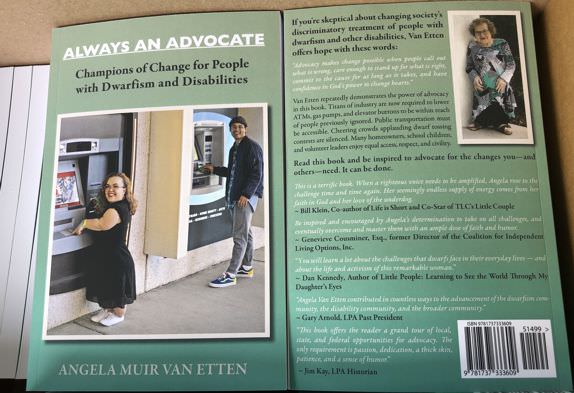
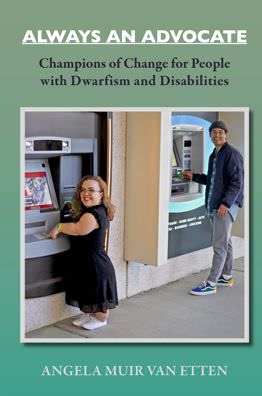
This post is a condensed portion of chapter 11, Biting the Legislative Dust, in “ALWAYS AN ADVOCATE: Champions of Change for People with Dwarfism and Disabilities” now available on Amazon in the US and UK.

Categories
Accessibility Disability Rights

Making the Impossible Happen

Always An Advocate

Characterized as the biggest state and local building code change in 20 years, October 8, 1997 is a date few know to commemorate. This is when the ICC/ANSI A117.1 Committee on Accessible and Usable Buildings and Facilities (the Committee) broke the six-inch reach barrier. Lowering the standard from 54 to 48 inches in new or altered buildings and facilities made ATMs, gas pumps, elevators—everything activated with a push, pull or turn—accessible to people with dwarfism and half a million others whose disability involved a reach limitation.

Want to subscribe to receive blog updates sign up today!

LPA proposed the change in 1994 after becoming a Committee member in the consumer category as one of ten disability organizations requiring accessibility. Other categories include building owners and operators, producer/distributors of manufactured products, professional organizations, regulatory agencies, and building code officials.

As the delegate representing LPA, I learned the Committee had no appetite for our proposed changes. But after a vigorous debate in February 1996, the Committee agreed to place 48 inches in the second draft revision of the ANSI Access Code—the key word being draft. In the Fall of 1996 and Spring of 1997, the Committee considered public comments and negative ballots filed on the draft. The American Bankers Association and manufacturers of gas pumps and vending machines joined the Building Owners and Manufacturer’s Association in opposition to the 48-inch change. Given the size and economic power of these opponents, a David and Goliath battle was imminent.

It seemed there was no hope for change. Experienced disability advocates were concerned that our early victory of getting 48 inches into the draft was about to slip away. Delegates were under a lot of pressure to change their early votes in support of the change. But I used my arsenal of weapons: preparation, persuasion, and prayer. And I believed God could move the hearts of Committee members to retain 48-inches.

After a five-hour battle, the room was quiet as the votes were carefully counted: 13 in favor of 54 inches, 18 for 48 inches, and seven abstentions. Victory. I attributed the triumph to Divine intervention. How else do you explain the force that withstood three of the most powerful industries in the nation—banking, oil, and retail?

In a surprising move, the Committee met again in October 1997. Once again I had to argue for lowering the reach standard from 54 to 48 inches. I didn’t think I could handle going through another battle. In my anguish, I called Robert to put this on our church prayer chain. God was faithful, and the Committee chairperson limited the debate to a recap of the main issues and only allowed the clock to run for one hour. After the fifth and final debate on LPA’s proposal, the victory was more decisive—22 votes for 48 inches, eight votes for 54 inches and only two abstentions.

Many little people have said they think of me every time they use an ATM, but I think of God’s grace, power, and justice. He deserves the credit for making the impossible happen.

This post is adapted from Chapter 15, Breaking the Six-Inch Reach Barrier, in “ALWAYS AN ADVOCATE: Champions of Change for People with Dwarfism and Disabilities.” Buy your print or e-book copy today at https://www.amazon.com/dp/1737333600/.

Dedication

Marilyn Golden


This post is dedicated to Marilyn Golden, Senior Policy Analyst for the Disability Rights Education and Defense Fund. Marilyn was our strongest ally on the Committee and used her legendary advocacy skills to garner support for LPA’s 48-inch proposal. I’ll be forever indebted to Marilyn for taking me under her wing to understand the process, know who to trust, and lead by example. https://dredf.org/2021/09/22/in-memory-of-marilyn-golden/

Categories
Celebrations

DWARFISM TRILOGY COMPLETE: Recurring Pattern of Three Emerges

Trilogy Complete

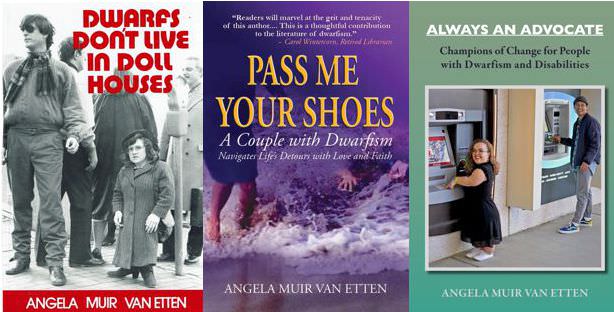
After 33 years, my dwarfism trilogy is complete. Three books in a little more than three decades about God’s three gifts of grace in my life—faith, hope, and love. As it happens, the word “three” has emerged as a thread in this cradle to retirement memoir series.

ALWAYS AN ADVOCATE: Champions of Change for People with Dwarfism and Disabilities (#3), officially publishes on October 1st. Organized into three parts, Part I is on volunteer leadership challenges; Part II is about dwarf tossing; and Part III deals with equal access.

Want to subscribe to receive blog updates sign up today!

Part I discusses the three times Robert or I served as LPA President during the years membership grew from about 3,000 in 1980 to 6,000 in 2006. Part II addresses LPA’s action to halt the dwarf tossing atrocity in three states—Illinois, Florida, and New York. Part III involves equal access to the built environment, education, emergency operations, housing, social security disability benefits, transportation, and voting. It took three years to break the six-inch reach barrier in the built environment standing against three of the most powerful industries in the nation—banking, oil, and retail.

The book will be released in three formats: e-book, paperback, and audio.

PASS ME YOUR SHOES: A Couple with Dwarfism Navigates Life’s Detours with Love and Faith (#2) published in October 2020. An e-book release is planned for our 40th wedding anniversary in November 2021. Robert and I had three marriage ceremonies in 1981. The wedding and anniversary rings on three fingers of my left hand symbolize our commitment.

Though if one may be overpowered, two can defend themselves. A cord of three strands is not quickly broken.
~ Ecclesiastes 4:12, New International Version

Robert and I met when I came from New Zealand to America for three months on a Winston Churchill Fellowship. I obtained an American law degree after attending law school for three semesters. Despite passing the three day Ohio bar exam, I experienced discrimination in three job interviews.

After a three-hour hip replacement surgery in 1997, Robert tanked up on three pints of blood. When he forgot to bring his electric razor to the hospital, a hand razor was off limits for three weeks because he was on a blood thinner. We couldn’t decide if the resulting beard gave him the distinguished professor or garden gnome look.

Dwarfs Don’t Live in Doll Houses (#1) published in 1988 and will be released as an e-book in December 2021. It took three photo shoots on bitterly cold days to get the right cover photo image.

I’m the eldest of three children and Robert has three younger brothers. Our adult height is the size of a three year old. When I was a bridesmaid for the third time, someone said, “If you’re a bridesmaid three times, you’ll never be married yourself.” Don’t believe everything you hear.

So what do all these threes mean? I’ll give you three guesses. Nothing more than interesting trivia.

More information and updates on my dwarfism trilogy is found at https://angelamuirvanetten.com/books/.

Categories
Awareness

Not Your Typical Father’s Day Story

Alz purple

Celebrating Father’s Day in September is out of kilter with the American calendar. But right on time in New Zealand and Australia where fathers are honored in September not June. And given that my father died of Alzheimers in Australia, this post is timed with Down Under tradition and World Alzheimer’s Day.

Every 65 seconds someone in the U.S. develops Alzheimer’s Disease, the most common type of dementia. And four out of five New Zealanders knows, or has known, someone with dementia. In my family, it was my father’s Alzheimers that brought the disease into our homes. 

Want to subscribe to receive blog updates sign up today!

In the early stages, we knew something was wrong with dad even though he still lived independently. Dad also knew things weren’t right. In a notebook filled with random thoughts and reminders he wrote, “I am definitely ready to stop work.  I’m no longer sharp enough to carry on in real estate.” He described himself as muddled and mixed up.

As dad’s condition regressed from mild to moderate, he repeatedly misplaced things, became more temperamental, and got lost in the town where he grew up and once knew like the back of his hand. Alzheimers is correctly dubbed “a family disease” given the impact the diagnosis has on family members. When dad needed more support, my brother and sister shared caregiving duties. But they had to contend with his refusal to eat less and exercise more, confusion, restlessness, and agitation as he tried to remember what he had forgotten. If he remembered what he was looking for, he usually didn’t find it. He even needed reminders to shower and change clothes.

When dad reached the severe stage of Alzheimers, he needed 24/7 care to keep him safe. All three siblings and spouses accompanied him on the day he moved into an aged care residence. Dad was warmly greeted by staff and was all smiles when he was served a delicious three-course meal. We handled it like any other day and left him saying, “We’ll see you later.” He never protested this change of residence.

For the next five years family and friends mourned the gradual loss of dad’s cheerful personality, corny jokes, smile, conversation, alertness, memory, ability to read and enjoy family photos, and physical functions of walking and feeding himself. So when we gathered for his memorial services we were ready to eulogize his 81 years of life. In his home church at Papakura East Presbyterian we celebrated his passing into eternity with Jesus—the one dad greeted every morning with “Good morning Lord” after opening the bedroom curtains.

We remembered the good times along with dad’s many sayings:

  • Civility hurts no one.
  • I’m seldom right, but I’m never wrong.
  • Patience is a virtue seldom possessed by a woman and never by a man.
  • Answering the phone, Santa Claus speaking or Russian Embassy.
  • There are only 364 days until Christmas (his annual quip on December 26th).
  • If someone gives you trouble, kick them in the shins and climb up the bumps (his advice to me as a child).

This post includes highlights from “Pass Me Your Shoes,” the second book in my dwarfism trilogy, chapter 24, Dad’s Alzheimer’s Disease. Buy links are available on my website at https://angelamuirvanetten.com/pass-me-your-shoes/.

Categories
Disability Rights

Fair Housing Disability Anniversary

Mike and Hannah

It took 20 years after passage of the Fair Housing Act to add disability to the list of classes protected from housing discrimination. And September 13 is the day to celebrate the Fair Housing Amendments Act of 1988.

When employed as an Advocacy Specialist for a Center for Independent Living, I often relied on the Fair Housing Act to confront the discriminatory practices of homeowner associations (HOAs) against residents with disabilities. A common grievance was the HOA’s refusal to make reasonable policy exceptions. Many of these residents lived peacefully in their communities for years until new HOA rules were enacted and enforced.

Want to subscribe to receive blog updates sign up today!

Here are some examples below:

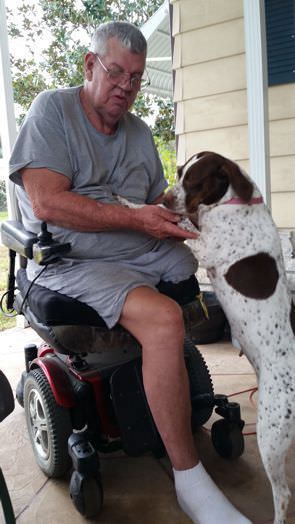
  • Mike took his service dog, Hannah, off-leash for her daily exercise run. Management objected to his violation of the HOA off-leash rule and posted a No Pet sign where Hannah exercised. Mike is an amputee, has epilepsy, and uses a power wheelchair for mobility. Hannah is not a pet and is individually trained to fetch what Mike drops and to run for help should he fall or have a seizure. Hannah is obedient to 30 voice commands and doesn’t need a leash to stay close to Mike. After I exchanged letters with the HOA attorney, the HOA reluctantly made an exception and allowed Hannah to run off-leash.
  • Shirley had parking violation notices placed on her SUV parked close to her building. Her mobility impairment made it impossible for her to walk to the distant newly designated area for SUVs. Despite having a disabled parking permit for her SUV, the HOA was threatening to tow, boot it, or impose a daily fine. My letter on Shirley’s behalf persuaded management that federal law trumps HOA parking rules.
  • Margaret’s HOA directed her to move the pavers off her lawn to maintain the uniform appearance in front of the parking spaces. Margaret needed the pavers to provide a solid walking surface as a shortcut to her vehicle; she couldn’t walk the long way around on the sidewalk. The HOA manager’s bravado disintegrated when I met him in person and he approved Margaret’s paver accommodation.
  • Joyce parked her battery-powered scooter on the walkway outside her unit when charging it with a cord through her window. Her neighbor complained about the obstruction to the path of travel. I proposed two alternatives: (1) install an electrical outlet under the stairwell so the scooter could be charged without blocking the walkway; or (2) widen the sidewalk in front of Joyce’s unit to allow a three-foot clear path of travel.  

None of the above accommodations cost the HOA any money, unlike Marilyn’s case. Marilyn was able to use the security key to unlock the front door of her apartment building, but she ambulated so slowly with her walker that the lock clicked closed before she reached the door. Besides, even if Marilyn reached the door before it locked, the door was too heavy for her to pull open. The HOA was persuaded to purchase and install an electronic door opener.

For more information, go to “A Guide to Disability Rights Laws: Fair Housing Act.” U.S. Department of Justice, Civil Rights Division, Disability Rights Section. February 2020. https://www.ada.gov/cguide.htm#anchor63409

This post is a condensed excerpt from chapter 17—Advocate for Independent Living, pages 169-171—in “Always an Advocate” releasing in October 2021. See book updates at my website, https://angelamuirvanetten.com/always-an-advocate/.

Categories
God's protection

Read A Book Day

Read a book

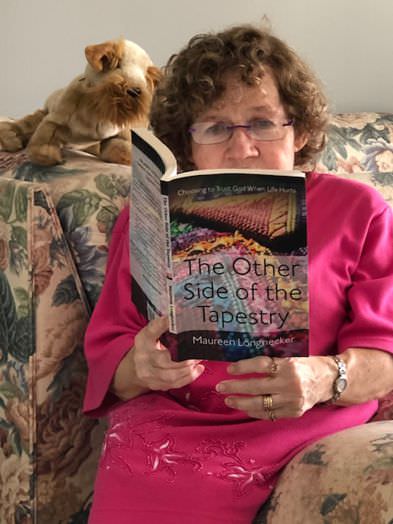
Labor Day is good for a lot of things: a day off work, retail sales, and celebrating National Read A Book Day. So why not relax and take the opportunity to walk in someone else’s shoes for awhile. I can recommend a really good book. (And no, I’m not pitching any of the books in my dwarfism trilogy.) No, in light of all the trouble in the today’s world, I recommend Maureen Longnecker’s book, “The Other Side of the Tapestry: Choosing to Trust God When Life Hurts.”

Yes, many books have been written about trusting God when life hurts, but this one stands among the best of them.

Want to subscribe to receive blog updates sign up today!

Right from the outset, Maureen discloses that she never thought her life would include so many painful events. So much pain that numerous words related to “trial” are needed to describe them: adversity, affliction, challenge, difficulty, discomfort, hardship, grief, tragedy, tribulation, trouble, and woe. Maureen’s many trials manifested in major depression, neck and shoulder injuries, surgeries, chronic fatigue syndrome, feelings of abandonment, claustrophobia, dengue fever, debilitating allergies, being physically unable to fulfill her dream of serving as a missionary, her parents separation, a difficult pregnancy, and her father’s suicide followed a few years later by her mother’s suicide.

Please resist the temptation to avoid reading “The Other Side of the Tapestry” because it’s too much of a downer. In an extraordinary way, Maureen lifted me up by sharing her gratitude for how God used each experience to teach her more about Himself. For example, she discovered that God’s unconditional love does not depend on her ‘performance.’ She found her refuge in God and trusted that nothing could happen to her without His permission. Maureen put it so well when she wrote, 

When we go through hard times, there is something more important than what we’re facing, and that is who is facing it with us. We need to cling to the who when the what makes us afraid.

This book is not only a testimony of Maureen’s faith, but also of the church as God intended it to be. In every struggle, she was supported by loving and caring church members involved in meeting her physical, emotional, and spiritual needs. They prayed, listened, gave godly counsel, shared her tears, accompanied her to hard places, did not judge, did housework, cooked meals, watched her children, and gave financial gifts. 

And in providing details of the depth of her distress, Maureen takes every opportunity to advise and encourage others going through their own ordeal. Permeated with Scripture references and applications, the book’s underlying purpose is clear: to glorify God and minister to others. This memoir does both very well. 

After reading Maureen’s book, Jennifer Sands—a 9/11 widow and author of “A Tempered Faith: Rediscovering Hope in the Ashes of Loss”—was reminded that a broken heart is not healed by explanations—it’s healed by God’s love and the promises in His Word.

Categories
Accessibility Celebrations

Access Hits and Misses in New York City

Decade Birthday Tradition

On August 30, 2015, Robert and I continued our decade birthday tradition with siblings and spouses.  This was my brother’s 60th so he chose the destination. Our flights from Australia and Florida landed all six of us in New York City for five days and a weekend with Greg’s daughter Holly who flew in from London.

Upon arrival at LaGuardia airport, Robert and I appreciated the help of the airport taxi dispatcher and a driver willing to load two scooters into his vehicle. We assured the driver that family would help him unload at our lodging. This was a better solution than scrambling to find an accessible taxi.

Want to subscribe to receive blog updates sign up today!

Greg’s wife, Julie, had asked every conceivable question to ensure that our second floor Airbnb loft had an elevator and no stairs. We planned to come and go independently like the rest of our crew. But the booking agent overlooked the three-inch rise from the sidewalk into the building and the elevator was a far cry from accessible. But we were thankful that one scooter at a time could squeak through the narrow door into the small elevator car.      

We primarily navigated our way around Manhattan riding accessible city buses and the subway to stops with elevators. This eliminated any parking problems, unless you count the perturbed parking attendant who did not appreciate my photo op humor when I backed my scooter into a ground level space underneath a car on a second tier hoist.

Greg’s birthday dinner was fine dining with great décor, toasts, and God’s blessing. And his birthday gift from Deborah proved to be the highlight of the trip—tickets to the opening night matches of the US Open at the Billie Jean King National Tennis Center in Flushing Meadows, Queens.

The accessible seats in Arthur Ashe Stadium gave us an unobstructed view of the tennis court and were near the section where Serena Williams family and coach were seated. The challenge was getting to our seats. The volunteer elevator usher repeatedly let us out on the wrong level. This was a big deal because of the long wait for an elevator car with room for the scooter. (Yes, only one scooter this time as Robert is not a tennis fan.)

After enjoying two matches of top-tier players, we exited the stadium and moved with the masses to the subway about 1:00 AM. However, we were shocked to exit the train at our stop and find the elevator out of order! Thankfully, Greg and Rob carried my scooter up the stairs and Deborah and Julie helped me. The next day we learned that the UK tourist we met on the train the night before was also confronted by an out-of-order elevator at his station. His power wheelchair was too heavy to lift and he had to board another train, exit at Grand Central Station, and wheel back to his hotel on city sidewalks in the early hours of the morning.

Do you have an access vacation story to share?

This post is based on outtake material removed from “ALWAYS AN ADVOCATE: Champions of Change for People with Dwarfism and Disabilities” releasing on Amazon on October 8, 2021.

Categories
Medical

Adapting to Changes in Climate and Age

Aging queen

In July 2003, Robert was shocked when we landed in my homeland of Auckland, New Zealand. He’d been there before, but was not a fan of winter visits. The 50 degree Fahrenheit drop in temperature from Florida’s 90 to Auckland’s 40 revealed Robert’s dependency on indoor temperature control. Telling him that the drop was only 27.5 degrees in Celsius was no consolation. Robert compensated by using dad’s two-month supply of kerosene for the heater in only three days.

Despite being irritated by this unexpected depletion in his fuel supply, my father threw open all the windows to let some fresh air into the over-heated room. 

Want to subscribe to receive blog updates sign up today!

Robert was shocked again. He had not learned how to adapt to New Zealand’s way of staying warm—only use a heater to take the chill off the early morning air and wear winter clothes inside.

When we flew to Sydney, Australia to visit my siblings and other family members, it was my turn to adapt. Shortly after a surprise 50th birthday celebration—where I was crowned the queen—I was rudely reminded of my advancing years. I fell and severely sprained my wrist the day before we flew home. I had one night to ice it, then fellow passengers across the Pacific suffered with me as I massaged my wrist with the penetrating and aromatic Goanna extra-strength heat cream. The healing process was impeded by the need to continue lifting myself on and off chairs, toilets, and in and out of the car.

I was also losing range of motion in my ankles. The pain interrupted my sleep, reduced my already limited walking distance, made stairs and curbs impossible to climb without a railing, and required avoidance of uneven surfaces like grass and gravel.

At the end of August, I went to a local orthopedist for x-rays. After looking at the images, he came into the room, was surprised not to see a wheelchair and amazed I could walk independently. He pronounced severe arthritis and prescribed a scooter and a lift to get it in and out of the car.

In September, I brought the x-rays to Dr. Mary Matejcyk, the same orthopedist who replaced Robert’s hips in 1997. She advised that the spontaneous fusion of my ankle joints was causing the pain. This sounds bad, but it was actually good news. Surgical intervention would be to fuse the joints and my ankles were doing this on their own. The only concern was that the ankles fuse in the right position for standing; thankfully, this appeared to be happening. When the fusion was complete the pain would end. And she was right.

Robert had no health incidents in 2003. However, he got quite a scare on the scales at the doctor’s office. The calibration on our home scale was off by seven pounds. We both admitted we needed to lose weight to reduce the stress on our joints.

So how were you reminded of National Senior Citizens Day on August 21st?

Read more about dwarfism issues in my dwarfism trilogy, https://angelamuirvanetten.com/books/.

Categories
Vacations

Water and Wildlife Camping

Camping in Mexico New York

My childhood summer vacations were spent camping in beach towns about a two hour drive from home. So in August 1990, I was up for a two hour drive to camp for the weekend with the New York Finger Lakes LPA chapter in Mexico, New York. But Robert’s idea of being ready to leave when I got home from work on Friday night was having a borrowed kayak strapped on top of the van with the help of two elderly neighbors. He had packed no food or camping gear!

As a result, we arrived at the camping ground after dark without a lantern and needed help putting up our tent.

Want to subscribe to receive blog updates sign up today!

Despite the availability of cabins, we chose to rough it in a campsite with no electricity to be as close as you could get to the river without getting wet. On Saturday, Robert enjoyed kayaking in the river as I sat in my sun chair at the river’s edge half studying for an exam and half watching chapter members splashing around.

            Five years later, we camped in the Florida Everglades National Park. Robert’s family set up tents for the men and boys with a spectacular view of Florida Bay. I escaped the mosquitoes and flies by staying with Robert’s sister and cousin in a cottage with air conditioning, a bathroom, and kitchenette. Even though the campers laughed at us, they didn’t hesitate to visit for food and amenities.

Robert accepted that poisonous snakes made swimming inadvisable,but he ignored the if-you-don’t-bother-them-they-won’t-bother-you advice when confronted by a growling alligator. When the canoe he shared with his niece unexpectedly disturbed an alligator resting on an embankment, Robert tried to convince her not to paddle away until he got a photo. She had the sense not to listen to him.

We rang in the New Year of 1996 sleeping in a pup tent in New South Wales, Australia—one week camping with my sister Deborah and family at Myall Lakes; the other with my brother Greg and family at Kiama.

Myall Lakes included relaxing in the water, riding a Jet Ski, and sight-seeing the lakes in a boat. However, Robert’s Jet Ski joyride turned into terror and the scariest three hours in his life. He got lost; went numb in the cold water; his joints hurt from cutting through the waves; and the weeds clogged up the Jet Ski, twice. When he finally found his way, he was most upset to have missed seeing a huge goanna lizard take a leisurely stroll through our camping ground.

The rain dampened our plans at Kiama, but the tree frogs had a blast. Greg’s attempt to quiet them down at night by yelling and throwing cans was futile, albeit entertaining to watch. When our tent got soaked, we moved into the family tent. We amused ourselves reading, shopping, going to the movies, and playing cards. The weather cooperated enough for us to visit a wildlife park where we walked among and fed the kangaroos.

So tell me about your camping stories.

This post is excerpted from our camping experiences discussed in “Pass Me Your Shoes,” the second book in my dwarfism trilogy, chapter 10, Season of Travel; chapter 13, Family Highs and Business Low; and chapter 14, What a Difference Ten Years Makes. Buy links are available on my website at https://angelamuirvanetten.com/pass-me-your-shoes/.

Categories
Awareness Little People of America

Dual Donahue Dialogue Differences

Donahue LPA panel

A two-time guest of Phil Donahue, the father of daytime talk shows, I appeared on August 8, 1984 in Chicago and October 12, 1989 in New York City. In 1984, a producer asked Robert Van Etten, president of Little People of America (LPA), to name panelists; in 1989, a producer invited me to join a panel based on my many media interviews resisting dwarf tossing.

But what a difference five years makes.

In Chicago, the LPA panelists were honored guests in the historic and luxurious Drake Hotel. We joined LPA friends riding in a limousine to the studio, being pampered by hair and make-up artists and hanging out in the green room.

Want to subscribe to receive blog updates sign up today!

Donahue talked with us before and after the show. He was playful with the kids and humbly kneeled in the center of our group photo. And we were treated to a post-show fine dining luncheon at the Drake.

In New York, I stayed in a nondescript hotel and my limo ride to the studio was with panelists I didn’t know. We did not see Donahue before or after the show and the food platters in the green room substituted for any post-show meal.

In Chicago, we had no concerns about the program veering off in the wrong direction. We trusted the show would educate the studio and TV audiences about LPA and dwarfism. Our diverse panel was well equipped to answer questions on marriage, parenting, education, employment, medical and other issues. There was no pitting one group against another.

Not so in New York. In order to maintain market share, Donahue had gradually shifted from thoughtful conversations to more sensational topics. For example, in a 1987 show on cross-dressing, he wore a woman’s skirt! So what would I encounter on a show on the violent entertainment of dwarf tossing and roller derby in which the loser is tossed into a pool with alligators?

I was thrown into a lopsided debate on New York State’s proposed ban on dwarf tossing in licensed establishments serving alcoholic beverages as the only panelist supporting the ban! A dwarf-tossing business owner, promoter, and dwarf “tossee” all opposed the ban. At least there was a medical researcher who spoke generally about the negative effects of violent entertainment.

And then there was the audience. In Chicago, it was supportive and included 16 LPA members, and four of Robert’s relatives. The reception was warm, friendly, and open to learning about little people. In New York, the reception was mixed. Although the majority appeared to favor a dwarf tossing ban, a sizeable and vocal group opposed infringing on the dwarf’s freedom of choice to engage in dangerous activity.

Clearly it was a no-brainer for LPA to do the Chicago educational show. But not knowing how Donahue would handle the dwarf tossing controversy in New York was a risk I had to take. Thankfully, the exposure helped propel the bill to ban dwarf tossing. Soon after the program, legislators began signing on as bill co-sponsors.

This post is a behind the scenes look at Donahue talk show appearances discussed in chapter 2—President Robert: The Second Term—and chapter 11—Biting the Legislative Dust—in “Always an Advocate,” the third book in my dwarfism trilogy, releasing on October 8, 2021. Updates are found at my website, https://angelamuirvanetten.com/always-an-advocate/.