Categories
Until Death Do Us Part

Healing With GriefShare

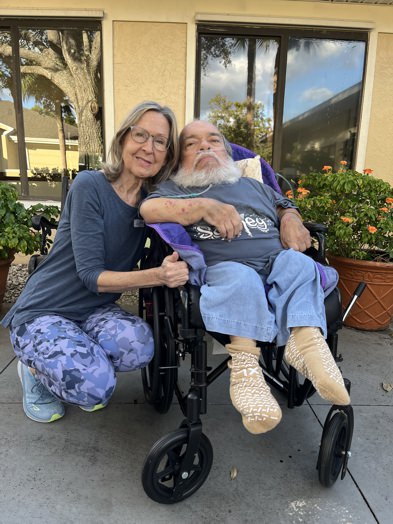
robertbirdangela
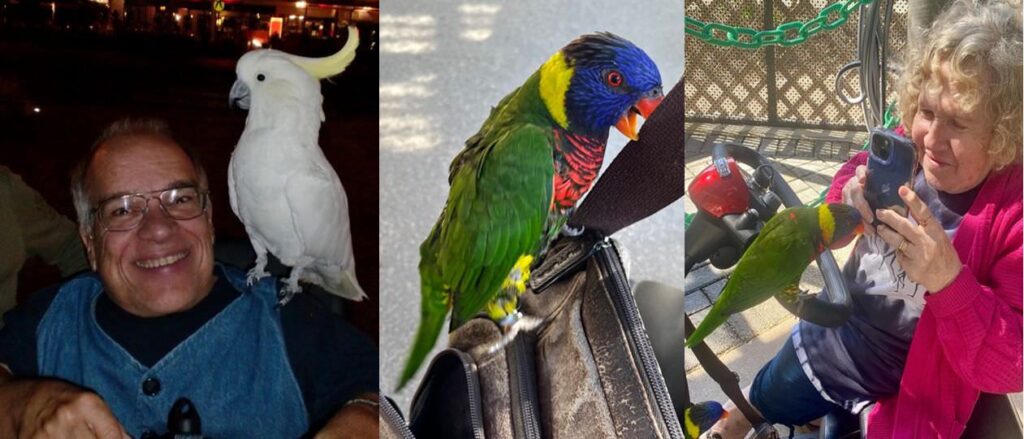
Image descriptions: LEFT: A night view of Robert wearing glasses, a blue denim vest and broad smile with an Australian Cockatoo sitting on his shoulder. MIDDLE: Australian Lorikeet climbs scooter tiller and gets traction with his beak. RIGHT: Angela wearing a blue T-shirt and pink cardigan remembers Robert’s love of birds as she aims her phone camera at an Australian Lorikeet sitting on her scooter steering wheel.

My life changed forever the day I met Robert. Our love for one another motivated me to change—my country, my church, my job—everything. Likewise everything changed the day Robert died. But this time the change was out of my control and it was the end of our marriage not a beautiful beginning. Bridal bliss was replaced with a widow’s sorrow. There would be no more of his adventures, caring, encouragement, hugs, laughter, love, smiles, or stories—no more anything with him.

Although it seemed like my world stopped, I was caught up in a flurry of activity with family and friends involving cremation, a celebration of life service, and the first round of distributing, donating and tossing Robert’s worldly goods. Despite the sadness, family helped nourish my body at favorite restaurants and my spirits at a butterfly park and art museum.

Want to subscribe to receive blog updates sign up today!

And as expected, after a few weeks everyone returned to their own routines. I was okay with this. Because Robert had been in residential rehabilitation or hospital care for several months before he died, I was used to living alone. So I went about my days taking care of what was in front of me—paying bills, medical appointments, online groceries, teaching Sunday School, et al. However, I felt flat, frittered away a lot of time watching TV, and lacked the creativity and concentration needed for anything extra. Clearly the mere passage of time was not enough for me to fully recover from losing Robert.

I needed a healthy way to mourn my loss. GriefShare—a 13-week support group that has helped more than one million people find comfort as they move through the grief process—is how I’m paving my path forward. Through a Bible-based work book, videos, and group discussions I’m learning six important processes to work through in order to heal the pain. As I approach the one year anniversary of Robert’s death, it’s a good time to pause and reflect on six signs of healing—accepting, adjusting, dealing with emotions, continuing, sharing comfort, and addressing questions. (GriefShare®, p ix, fourth edition, April 2024.)

Accepting that I won’t see Robert again on this earth is a given; rather I’m acknowledging that every aspect of my life is changing. I can’t go on as though nothing has happened. And numbing the pain with escape behaviors keeps me stuck in grief. Instead, adjusting to being a widow calls me to embrace a different role in society. So I’m reassessing how God wants me to use my gifts, talents, and skills and staying open to any changes God wants me to make.

The first focus was my blog begun five years earlier as a tool for marketing my dwarfism memoir trilogy. I asked God whether to discontinue or remodel the blog. After a five month pause, the answer was apparent. Restart the blog and reduce the frequency to once a month.

My biggest challenge to adjusting has been with household maintenance issues. I was bombarded with opportunities to adjust when the pool pump got so loud it disturbed the neighbors, brown patches appeared in the lawn after the sprinkler clock quit, the air conditioner failed to keep the house temperature comfortable, water cascaded off the roof when the gutters clogged, a leaking pipe on the solar panel dripped onto the patio, and termites were discovered in the attic. Dealing with contractors had been Robert’s department. Now it was my job to get bids from reputable businesses, understand the equipment, and negotiate the scope of the work and fair prices. I hated the process, but trusted God to lead me to competent and reliable workers.

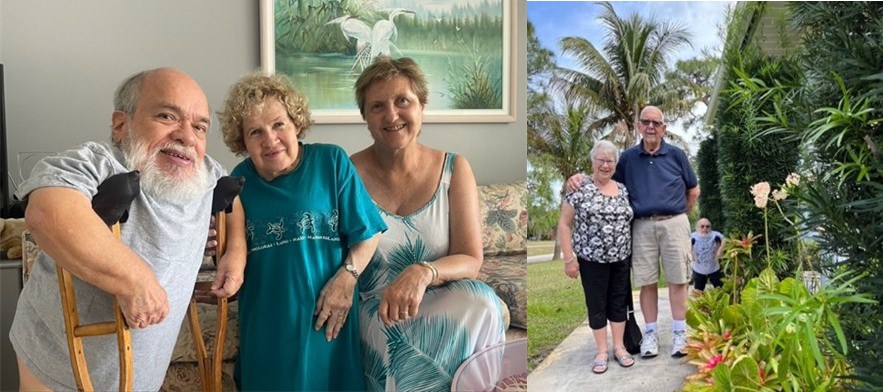
Relationships also required adjusting. Despite the high value I place on being independent, the large volume of maintenance issues caused me to rely on help from family, friends, and neighbors. Breaking two fingers and being in a hand splint for six weeks saw many of these same helpers provide meals and drive me to appointments, church, and other events. The bonus was that our bonds grew stronger as we spent more time together. My relationship with Robert’s brother Mickey and his daughter Veronica (his caregiver) also strengthened when I visited him regularly to provide stimulation and encouragement and give Veronica much needed breaks and emotional support.

Sadness is the primary emotion I deal with in my healing process. Rather than being angry and bitter that Robert’s gone, I thank God for our 43 years of marriage and for ending his suffering. I alleviate my sadness with music and memories. Remembering him with photos, in conversations, and on special days helps fill the void. On his birthday, I celebrated with family at the same place Robert ate with us last year. On our wedding anniversary, I ate a slice of cheesecake remembering how much he enjoyed this treat last year while in a rehabilitation facility. Naturally I also remember him on ordinary days!

In continuing life without Robert I take steps forward in a way that honors his memory. For example, I provided biographical material to Robert’s professional organization—the Rehabilitation Engineering Society of North America (RESNA)—in support of his posthumous Fellow Award; gave Robert’s close friends and family a photo magnet of him enjoying six of God’s creatures; and continued our Christmas tradition of shopping in charity gift catalogues as an alternative to buying presents for each other.

I don’t try to replicate the way things were, but I have continued our practice of hospitality. Two of these events Robert used to enjoy—our Little People of America chapter Thanksgiving party and family reunions. He was not here for this year’s baby shower or welcome dinner with our new Pastor’s family and church friends.

Comforting others is essential to your healing.” (GriefShare®, p ix, fourth edition, April 2024.) I found my comfort in God, our merciful Father and the source of all comfort. He comforts us in all our troubles so that we can comfort others. When they are troubled, we will be able to give them the same comfort God has given us.” (2 Corinthians 1:3-4, New Living Translation.) Because I was very aware of how important it is to have family at your side in the aftermath of a loved one’s death, I comforted a grieving mother by contributing to the travel expenses of her siblings who lived thousands of miles away.

A key step toward healing involves coming to terms with what you believe about God, heaven, and eternity.” (GriefShare®, p 101, fourth edition, April 2024.) This was an easy one for me. My views on such matters were settled long before Robert’s death. We both believe that Jesus is our Lord and Savior, Robert is alive in Christ, and we’ll be reunited when I die or Jesus returns, whichever comes first. The day is coming when “[God] will wipe every tear from their eyes, and there will be no more death or sorrow or crying or pain. All these things are gone forever.” (Revelation 21:4, New Living Translation)

Meanwhile, I’m trusting God’s plan and goodness. Based on His faithfulness to me in the past, I’m confident He will keep His promises in the future. I can be sure of this, “God is with [me] always even to the end of the age.” (Matthew 28:20)

For further information on GriefShare, go to: https://www.griefshare.org  

For more Angela Muir Van Etten blog posts in the series Until Death Us Do Part, go to:

For Angela and Robert Van Etten’s love story, read “Pass Me Your Shoes: A Couple with Dwarfism Navigate Life’s Detours with Love and Faith” by Angela Muir Van Etten. https://www.amazon.com/Pass-Me-Your-Shoes-Navigates/dp/0998464864/ref=sr_1_1?dchild=1&keywords=pass%20me%20your%20shoes&qid=1600969039&s=books&sr=1-1&fbclid=IwAR2SO81IzPfczzW2MPyCHKRHvoQTQDulyzwywq2G_fgpIMyaQCV1zkIQFJo

For Scripture supporting my belief that Robert is alive in Christ and that we will be reunited when I die, go to: Luke 24; John 14:1-3; Romans 1:16-17, 3:23-25, 5:8-10, 6:4-11, 23, 8:1-4, 11, 31-34, 10:9-10, 13; 1 Corinthians 15:22, 35-58; Philippians 3:20-21; and 1 Thessalonians 4:14.

Categories
Until Death Do Us Part

More Valuable Than Sparrows

Sparrow main
Image by junfangsjs from Pixabay. Description: the pavement is covered with a large flock of sparrows either sitting or taking flight.

What is the price of five sparrows—two copper coins?
Yet God does not forget a single one of them.
And the very hairs on your head are all numbered.
So don’t be afraid;
you are more valuable to God than a whole flock of sparrows.
Luke 12:6-7 (New Living Translation)

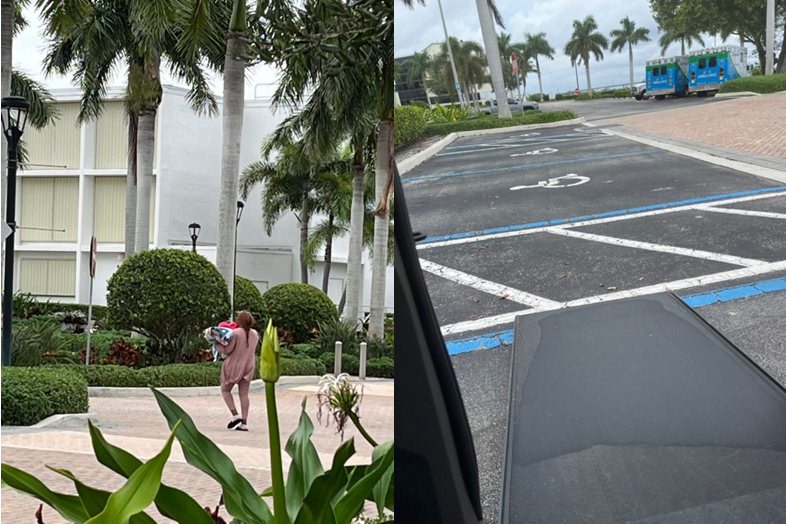
On October 9, 2024, I was visiting Robert at the Cleveland Clinic, Martin North Hospital. At 3 PM the hospital went into emergency lock down mode. Windows were shuttered. The parking lot emptied. Staff made their way into the building with sleeping bags and personal care items. All because Hurricane Milton sped towards Florida as a Category 5 storm. I left the hospital trusting Robert into God’s care.

Want to subscribe to receive blog updates sign up today!

secondgroup
Image descriptions: LEFT – a female carrying an arm load of bedding topped with red slippers walking towards a three story hospital building with shuttered windows, adjacent palm trees, well-manicured shrubs and a large flowering plant in the foreground; RIGHT – a lowered ramp on our wheelchair accessible van faces a row of empty accessible parking spaces with a background perimeter of palm trees and two parked ambulances.

Although Milton slowed to a Category 3 hurricane, wind and rain ravaged the west coast of Florida and a record number of tornadoes wreaked havoc as it crossed the State at hurricane speed. When driving to emergency shelter with a cousin, our cell phones pinged repeatedly with warning of tornadoes in the vicinity. The next morning we praised God for keeping us safe and sparing our homes and the hospital from the deadly destruction of multiple tornadoes in the area.

Despite being critically ill, Robert was discharged from the hospital two days later. He was admitted to Solaris HealthCare Parkway, a subacute rehabilitation and skilled nursing facility. I knew Medicare would cover the cost of rehabilitation for up to 100 days, but was blissfully ignorant that Robert only had 14 days to demonstrate progress. When he failed to meet Medicare’s rehabilitation benchmark within two weeks, the administration began talking to me about discharging him from rehabilitation services.

Because Robert was in no condition to come home, his only option was to transfer to long-term skilled nursing care at Solaris—a private-pay service billed at $9,500 per month! Whoa. It felt like another emergency was about to hit. Not only did my mind boggle over the $9,500, but also on making this payment every single month. Sure we had sufficient savings to cover a short-term stay. But long term? And would there be any money left to cover long-term care for me should the need arise in the future? It was time to create a personal emergency plan—one that didn’t involve lockdowns, shutters, or shelters.

As a couple, we did not meet Medicaid’s financial criteria, so I consulted with an Elder Law Attorney. However, her recommendation that I apply for Medicaid’s Institutional Long-Term Care Program did not sit well with me. I had already rejected the suggestion of his cousin that I qualify Robert for Medicaid by divorcing him, but the lawyer’s advice was almost as disturbing. She said Robert would qualify as an individual if I removed his name from joint bank accounts and chose not to pay his nursing home bills. Although this spousal refusal option was a recognized choice used by many applicants it didn’t feel right to me.

Thankfully God’s master plan was far better. It also confirmed how He cared for His children way more than the sparrows. However, it took several weeks to understand how God would do this. Here’s how it played out.

Robert’s nine-week stay at Solaris was punctuated with two hospital admissions. Both coincided with discharges from rehabilitation services. So whenever he returned to Solaris, the calendar reset for another 21 days of rehabilitation covered by Medicare. Because this happened twice, Robert’s final discharge from rehabilitation services happened one day before he left Solaris for the last time. As a result, instead of my private-pay bill being in the tens of thousands, I only paid a total of $317! God took challenging circumstances and worked them for our good.

“And we know that God causes all things to work together for good to those who love God, to those who are called according to His purpose.”
Romans 8:28, New American Standard Bible

Surprisingly, not meeting Medicaid eligibility also created an issue for Robert’s transportation from Solaris to the dialysis center. The first time I arrived at Solaris to pick him up, a nurse objected to my transporting Robert in Hugo, our wheelchair accessible van. She followed us out to the van and watched the boarding process. After I securely tied down Robert’s scooter, she told the aide standing next to her that this would be the last time for me to take him in the van. So I looked at her and said, “So how is he going to get there?” She referenced transportation services. Without hesitation, I retorted:

And who is going to pay for it? Solaris won’t pay, Medicare won’t pay, the dialysis center won’t pay, Robert doesn’t qualify for Medicaid or State-funded transportation disadvantaged rides, and private-pay accessible transportation would cost around $1,200 a month.

After announcing that we had purchased Hugo two years earlier to transport Robert where he needs to go, I pulled in the ramp, closed the door, and drove Robert to dialysis. The only response I got from Solaris after that was from an Occupational Therapist who added a seatbelt to the scooter.

Because each hospital stay lasted about a week, there was a question mark as to whether there would still be a bed available at Solaris when Robert was ready to return. But God was faithful in answering our prayers. In October, caring staff welcomed him back to the same room he had vacated the week before. Although his November return involved a room change with less space and different staff, he now had a window view of the garden in a cheerful well-lit room. The bonus was that his post COVID-19 status meant he had the room to himself for ten days! This was a big deal because there was a very long waiting list for single occupancy rooms.

After Robert discontinued dialysis on December 11, 2024, it was important to me that he spend his final days in a peaceful setting with compassionate and skilled care from nursing staff attentive to his end-of-life needs. Hospice House was where this could happen. God knew that timing was of the essence and moved with record speed—December 12th was the intake, December 13th he was transported to Harper House, and at 10:45 PM on December 14th he died peacefully in Hospice care. God clearly showed how valuable Robert was to Him!

For more Angela Muir Van Etten blog posts in the series, Until Death Us Do Part, go to:

For a musical bonus, listen to Chris Rupp. “His Eye is on the Sparrow.” A Cappella, Official Video. https://www.youtube.com/watch?v=PTiIHLfuzxc

For Hurricane Milton details, see:

Categories
Until Death Do Us Part

Physical Therapy Journey

Robert scotter

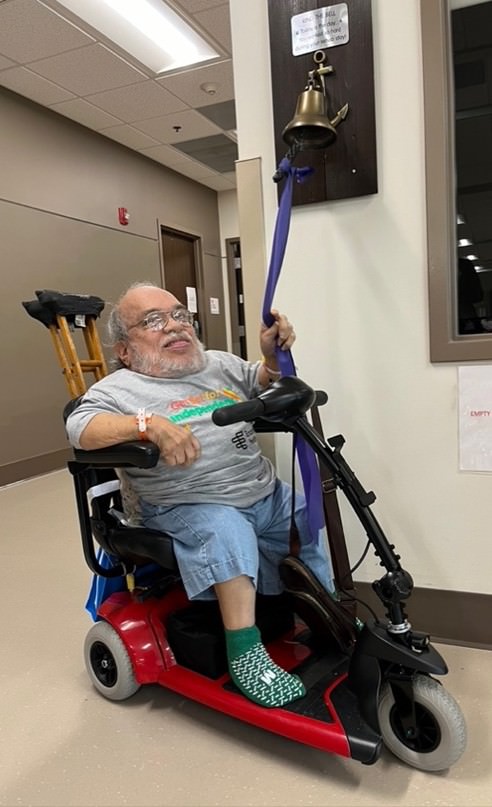
Image description: Robert—a male dwarf wearing jeans, T-shirt, hospital socks and arm band—sits in his scooter with crutches in the holder behind him as he rings the bell with sparkling eyes signaling the end of inpatient therapy.

We had been married 15 years when Robert received physical therapy (PT) after his bilateral hip replacement surgeries. I was impressed with how hard he worked and his therapist hit the nail on the head when she declared he must be a workaholic! I expected the same level of commitment 24 years later when he needed PT again.

Although Robert’s prosthetic hips held up very well, his legs weakened and pain in his ankles and knees made walking difficult, falling frequent, and getting in and out of the car near impossible. So when Robert had his doctor write a PT referral, I was fully on board with helping him achieve his therapy goals. I even sat in on sessions to understand what was expected of him.

Want to subscribe to receive blog updates sign up today!

Robert therapist

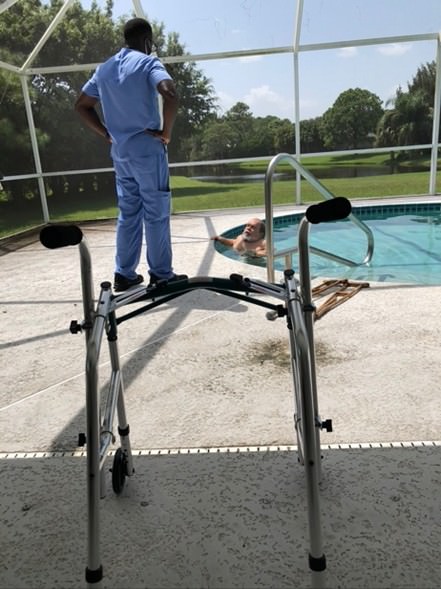
Image description: Robert’s therapist stands—hands on hips—directing leg strengthening exercises in the pool; his walker is in the foreground and crutches lie on the patio next to the pool railing.

His physical therapist was determined to transition Robert from crutches to a walker to save his shoulders and arms from permanent nerve damage and stop him crashing to the ground when his crutches slid out from under him. However, after 60 plus years using crutches, Robert’s resistance was resolute! He only used the walker when the therapist was present and only did his homework exercises when he succumbed to spousal pressure. Consequently, it was no surprise when Robert was dismissed from PT services due to lack of progress.

When a nerve conduction test in Robert’s legs showed chronically irritated nerves in his lower back, we knew PT would help him. But given his low motivation for doing exercises between visits and disdain for the walker, I didn’t support Robert’s return to PT. Eventually Robert took matters into his own hands and restarted at-home PT while I was visiting family in Australia! Despite his assurances that this time would be different, I was skeptical.

We can make our plans, but the Lord determines our steps.”
Proverbs 16:9 (New Living Translation)

After only a couple of months, Robert’s PT services were interrupted by a week-long hospitalization for high blood pressure, infections, pneumonia, and Chronic Kidney Disease. Although he did manage to get in a few walks—using his crutches—with hospital PTs.

Robert walking

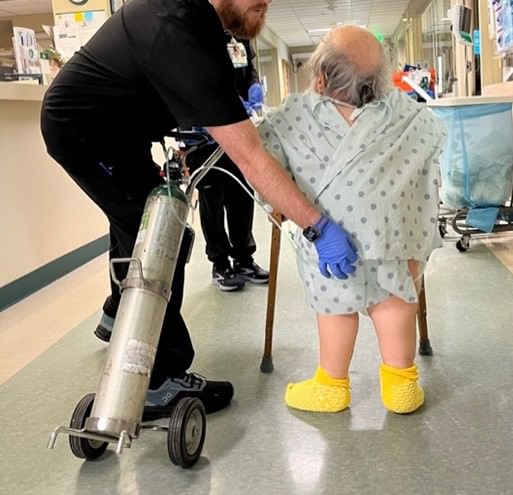
Image description: Robert walking with a hospital PT wheeling an oxygen tank and discreetly closing the backside of his hospital gown.

When Robert was being discharged from the hospital, a referral to an acute rehabilitation facility for intensive PT was suggested. He chose to continue PT at home with Natasha, the therapist with whom he had developed an excellent working relationship. She was very good at distinguishing between excuses for cutting therapy sessions short and his actual need for a break. His complaints that it hurts fell on deaf ears and she was unimpressed by Robert’s resistance to using the walker. Instead of caving when he said with plaintive eyes and a winning smile, “You should see what I can do with crutches,” she burst out laughing.

Robert walker

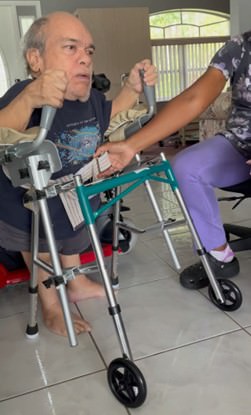
Image description: Robert using his custom walker at home with PT Natasha

But five months later, unwelcome differences in Robert’s therapy transpired when he was admitted to the hospital for ten days, diagnosed with End-Stage Kidney Disease (ESKD), and prescribed dialysis three times a week. This was a major setback. Robert was now so weak he couldn’t independently pull up to a sitting position or support his trunk, and two or three people were needed to transfer him in and out of bed. Walking goals were remote.

Robert PT Aide

Image description: Robert with physical therapist and aide helping him into bed.

I wondered whether Robert was even a candidate for the intensive three hours therapy per day at Encompass, an acute rehabilitation hospital. But the Medical Director—who was also Robert’s personal physician—made an exception for him saying, “after all he is exceptional.”

But God was still directing our steps, just as he did when we first met. In his second week at Encompass, I kept our tradition of giving him a Saint Patrick’s Day card:

“Forty-three years ago today my life changed forever
when I met you at the New Zealand Embassy.
So much has happened since then,
for better and worse,
but God has been with us through it all.
Now as we enter the next phase in our health journey,
I look forward with hope and love for you and our Heavenly Father
who guides our steps and gives us strength for every situation.”

Robert participated in the intensive therapy regimen to the best of his ability with therapists who were both caring and committed to his progress. He rarely complained and displayed good humor when I picked up an orange “thing” on his bedsheet to see what it was. When I told him it was salmon he quipped, “was it swimming?” Not so funny was the day his bed was stripped down to the mattress looking for his lost hearing aid. The search ended when a therapist walked in and spotted the aid in his ear!

In his three weeks at Encompass, Robert advanced from being barely able to sit up and feed himself to sitting up, eating independently, and transferring with one helper to and from the bed to his scooter. He discharged to PT at home where for six months he continued to work on building his strength. Sadly, he was never able to walk independently with either the crutches or the walker. He switched to using his scooter both indoors and out.

To my surprise, Robert never lost his powers of observation. One day he told me, “you have beautiful green eyes.” I was happy to know he still noticed and admired this feature. However, I was stunned another day when he blurted, “your teeth are falling out.” He correctly observed wider gaps between my teeth, but wrongly concluded that I was missing some teeth. I excused his lack of tact to his cognitive decline. And it wasn’t long before I missed his observations whether positive or negative.

Sepsis—secondary to a urinary tract infection—spreading through Robert’s body changed everything. After being hospitalized for another week, he lost so much strength he now needed two people to transfer him to his scooter and lots of pillows to prop him up while seated. Although Encompass accepted Robert back for more intensive therapy, physical therapists reported slow progress impeded by sleepiness and inability to follow PT instructions.

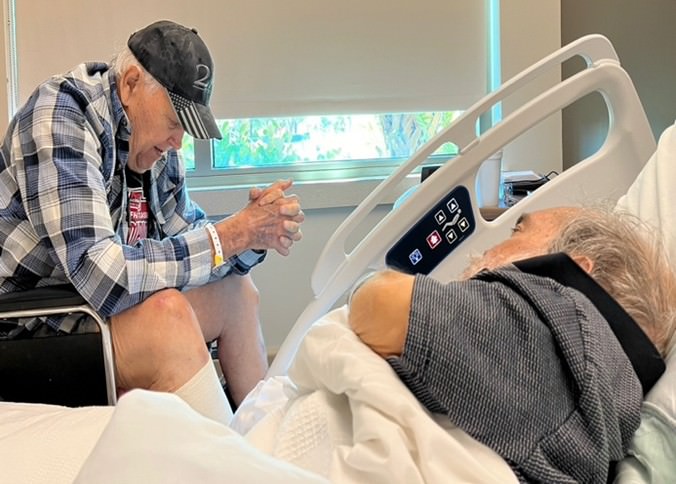
The only positive thing about being an Encompass alumnae was that he was warmly received by staff who remembered his willing participation six months earlier. It also helped that his brother Mickey was a patient at the same time. Although Mickey visited Robert every day, there was little conversation—Robert had become a man of few words and Mickey’s speech was impaired by a third stroke.

Robert reclining

Image description: Robert reclining in the bed watches his brother seated next to him in his wheelchair.

This time Robert’s discharge from Encompass did not involve any talk of him coming home. He was transferred to Solaris for subacute rehabilitation services with only one hour therapy per day. There was little opportunity for progress given the limited time available for PT and two more hospitalizations for respiratory issues related to his ESKD and COVID. Inevitably Robert’s critically ill status led to his discharge from all rehabilitation services and ended his physical therapy journey.

My flesh and my heart may fail,
But God is the strength of my heart and my portion forever
.
Psalm 73:26 (New American Standard Bible)

For more blog posts by Angela Muir Van Etten, go to:

For further discussion on Robert’s physical therapy experiences, you may also want to read Chapter 15, For Shorter or Taller, Closer or Farther in the second book in Angela’s memoir trilogy—“PASS ME YOUR SHOES: A Couple with Dwarfism Navigates Life’s Detours with Love and Faith,” https://angelamuirvanetten.com/pass-me-your-shoes/.

Categories
Until Death Do Us Part

Caregiving with Help

Caregiving main

For I hold you by your right hand—
I, the Lord your God.
And I say to you,
‘Don’t be afraid. I am here to help you.

Isaiah 41:13
(New Living Translation)

Knowing God had a good grip on me was calming when planning Robert’s discharges from hospitalizations to home care with End-Stage Renal Disease (ESRD). Fear and worry were corralled, because I counted on God to help me keep Robert out of long-term institutional care for as long as possible. This post is the story of how God orchestrated people to help me care for him at home with Medicare and private-pay home health services and a groundswell of support from family, friends, and neighbors.

Nurses, therapists, and aides were deployed from a Medicare-certified home health agency.

Want to subscribe to receive blog updates sign up today!

Private-pay caregivers helped with bathing, dressing, laundry, meals, and transfers in and out of bed. Although I canceled caregivers hired from an agency after only a few days due to standard shifts being a minimum of six-hours and Robert’s personal care only taking about two hours. My attempt to assign light housekeeping tasks for the remaining four hours went awry despite being within the scope of work. One caregiver acted like she was doing me a favor when she reluctantly agreed to run the vacuum cleaner while Robert was at dialysis. She expected to be paid for reading and talking on her cell phone. That was the last day she worked for us—I called the agency to cancel future services.

Although the agency did have an option for two-hour shifts, it came with a price penalty. For every hour less than six, the hourly rate increased. In an attempt to locate self-employed caregivers who lived nearby, I posted in our homeowner association’s private Facebook group. The hope was that caregivers who lived in the neighborhood would accept two-hour shifts because travel time was not an issue. Not only did this bring a couple of leads, but it also brought some volunteer help from neighbors. One of them was a recently retired registered nurse who helped me decide to call for an ambulance when Robert was too weak to sit up straight on his scooter for the trip to dialysis. A recommendation from Robert’s physical therapy assistant led us to a private pay aide that I hired for four hours on Sunday mornings while I went to church.

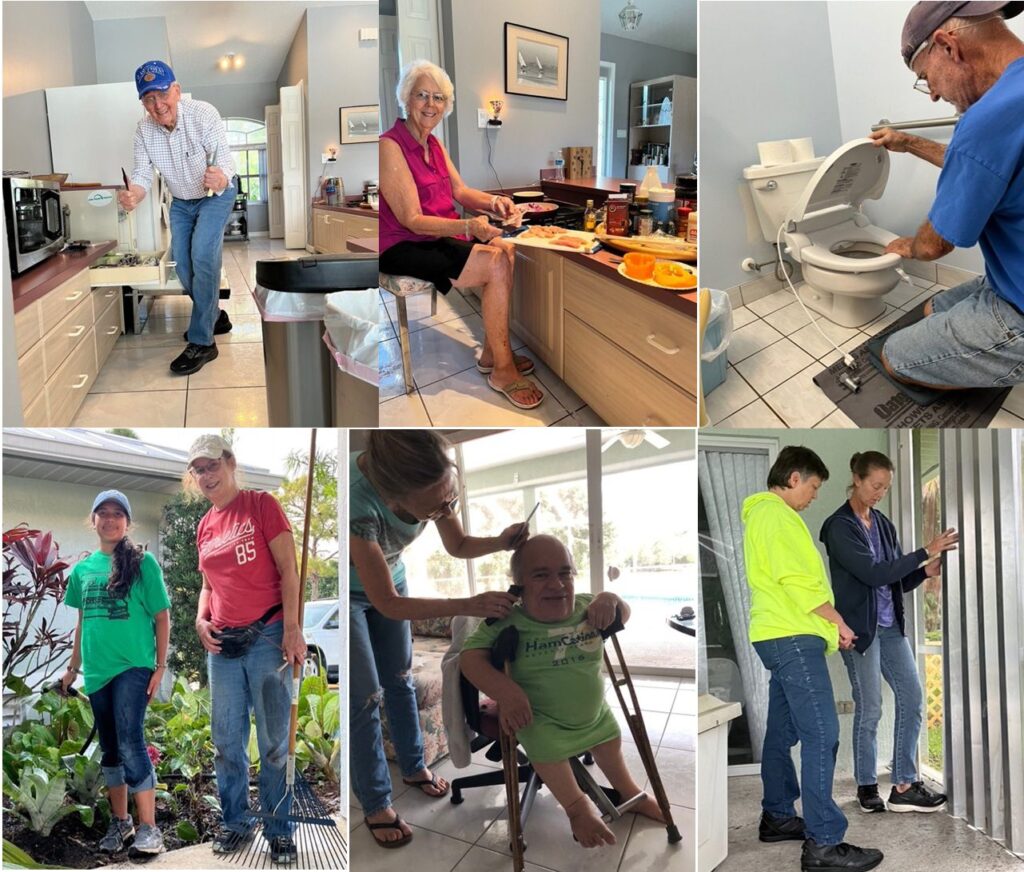
In the Galatians 6:2 spirit of sharing each other’s burdens, Christian friends and family pitched in to help from time-to-time with dishes, gardening, meals, replacing light bulbs and smoke detector batteries, hurricane shutters, salt in the water softener, and other miscellaneous chores. Visitors also helped with tasks relating to Robert’s care, such as assembling a mobility scooter, haircuts, installing a lower toilet and bidet toilet seat, removing furniture to allow for scooter access next to the bed, and replacing a wheelchair tire.

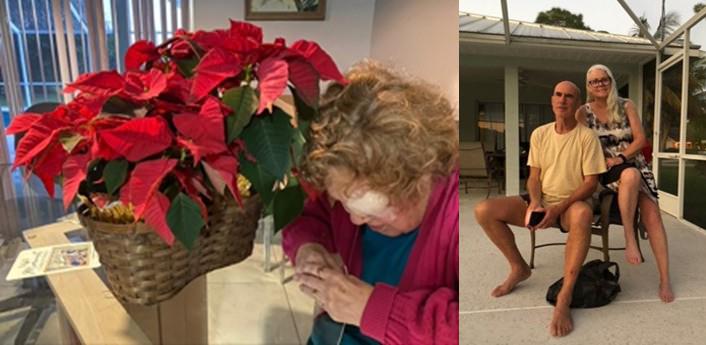
Visitors were also key to providing Robert with socialization, emotional, and spiritual support. Many brought gifts, like flowers and plants; or treats, like Easter eggs and homemade shortbread. Some played games with Robert, like Qwirkle and Uno; others reminisced on past adventures and stories retold at almost every meeting. Robert always agreed for people to pray with him.

Visiting hours were liberal ranging from an hour to a few days. Overnight guests included a church friend from Rochester, New York raising funds to serve as a missionary in Spain; a first-time visit from my High School girlfriend in New Zealand along with her daughter and granddaughter; and cousins from Indiana, Jacksonville, and Las Vegas. All of them brightened our days and took care of their own needs. My girlfriend even managed to get Robert into the pool!

Caregiving r3

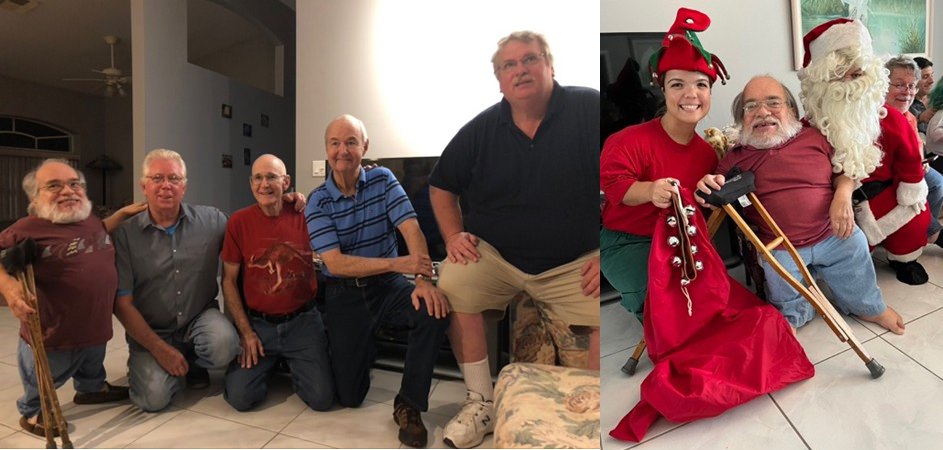
There was no limit as to how many visitors could come at one time. Van Etten Woods continued as the popular venue for reunions of about 30 family members and the 20 or so attending the annual holiday party of our local chapter of Little People of America (LPA). In both cases, the meal was a potluck and helpers came early and stayed late for set up and clean up.

Caregiving r4

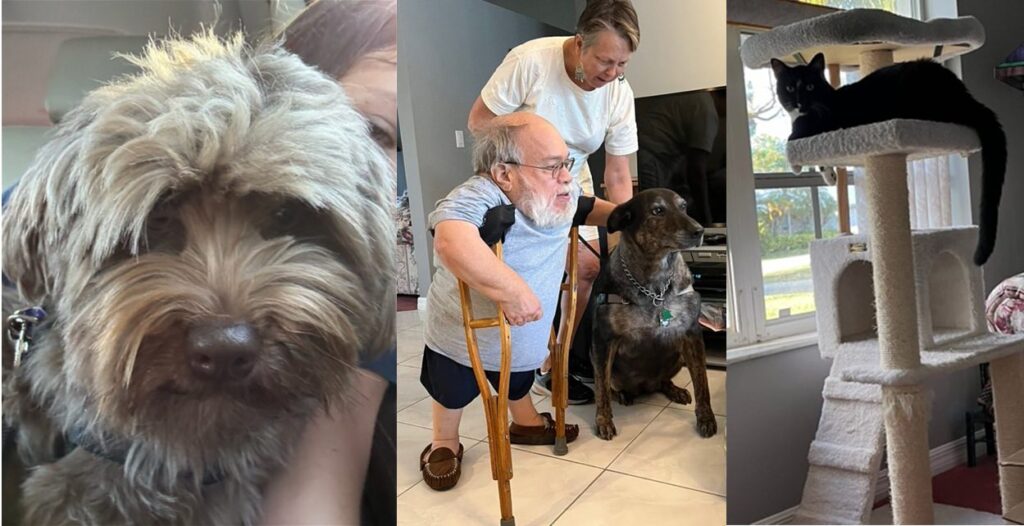
And there was no restriction to two-legged creatures—four-legged animals were especially welcomed by Robert. He enjoyed afternoon visits with dogs—Kit and Frodo, and three days and nights with Puffin, the cat who sheltered with us and his owner while their home was tented for termites.

Caregiving r5

Robert’s niece and two cousins—Brittany, Linda, and Susan—took helping to the next level when they each had charge of one week of his care. Their love and kindness made it possible for me to travel to Sydney, Australia for three weeks to celebrate my 70th birthday with my family. Although this preceded Robert’s diagnosis with ESRD and need for hands on personal care a few months later, his impaired cognition and reduced mobility required protective care and guidance. He was in no shape to join me on the trip, but was agreeable to my going without him.

The magnitude of their caregiving assignment no doubt sank in when they received my detailed email instructions relating to getting in and out of the gated community, garage and house; the garbage schedule; medication management; food and hydration needs and preferences; his Medic Alert button; showering; tips on getting him up from a fall; handling his laundry; house temperature preferences; and supervision in the pool. This still didn’t cover everything. There were followup questions about the garden, lawn, hurricane preparation, and pool and water softener services. My contribution was to simplify their days by not scheduling any appointments for three weeks.

Thank goodness for FaceTime. Our daily calls between Stuart and Sydney took care of unforeseen issues, like the air conditioner malfunctioning. Naturally Robert missed me while I was gone, but he had a blast with all three carers who kept him comfortable and content. Amazingly, a year later Brittany and Susan served as substitute caregivers again when I went to Baltimore, Maryland for two nights and three days.

When I was invited to be the keynote speaker at the annual LPA banquet in Baltimore, I couldn’t imagine accepting the engagement. Robert’s care needs had increased substantially given his ESRD diagnosis which, among other things, required outpatient dialysis three times a week. However, Robert and his family caregivers encouraged me to go. So after prayerful consideration, I went and delivered the most important speech of my life—“Be an Advocate for Positive Change.” I was honored for the opportunity, humbled by those who made it possible, and hopeful that LPA members would believe that change is possible, recognize that everyone has what it takes to be an advocate, care enough to do something, and commit to going out to change the world.

And so what happens when the caregiver is incapacitated? We had three occasions to learn the answer—eye surgery, severe shoulder inflammation, and a vertigo attack:

  • My brother and sister both came from Sydney for ten days to care for both Robert and me when I had Vitrectomy surgery for a hole in the macular and a detached retina.
Caregiving r6
  • A friend came with holistic remedies, a heating pad, and groceries when I was debilitated for a week with right shoulder inflammation and pain.
  • A cousin came with groceries, made Robert’s dinner, and helped him into bed when I had a vertigo attack.

As you can see, God was here to help me in every circumstance through the willing hands of so many dedicated helpers! And for that I am forever grateful.

For details on events only mentioned in this post, you may also want to read other writings by Angela Muir Van Etten:

Categories
Until Death Do Us Part

Caregiving at Home with Love and Faith

Robert n Angela Happy Birthday
Robert and Angela’s final birthday celebration a couple of weeks before sepsis ended Robert’s care at home.

Saint Patrick’s Day 2021 was the 40th anniversary of our first meeting. Robert called me from the bedroom, but romance was not on his mind. Rather he announced not being able to get up from the floor and implored me to bring him the urinal or he’ll pee on the carpet. I grumbled. But providentially my morning devotion had taken me to Jeremiah 32:17:

‘Oh, Lord God! Behold, You Yourself have made the heavens and the earth by Your great power and by Your outstretched arm! Nothing is too difficult for You . . . (New American Standard Bible)

Want to subscribe to receive blog updates sign up today!

Clearly with God’s help I could easily do this for Robert. So why was I annoyed? It was more about him forgetting to bring the urinal to the bedroom than not mentioning the anniversary. Plus, I knew how hard it would be getting him up from the floor, again.

In the next three years, at least eleven 9-1-1 calls brought Emergency Medical Technicians (EMTs) to the house to pick up Robert after a fall and sometimes take him to the ER to check for injuries. Occasionally Robert called 911 or used his medic alert button without telling me. The first I knew was when an EMT tapped on the bedroom window in the middle of the night calling my name, or I walked into the lounge to find several EMTs attending to him.

In an effort to reduce the need for emergency calls, we trialed a power chairlift hoping I could use it to get Robert off the floor. Unfortunately, it wasn’t safe for either of us and we never identified another one that would work. However, we did add bed rails to impede falls and lowered his bed to minimize injury should he still fall out of bed.

In 2021 and 2022, Robert’s main medical issues were high blood pressure (BP), weakness, and bladder spasms. All three were treatable—BP with medication and weight loss, weakness with physical therapy (PT), and spasms with medication and botox surgeries. However, Robert had an issue with portion control; typically only did PT exercises when the therapist was present; and botox had a negligible effect.

Since diet and exercise are both a matter of the will, Robert’s failure to cooperate was a constant source of frustration to me. Consequently, I became the nagging wife searching for ways to motivate him to stay away from the fridge, swim, walk, or do his therapy homework. Usually it was wasted breath. Only when I gave up and brought the matter to God in prayer did anything change. For example, on the morning of May 10, 2021, I was convicted by Psalm 66:18-19 (New Living Translation):

If I had not confessed the sin in my heart,
the Lord would not have listened.
But God did listen!
He paid attention to my prayer.

And in the afternoon, I was blown away when Robert initiated doing a set of exercises!

By the time of our 40th American wedding anniversary in November 2021, love was still in the air. I gave Robert a Hallmark card with these words:

I believe we were meant to work through hard times and learn to overcome and stay strong.
I believe we were meant to love each other, to laugh together, to get better as the days go by.

Robert soon reciprocated with an original Valentine card:

They say love is patient and kind and I know that’s true because of you.
I’ve felt the true comfort of knowing you’re there through thick and thin—even when life’s crazy or I fall short of my best.
I’m a lucky husband and a better man for having you at my side and for having your love in my life.

Indeed I had many opportunities to show my love and grow my patience as the hard times multiplied and intensified:

  • In January 2022, Robert stopped driving due to difficulty getting in and out of his minivan, slow reaction times, and memory issues.
  • In February 2022, Robert developed lower limb weakness due to chronically irritated nerves in his lower back.
  • In March 2022, Robert was diagnosed with mild cognitive impairment.
  • Ongoing bladder issues involved spasms and sudden urges necessitated medication, use of a urinal and absorbent bed pads and underwear.
  • In August 2022, breathing difficulties required ongoing nebulizer treatments.
  • Kidney Disease was diagnosed at Chronic Stage III in August 2022; Severe Stage IV in October 2023, and End Stage V in March 2024.
  • Robert slept a lot and lost his sense of day and night. For example, he called me at 3:00 AM asking for a drink of water.
  • In September 2024 and thereafter, multiple infections stemmed from his urinary tract and dialysis catheter; sepsis stripped him of all but one-or-two words and he totally depended on the scooter for mobility. He needed more care than I could provide at home!

Despite my caregiver role increasing as Robert’s condition decreased, we still strived to preserve as much independence as possible. When he was unable to get onto the regular height toilet, we replaced it with a kindergarten height. When a bottom wiping aid was inadequate, we installed a bidet toilet seat. When this wasn’t enough, I needed extra steel to finish the job manually.

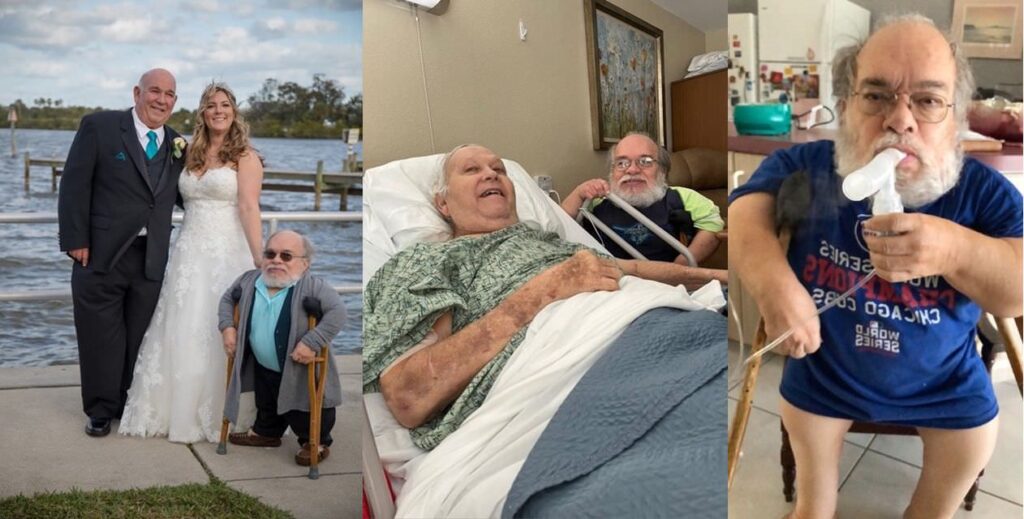
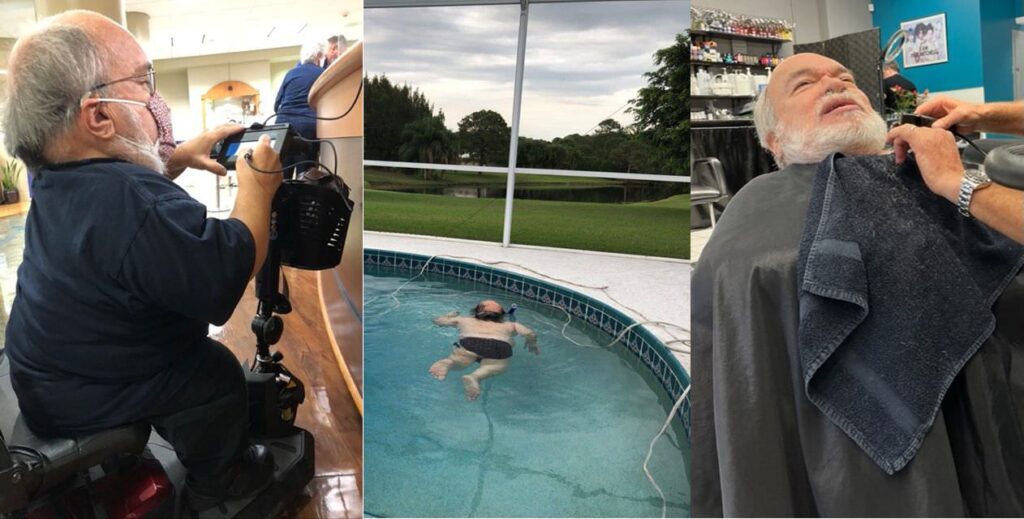
I transported Robert to all appointments—doctor, dentist, lawyer, barber et al.—and sporadic outings to restaurants; visit family; repair hearing aids; and attend high value events like a nieces wedding and a 50th high school reunion. We gave up on LPA weekend trips after having major issues accessing hotel beds and toilets. Church only happened on his good days.

Robert top pics
Robert bottom pics

After the End-Stage Renal Disease diagnosis, preparation for outings took at least two hours for a bed bath; transfer to the scooter; dressing; eating; toileting; and rounding up his glasses, hearing aids, and wallet. Extra time was built in to allow for a final bathroom stop, boarding Hugo—our Wheelchair Accessible Van—and tying down the scooter he was sitting in.

Managing the renal diet and medication were also on my plate. The primary focus was on sodium, potassium, and phosphorus. Limiting how much salt Robert ate was easy because salt was already off our menu. Because dialysis can’t remove much potassium and phosphorus from the blood, levels are best controlled by not eating food with these ingredients in the first place. I relied on renal diet education materials for shopping and monthly blood work results to see when it was safe to eat a small portion of otherwise forbidden food, like bananas, chocolate, potatoes, or nuts. Robert savored the one piece of dark chocolate a day approved by the dialysis center dietitian.

My hardest duties were the ones previously in Robert’s domain—hiring contractors and purchasing or repairing equipment. My first response to the leaking pool pump was to ignore it. Bad idea. It got worse and the pool cleaning guy kept pressuring me to buy a new pump. But through prayer and help from friends and family, I tracked down the manufacturer and he sent me a replacement part for free. I also found the guy who originally installed the timer for the lawn sprinkler which now needed replacing. Thankfully, I knew enough about mobility scooters to troubleshoot whether to repair or replace them when they conked out.

On November 28, 2023—our last wedding anniversary at home—I wrote this message to Robert:

Now as we walk through our bonus years (in our 70s) may we continue to love God and one another. Our future is in His Hands; let us continue to depend on and draw from God’s power and love as we encounter frustration and the infirmities of aging.

And God was faithful to the end.

For details on issues mentioned in this post, you may also want to read other blog posts by Angela Muir Van Etten:

For more information on kidney nutrition, go to:

Categories
Until Death Do Us Part

Dialysis Prayer Walk

Dialysis Prayer Walk

In October 2023, Robert got a preview of medical troubles that awaited him—in 2024, he had five hospital admissions and three ER visits for infections and difficulty breathing. It began with a 3:00 a.m. 911 call that led to a week-long hospital stay featuring his three kidney conditions: absence of a right kidney, multiple cysts causing Acute Kidney Injury, and severe (stage IV) Chronic Kidney Disease.

Prayer was central to navigating Robert’s care. I prayed to the Lord. Church prayer warriors prayed. Family and friends prayed. We all trusted God to give us wisdom for decisions to be made, qualified medical personnel, and provision for his every need.

Want to subscribe to receive blog updates sign up today!

“. . . for we do not know what to pray for as we should, but the Spirit Himself intercedes for us with groanings too deep for words; . . . He intercedes for the saints according to the will of God.” Romans 8:26-27 (New American Standard Bible).

And God was faithful. In answer to our prayers, Robert’s medical needs were met without dialysis. On October 13, 2023, he was discharged to home with oxygen, medication, and home health. Sadly the reprieve was only temporary.

Twenty weeks later, Robert was once again in the ER fighting for his life. His kidney function had virtually stopped and had reached Stage V, End Stage Renal Disease. In response to many prayers, God brought Robert back from the brink of death. However, this time hemodialysis was needed to remove blood from his body, send it to the hemodialysis machine for cleansing, and return the clean blood back into his body.

Dialysis treatment began in the hospital, continued in an acute rehabilitation hospital, and carried over to an outpatient center. However, the transition from inpatient to outpatient dialysis was fraught with frustration. Prayers were needed to overcome the angst caused by the case manager at the rehabilitation hospital. First she dragged her feet in notifying the local dialysis center of Robert’s imminent need for chair time; then she referred me to dialysis centers in neighboring counties saying there was no chair time available in our town. This meant I would have to wait for him at the center three and a half hours instead of returning home during his treatment.

But God took care of the situation. Right when I was at the end of my rope, the Nurse Practitioner from Robert’s kidney doctor’s office appeared. After I told her what was happening, chair time miraculously became available five miles from home!

Before beginning outpatient dialysis, I met with the center manager to discuss the accommodations Robert would need. Given his inability to independently get on and off the dialysis chair, she promoted Robert’s switch to at-home dialysis.

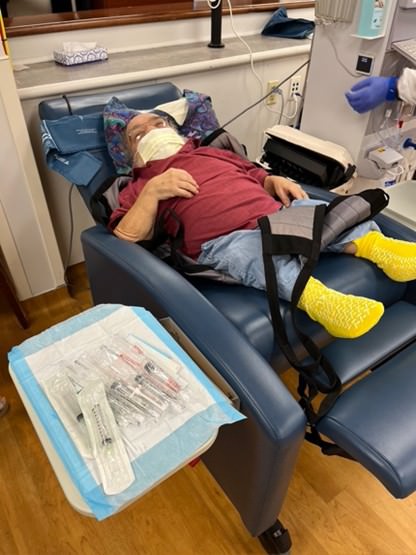
Robert Reclining
Robert reclining in a dialysis chair wearing a mask, burgundy shirt, blue jeans, and yellow socks, with half a dozen ominous looking tubes laid out next to him.

My instinct told me the manager preferred for Robert to be treated elsewhere. Nonetheless, I politely listened to the pitch for Peritoneal Dialysis (PD)—a needle-free at home treatment where waste is filtered from the blood via a solution input into the abdomen using the peritoneal lining. In contrast, hemodialysis uses two needles.

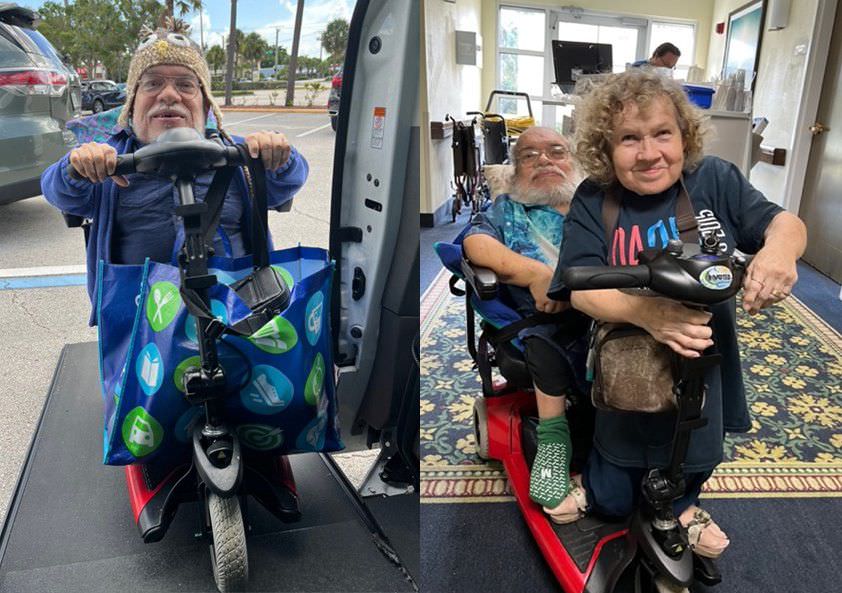
Whatever the manager’s motivation, Robert’s kidney doctor directed that he begin treatment with in-center hemodialysis. She approved using a Hoya lift to get Robert onto the dialysis chair, but disapproved staff stepping outside the building to help him get to and from the van into the center. Initially Robert was able to safely ride his scooter independently up and down the van ramp and across the parking lot to the entrance. However, as his cognitive acuity and physicality declined so did his ability to drive his scooter. How was I going to get him into the center? I couldn’t manually push Robert up and down the ramp in a wheelchair or scooter. This is when God reminded me of a past practice we had of riding the scooter tandem when we only brought one scooter to an event—we raised the scooter tiller to vertical, one of us sat, and the other stood on the scooter platform and drove. So this is what we did. Plus we moved the dialysis bag to hang off the armrest. Problem solved.

lr join
Side-by-side pictures—left, Robert riding his scooter up the ramp to the van wearing a woolen hat and blue cardigan with a large blue bag in front of him; right, Robert seated on the scooter wearing a blue shirt and green and white socks with Angela standing in front of him wearing a navy T-shirt dress, sandals, and hands holding the tiller.

For eight and a half months, Robert and I trekked three times a week to the outpatient dialysis center. He typically emerged from sessions complaining of refrigerator like temperatures, headaches, various aches and pains, and exhaustion. Yet one thing was still intact. His appetite. So we quickly developed two takeout traditions on our way home—Taco Tuesday was a buy one get one free (BOGO) deal and Dunkin Donuts beckoned us on Thursdays despite lacking a BOGO lure. (Believe it not, neither of these treats were renal diet cheats!) Saturdays were open for spontaneity.

Long after the 90-day timeline for the dialysis tunneled catheter in the vein below Robert’s right shoulder had expired, Robert was referred to two surgeons in search of alternatives with less infection risk and minimal needle trauma. However, after evaluating Robert for creation of a dialysis fistula—connecting an artery and a vein—the vascular surgeon rejected him as a candidate for this procedure given his short arms and peripheral artery disease in his legs. A second surgeon approved Robert for a peritoneal catheter placement. However, one week before the scheduled surgery, Robert was admitted to the hospital with sepsis and never recovered sufficiently for the surgery to be rescheduled.

A kidney transplant may have been the ultimate solution to Robert’s vein access issues, but an information appointment was cancelled due to his ER visit for falling out of bed. Likewise subsequent admissions to hospital and rehabilitation facilities squelched further exploration of a kidney transplant.

Hospitalizations were initiated by the dialysis center when Robert passed out during a treatment in October with shortness of breath and a COVID infection in November. In December, two more respiratory episodes led to ER visits. The differential diagnosis lists added “worsening renal failure” and “congestive heart failure” exacerbation.

On December 11, 2024 Robert went to a make-up dialysis session after missing his regularly scheduled treatment the day before. He was miserable. The dialysis social worker could see this and called me to report her conversation with Robert. Knowing his expressive communication was limited, she elicited his responses with a caring comment followed by two questions:

  • I hate to see you suffering like this Robert, do you want to continue dialysis? He answered with a decisive “no.”
  • Do you know what happens if you stop dialysis?” Robert replied, “I will die.”

I did not anticipate Robert’s dialysis ending this way. Nonetheless as his Health Care Surrogate, I honored his choice and thanked God that Robert saved me from having to make the decision for him. God knew how much we could handle and saw we were both close to breaking point.

But He knows the way I take;
When He has put me to the test, I will come out as gold.
My foot has held on to His path;
I have kept His way and not turned aside.

Job 23:10-11 (New American Standard Bible)

You may also want to read:

Categories
Until Death Do Us Part

Institutional Care

Institutional Care

Preface

Two months after the death of Robert, my husband of 43 years, I was asking God to reveal my next move. All my plans came to a halt when he died on December 14, 2024. Everything was on hold. My world stopped!

However, a light bulb turned on for me when reading the book of Deuteronomy. I was struck by what Moses did after 40 years of leading the Israelites out of slavery to the Promised Land. Instead of taking immediate action, he paused before directing the Israelites to take possession of the land. He reviewed their turbulent desert history and recounted how the Lord their God watched over them all along the way.

Want to subscribe to receive blog updates sign up today!

So before making my next move, I reviewed how God had watched over Robert and me during his last year on the planet. As I sorted events into chronological sequence, one thing became clear—I have a lot to say about how God cared for us! So after a five month pause writing for my blog, the first Wednesday of the month will see posts upload in a series on “until death do us part.”

# # # # #
Institutional Care

Robert’s difficulty breathing, recurring infections, and COVID-19 dominated our 2024 calendar with five hospital admissions, three ER visits, and stints in acute and subacute rehabilitation facilities. Altogether Robert spent 23 weeks in institutional care.

The March 2nd hospitalization was the trigger for it all as Robert lay at death’s door with his lungs on the verge of collapse. His survival depended on my consent for him being intubated, put on a ventilator, and beginning dialysis due to his End Stage Renal Disease. In one sense we had prepared for this emergency, a year earlier, when Robert signed a Living Will appointing me as his Health Care Surrogate to make decisions for him in the event he became incapacitated. In another sense, there was no way to prepare for the pain associated with watching Robert’s chest heave up and down as he struggled for air.

But I was faced with the dilemma of knowing Robert would die if I refused consent, or could die if I did consent and the ICU doctor botched it because he had never intubated a Little Person! So Robert’s cousin Susan and I prayed for wisdom and trusted the Great Physician to guide the doctor’s hands. And God heard us. The intubation was successful on the first try and Robert was backed off the cliff when the ventilator started breathing for him. Four days later, the tube was removed and he breathed independently albeit with CPAP and oxygen support.

Robert’s dwarfism added many medical challenges. For example, staff couldn’t insert reliable intravenous (IV) catheters into veins on his arms or hands. The solution was surgical procedures to insert tunneled catheters into veins just below his shoulders—one for dialysis and the other for antibiotic infusions. Unfortunately, when sepsis infection attached to both catheters they had to be removed and reinserted a few days later.

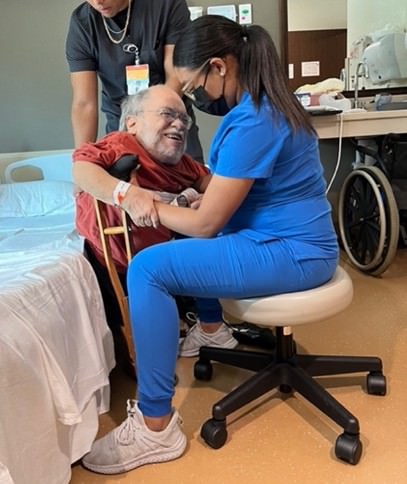
Robert’s 40 plus visitors from family, church, and friends encouraged us both with their presence, gifts, and prayers. A core group of six regular visitors often pitched in with personal care tasks like feeding Robert meals; trimming his beard and moustache; cutting his hair; giving manicures; enjoying onsite events like the Fall Festival and Antique Car Show; and soaking in the sun in the garden.

My daily visits were for a minimum of three hours, but typically closer to six. One rehabilitation resident saw me at the facility so frequently, he mistook me for a resident. In my comings and goings, I savored the beauty of God’s creation by photographing the birds, flowers, trees, and water views on facility grounds. Eating the delicious brownies at the hospital cafe contributed to my picking up a couple of pounds. My Cinderella-like curfew caused me to be home by sunset to avoid being blinded by oncoming vehicle lights.

Visitors were also important players in advocating for Robert’s needs. Food was a common area of concern. Hospital personnel were not good at ensuring Robert’s meals were ordered, delivered, or accessible to him. His core-group visitors often helped him eat when staff were MIA. On one occasion, Robert’s assigned tech was caught lying to a visitor who came to help him eat lunch. He said Robert had already eaten. So why was his untouched food tray sitting in the hall outside his room?

I often advocated for Speech Language Pathologists (SLPs) to modify Robert’s diet restrictions. We shared the goal to prevent Robert from choking, but the divergent opinions of various SLPs gave me confidence to challenge rulings limiting his food to minced and moist or pureed. As his condition deteriorated, I accepted that the texture and thickness of food and liquids should change, but only in step with Robert’s condition not the SLPs overly cautious approach. Food was Robert’s only remaining pleasure.

Given that hospital admissions were traumatizing and lacked continuity due to different nurse assignments almost every day, I sometimes advocated against admission. This happened in early November when Robert was in the ER for a blood clot. Instead of giving my consent to admit him, I asked the doctor what the hospital would do that couldn’t be done in his rehabilitation facility. The doctor said Robert could see a vascular surgeon. But I knew Robert had already seen the vascular surgeon the ER doctor had in mind. After checking with the surgeon, the ER doctor ordered prescriptions to be administered at the rehabilitation facility.

Despite hospital and rehabilitation facilities being covered by the Americans with Disabilities Act, I had to self-advocate for access in and out of one building, an intensive care unit (ICU), and a guest bathroom. The placement of entry and exit buzzers or phones way above my head were barriers to my independent access. Although able to get into a guest bathroom, I struggled to get out using door handles with round knobs instead of levers. The Assistant Director of Nursing agreed to upgrade the bathroom to ADA compliant door handles, but removing the other barriers required time and energy I didn’t have. Thankfully, there were plenty of people around willing to help me.

After sepsis spread through Robert’s body in September, his communication dropped dramatically. He couldn’t make phone calls and became a man of few words. One cousin was happy Robert said his name, but disappointed it was the only word he said. His brother complained, “he won’t talk to me.” But every now and then Robert amazed me:

  • In mid-November after giving Robert a heads up on my scheduling a Hospice information session, he said: “not ok.”
  • In late November when asking Robert what he wanted to name his toy dog, he replied, “woof, woof, woof.
  • The day before he died, I zoom called Robert’s college room-mate. He reached for the phone when he saw Alan’s face and said, “Wow!”
  • The day he died, two cousins got to hear him say, “I love you too.

This retrospective was key to my seeing the hand of God guiding and caring for us both all year long. Consequently, I have confidence that God will care for and guide me through whatever happens next.

Give all your worries and cares to God, for he cares about you.”
1 Peter 5:7 (New Living Translation)

You may also want to read: