Categories
International

The Sun Will Never Set on Little People

World Map
Image by Pete Linforth from Pixabay

When Billy Barty founded Little People of America (LPA) in 1957, little did he know it would spawn dozens of LP organizations world-wide. As a result, his October 25th birthday is recognized as International Dwarfism Awareness Day. I join the global celebration with the release of PASS ME YOUR SHOES: A Couple with Dwarfism Navigates Life’s Detours with Love and Faith.

In 1981, when I traveled from New Zealand to the United States on a Winston Churchill Fellowship in the International Year of ‘Disabled Persons,’ I never dreamed that seven months later I would marry Bobby Van Etten.

Want to subscribe to receive blog updates sign up today!

In my Fellowship study of American disability civil rights laws and public education programs designed to improve attitudes towards people with disabilities, Bobby was 1 of the 40 disability leaders I interviewed. We met at the NZ Embassy in Washington, D.C.

“When Bobby walked towards my desk . . . he was all smiles. For some inexplicable reason my heart beat faster as he got closer to me. I don’t remember a thing he said. I was unnerved by the proximity of his brown eyes gazing directly into mine. We were eye-to-eye because we were the same exact height.” (Pass Me Your Shoes, p. 12.)

This connection was an unplanned part of my Fellowship research! When people ask me if it was love at first sight I say, “No, it took two weeks.”

Our union attracted international media because Bobby was President of LPA and I was President of Little People of New Zealand (LPNZ). Bobby also gave a keynote address to LPNZ on United Nations Day (October 24). A United Press International headline paralleled our wedding to Prince Charles and Princess Dianna who married a few months earlier. “‘Royalty’ of Little People Exchange Wedding Vows.” And the LPA Today September issue reported,The sun will never set on little people.”

Thankfully our marriage took a different path than the royals, but has not been without complications. However, on this international day of celebration I thank God for the blessing of our international adventures:

  • Meeting Little People from eight countries at the first international Little People conference in Washington, D.C. (1982)
  • Attending an LPA national conference in Puerto Vallarta, Mexico (1985)
  • Speaking at the conference of the Restricted Growth Association (the English equivalent of LPA) in Worthing, West Sussex, England (1990)
  • Australian media coverage of “Dwarfs Don’t Live in Doll Houses” (1992)
  • New Zealand media coverage of my keynote speech at the annual CCS conference attended by NZ Little People (1992)
  • Attending numerous receptions at LPA national conferences to welcome international guests with dwarfism
  • Our friendships with many parents who adopted LP children from various countries around the world
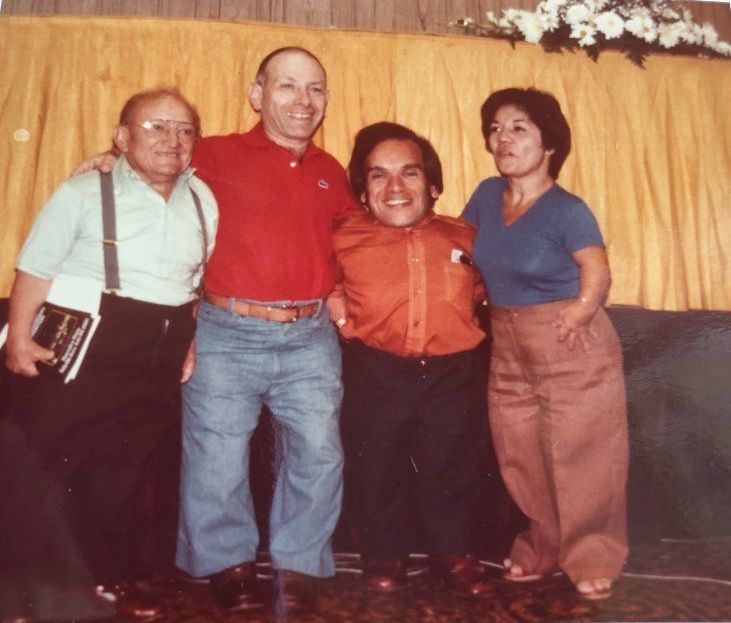
  • Meeting Billy Barty at the LPA 25th anniversary conference in Reno, Nevada (1982).

LPA 25th Anniversary

LPA Officers

From the left:
Billy Barty, Founder
George Baehm, Vice President
Robert Van Etten, outgoing President
Mary Carten, President elect


Now it’s your turn. Please comment on how you became aware of dwarfism in other countries.

And for another way to further your awareness, buy Pass Me Your Shoes: A Couple with Dwarfism Navigates Life’s Detours with Love and Faith at Amazon.com, Barnes & Noble, Books a Million or other retailers. For more information, go to my website at https://angelamuirvanetten.com/

Author Angela Muir Van Etten

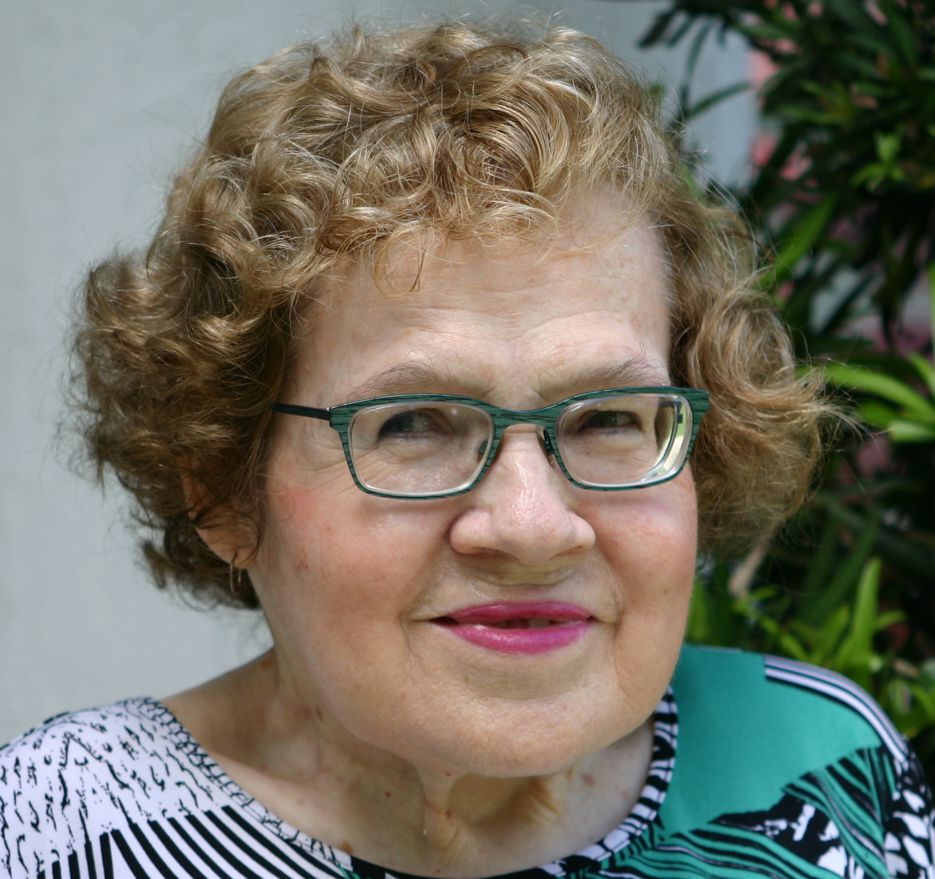
Angela Muir Van Etten, a dual citizen of New Zealand and the United States, qualified as a lawyer in both countries and served as national president of both Little People organizations. As a professional, Angela has written law books for lawyers and religious liberty articles for nonlawyers. Disability advocacy was her focus when employed by a Center for Independent Living and volunteering for LPA. Press in Australia, Canada, Germany, New Zealand and the United States have interviewed Angela about her writing and advocacy pursuits.

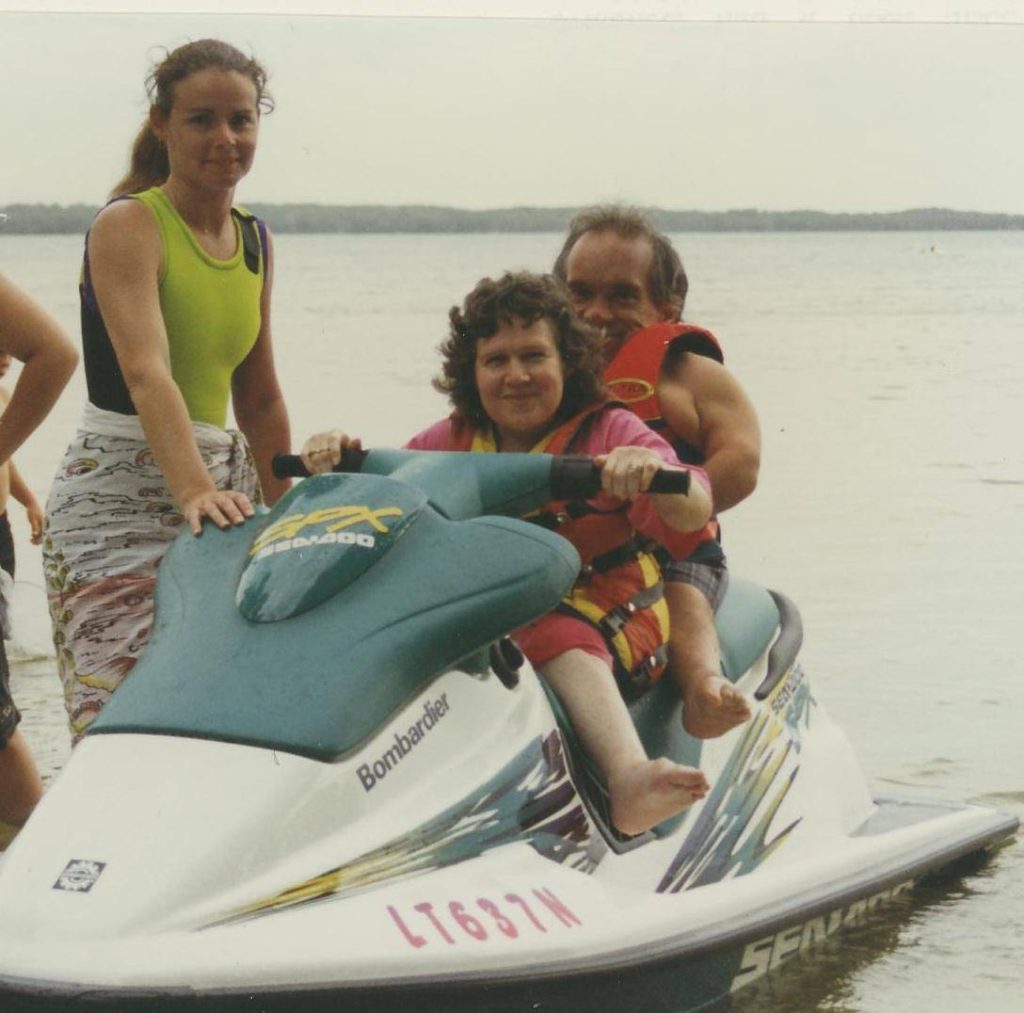
Jet-Ski Contest (open from October 26 to November 7th midnight)

Jet Ski

Enter the jet-ski contest to win a $25 digital Amazon Gift Card.  
Write a comical photo caption of 10 words or less for this vacation photo of Angela and Robert on a jet-ski in Myall Lakes, New South Wales, Australia.
Email your caption to angela@angelamuirvanetten.com with the subject line: jet-ski caption contest
Angela’s sister Deborah (standing in the pic) will choose the funniest caption. Look for the announcement of the winner on my website at https://angelamuirvanetten.com on November 9th.  

Categories
Disability Rights

Car Rental and Marriage Mulligans

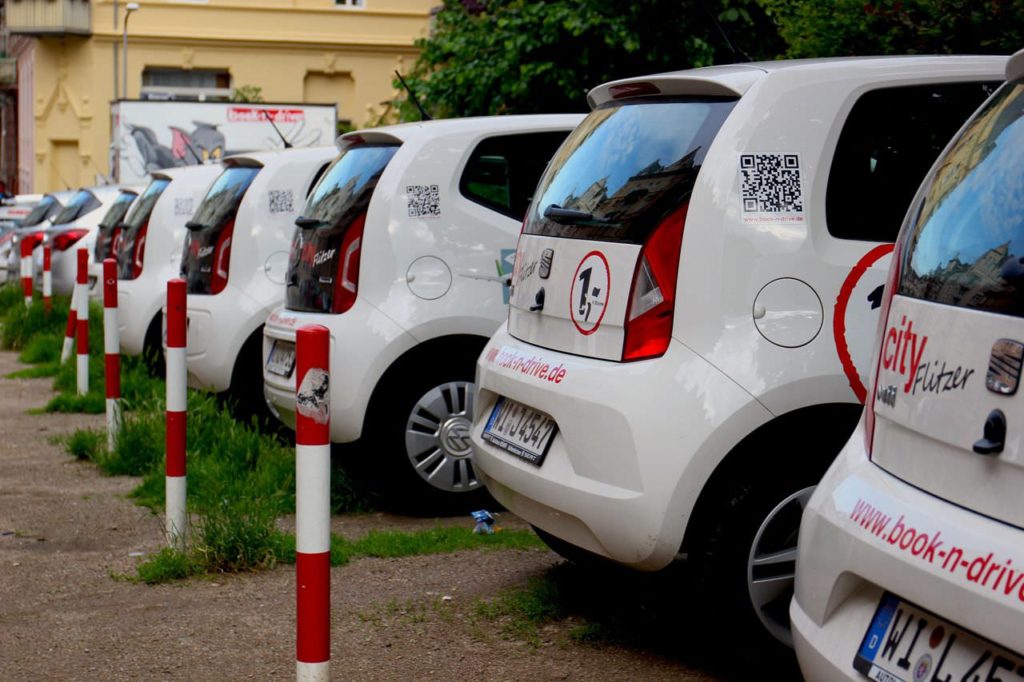
Car rental
Image by kenny2332 from Pixabay

Golfers understand the importance of a mulligan i.e. when a player gets a second chance to replay a specific move. National Mulligan Day was observed on October 17th, but if you’re like me, you can think of many times in real life when you needed a second chance. Two times when this played out dramatically for me was when renting a car and in our marriage.

The first time we rented a car was in 1986 when we returned to New Zealand to visit family. When Robert went to pick up our reserved car, the clerk refused delivery. Unfortunately, prior to our arrival my father told the car rental agency that we were little people and the company directed the clerk not to rent us the car.

Want to subscribe to receive blog updates sign up today!

Thankfully, our vacation plans were salvaged when the clerk rented us the car because my father co-signed on the rental agreement.

Four years later, we experienced our car rental mulligan on the way to speak at a national conference of the Restricted Growth Association—the English equivalent of LPA. At Heathrow airport in London, we waited at the designated place for a ride to the car rental agency. The driver told us we were in the wrong line, but loaded our bags into his van with obvious skepticism. After the debacle at the NZ car rental agency, in this mulligan, we pre-paid the car rental and held disclosure of our stature until arrival at the service desk. We counted on the difficulty of refusing service to someone standing there with a pre-paid voucher for a reserved car.

When we presented our voucher, the young clerk disappeared behind closed doors. A more senior person emerged and asked how we planned to drive the car. Robert showed him the pedal extensions and seat cushions we had brought with us. Despite their doubts, management reluctantly agreed to let Robert install the extensions. But to be sure we were not an insurance risk, the manager insisted on driving around the block with us before letting us loose on English roads with his vehicle.

Marriage counseling also gave us a mulligan in our relationship that in 1993 was on the brink of divorce. Robert’s workaholism and 90-hour work weeks left me alone on nights and weekends. I had to negotiate to get Robert to do anything with me. I was living in the worst of two worlds—the loneliness of being single with the constraints of being married.

Thankfully, we got our “do-over” when John, our church Pastor of Family Life and Counseling, helped us understand the dynamics of our relationship. He worked with us on our relationship vision, childhood frustrations, a partner profile, unfinished business, and communication. We even wrote pledges to each other on issues relating to responsibilities, scheduling, spending time together, and supporting one another. We saw the light of day in our marriage, starting with a renewal of our marriage vows and taking the word divorce off the table.

Please comment with any mulligans you’d like to share.

This post was adapted from Pass Me Your Shoes: A Couple with Dwarfism Navigates Life’s Detours with Love and Faith. Order your copy today at Amazon.com, Barnes & Noble, Books a Million or other retailers.

Contest (open from October 19-31 midnight)

Enter the car rental contest and be entered into a drawing for a $25 digital Amazon gift card.  Post, tag me, and share on social media a selfie holding your copy of Pass Me Your Shoes with a thumbs up or thumbs down gesture next to an actual or virtual car rental sign. To qualify for a second entry into the drawing, make a comment explaining the reason for the thumbs up or thumbs down. Look for the announcement of the winner of the drawing on my website at https://angelamuirvanetten.com on November 2nd.  

Categories
Humor

One Smile Worth 2,000 Chocolate Bars

Smile
Image by klimkin from Pixabay

Did you know one smile can stimulate the brain as much as 2,000 chocolate bars? Indeed, many studies show that smiling and laughter improve our health, relationships, productivity, and possibly extend our lives. Even though World Smile Day was last week, let me help you get someone to smile any day. Share one of the following stories from PASS ME YOUR SHOES: A Couple with Dwarfism Navigates Life’s Detours with Love and Faith.

When I immigrated to America from New Zealand, I wondered if we spoke the same language. Despite using the same words, people often misunderstood:

Want to subscribe to receive blog updates sign up today!

  • When I said, “ushers use a torch in a theater” people imagined a flaming fire instead of a flashlight.
  • When I asked Bobby if he wanted cotton to tie the roast he was stuffing, he could not see how cotton would be of any use and asked instead for thread.
  • When asking for a biscuit, I got what looked like a bun and tasted like a scone. I should have asked for a cookie.

Six months after starting a new job, a kindergarten height toilet suddenly appeared in the bathroom. I was transported into the fantasy land of Goldilocks and the Three Bears: one for papa bear (wheelchair height), one for mama bear (regular height), and one for baby bear (my height). I had to ask, What did the company think I’d been doing all this time when I needed to use the bathroom?

At a family Christmas gathering it was too late to go tree shopping so my brother and brother-in-law foraged for a tree on a dark country road. They returned with a beauty that impressed everyone. Well, at least Dad enjoyed it until he went to golf. His grief was the inspiration for our Scruples game addendum question: You are a member of a golf club. Your son chopped down a prized tree at the 18th hole. Do you tell that the tree is in your living room?

And one more story not in the book.

Five years after Robert narrowly missed a head-on collision on our honeymoon, he dared to drive in New Zealand again. Instead of his wife yelling “PULL LEFT, PULL LEFT,” upon arrival at his destination a stranger yelled, “THE PIGS, THE PIGS.” Robert was mystified, what pigs? So, the lady showed him the clothes “pegs” placed on the car roof when the clothes were taken off the clothes line. To Robert’s American ear, pegs sounded like pigs.  Can you imagine how slowly Robert was driving for those clothes pins to still be on the roof?

So I recommend having fun, because there is nothing better for people in this world than to eat, drink, and enjoy life.” Ecclesiastes 8:15a (New Living Testament).

Read the five star customer reviews at Amazon.com and Barnes & Noble and order your copy of Pass Me Your Shoes today. For more information, go to my website at https://angelamuirvanetten.com/

Contest (open from October 12-26 midnight)

Start having fun by entering this week’s contest to win a $25 digital Amazon Gift Card.  In 100 words or less, share a funny story or photo with a caption about dwarfism or disability. The story or photo should be about yourself or a family member. Post your story or captioned photo as a comment on my October 12th One Smile Worth 2,000 Chocolate Bars blog post at https://angelamuirvanetten.com/blog/. All submissions will be entered into a drawing.  Subscribe to my blog for a second entry into the drawing. I will announce the winner as a comment on this post on or about October 26th and on my Facebook Author page at https://www.facebook.com/MuirVanEttenTrilogy.

Categories
Open

“Pass Me Your Shoes” Book Launches in Dwarfism Awareness Month (DAM)

Pass Me Your Shoes

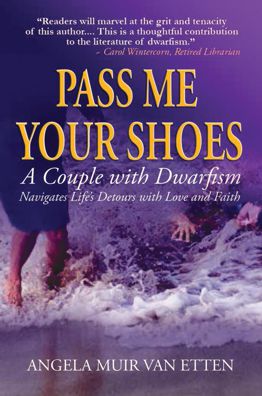
Thirty-two years have passed since I published Dwarfs Don’t Live in Doll Houses covering my years as a single person.  Now the sequel—PASS ME YOUR SHOES: A Couple with Dwarfism Navigates Life’s Detours with Love and Faith—has released during DAM in October 2020.

Find out what happens when our marriage is complicated by dwarfism, different cultures and careers, dishonesty, discord, and discrimination. No-one skates through life without suffering some kind of hardship— abuse, betrayal, cancer, divorce, environmental, financial, grief, health, and so it goes through the alphabet.

Want to subscribe to receive blog updates sign up today!

As a result, people reading this book whether or not they have dwarfism, another disability, or know someone with a disabling condition will—

—relate our challenges to their own.

—experience many emotions, including: (1) joy and laughter in our love story and humorous adventures, (2) fury and frustration for frequent accounts of discrimination; and (3) empathy for relationship struggles and surgeries.

—be encouraged to persevere in tough circumstances.

—aspire to the grit and tenacity we found to succeed in life and love.

—be warned that poor decisions can lead to lasting and painful consequences.

—learn how to live every day with hope and confidence in God’s strength, love, and mercy in all circumstances.

For several years we moved from state to state looking for job stability and a place to put down roots. Our common height of three-feet-four-inches was not a common interest that could hold the marriage together. Yet, through it all, God provided new opportunities, kept us together, and close to loving family and friends.

Whether our hardships are the same or different, all can respond to the message of hope and love we offer in Pass Me Your Shoes. For us, the key was in looking to the LORD God as our strength, rock, deliverer, refuge, support and salvation. You cleared the ground under me so my footing was firm. ∞ Psalm 18:36 (the Message).

Need more persuasion that this book is a good read? Here’s a sampling of endorsements: 

  • “This book provides a thoughtful contribution to the literature of dwarfism.” Carol Wintercorn, Retired Librarian
  • “I pray that . . . anyone who is daunted by a tough circumstance will find inspiration to pursue their dream.” Lee Fielder, former Pastor of Tropical Farms Baptist Church, Stuart, Florida
  • “With great frankness, Angela relates the challenges and triumphs she has faced in marriage, family, health and career. Along the way, we learn profound lessons from her great humor, strong faith and abiding love.” Diane Tomasik, Retired Journalist and Communications Professional

Please also read the five star customer reviews at Amazon.com and order your copy of Pass Me Your Shoes during DAM. The book is also available at

Barnes and Noble, https://www.barnesandnoble.com/w/pass-me-your-shoes-angela-muir-van-etten/1137737056?ean=9780998464862 and

Books a Million, https://www.booksamillion.com/p/Pass-Your-Shoes/Angela-Muir-Van-Etten/9780998464862?id=7948378273836

For information “About the Author” go to my website at https://angelamuirvanetten.com/about/

Enter Contest to Win
(open from October 5 to November 14 midnight)

Post, tag me, and share on social media a selfie holding or reading your copy of Pass Me Your Shoes. The first 100 people to also email a copy of your selfie to angela@angelamuirvanetten.com will receive a free Dwarfism Awareness Month wrist band and an autographed bookplate to paste in your book.

Categories
Little People of America

How My Life Would Be Different Without LPA

Cups

Image by congerdesign from Pixabay

  • I would not have married a President.
  • Local LPA communities would not have welcomed me when I moved from New Zealand to Virginia to Maryland to Ohio to New York to Florida.
  • I would not have enjoyed so much hospitality from LPA members opening their homes for meetings.
  • I would not have been a guest in so many modified LP kitchens and seen how to modify my home for greater comfort and safety.
  • I would not have been on the advocacy teams that defeated dwarf tossing in Chicago, Florida, and New York.

Want to subscribe to receive blog updates sign up today!

  • Conservative Rush Limbaugh and Liberal Howard Stern would not have criticized me in a radio broadcast on the same day for suggesting that Little People have a “cause.”
  • I would not have talked to so many reporters.
  • I would not have attended 28 national conferences in 20 states and four countries.
  • I would not have received an LPA education scholarship.
  • River rafting in the afternoon and modeling my wedding dress in the evening would never have happened.
  • I would never have read so many great books written by people with dwarfism.
  • I would never have used a scooter to extend my endurance and long term joint maintenance.
  • ATMs and credit card readers on gas pumps at my local gas station would still be out of my reach.
  • I would have earned fewer frequent flyer miles.
  • I would have stayed in fewer hotels.
  • I would have missed the free advice from medical experts in dwarfism.
  • My T-shirt wardrobe would be deficient.
  • I would have missed meeting other Little People with my diagnosis.
  • I would have got a lot more sleep.
  • I would have fewer friends.
  • My photo albums and newspaper clippings would not feature Little People.
  • I would not have met so many celebrities.
  • I would not have met so many Little People from all over the world.
  • I would not have seen an LP toddler grow from jumping up and down on my water bed to graduating from college, and getting married.
  • Free time would be a reality not a concept.
  • I would not have spent so many weeks of my life in meetings and become proficient with Robert’s Rules of Order.
  • I would not have read LPA Bylaws or cared enough to try and change them.
  • I would not have laughed and cried so much.
  • The opportunity to encourage parents to raise their child with dwarfism with the same expectations and boundaries as their other children would have been lost.
  • I would not have learned the lessons that come from being in the majority.
  • I would have missed being in the LP melting pot of diagnoses, gender, ethnicity, nationality, economic and faith backgrounds.

This post was adapted from a 2005 LPA Today article. For additional insights, go to Amazon.com and order your copy of my book—PASS ME YOUR SHOES: A Couple with Dwarfism Navigates Life’s Detours with Love and Faith—a new release during Dwarfism Awareness Month in October 2020.

Categories
Disability Rights

REGISTER TO VOTE, THEN VOTE AND MAKE IT COUNT

Vote


Image by amberzen from Pixabay

Are you registered to vote? National Voter Registration Day on September 22, 2020 is a good day to check. If you’re thinking why bother, read on to find out why voting matters for both constituents and election workers.

Constituent Voters

V ─ VOTE because federal laws—the Americans with Disabilities Act and Help America Vote Act—protect the voting rights of people with disabilities.

Want to subscribe to receive blog updates sign up today!

O ─ ONE vote can make the difference between winning and losing an election. Google it and you’ll see. Tie votes have been broken by pulling a name out of a hat, a coin toss, or drawing the highest card. Don’t surrender your vote to chance! Did you know that, in the 2018 midterm election, 20% of voters either had a disability or lived with someone who had a disability? i.e. more than Hispanic/Latino voters. Vote and be sure that our powerful voting bloc is heard.

T ─ TOUGH choices in troubled times is no excuse for not voting. Tear through the trial of long lines or people not wearing masks, and vote early or by mail.

E ─ EDUCATE yourself on candidate platforms, referendums, and proposed amendments.

R ─ REGISTER to vote prior to rolls closing for the November general election. If you don’t know the registration cut-off date, find the date in your State by clicking on this link, https://www.vote.org/voter-registration-deadlines/

S ─ SERVE as an election worker. If you need an accommodation, ask for it. I served as an Inspector giving voter passes at eight primary or general elections with two accommodations—my adjustable height Ergo Chair for Little People and a block of wood. Yes, you read that right, a block of wood! The block was placed under the back of my assigned Electronic Voter IDentification (EVID) machine tilting it forward so I could read the screen.

Election Workers

V ─ VALUE differences in each unique voter.

O ─ OFFER help, but allow voters to choose their own helper—a friend, family member, or an election worker. If help is accepted, ask how you can help and wait for instructions. Don’t insist on helping if the offer is refused.

T ─ TRAINING is mandated to promote access and participation of individuals with disabilities. Local disability advocates are ideally suited to conduct this training. For ten years, I provided disability sensitivity training to election workers on terminology, communication, respect, and access issues.

E ─ EQUAL access to facilities and equipment is required. This includes the opportunity for private and independent voting. Accessible voting machines—equipped with earphones and other modifications—must not only be in the precinct, but must also be ready to use.

R ─ RESPECT a voter’s pace and space.For example, don’t pat or reach over a voter’s head.Allow a voter to move and speak at their own pace.

S ─ SPEAK with a typical voice volume, tone and subject matter.  People who are blind are not deaf. People with dwarfism are not children. People with intellectual disabilities understand what workers say about them.

Almost time to order your copy of Angela Muir Van Etten’s book—PASS ME YOUR SHOES: A Couple with Dwarfism Navigates Life’s Detours with Love and Faith—which releases during Dwarfism Awareness Month in October 2020.

Categories
Hospitality

Welcome to Our Home

Welcome to our home
Image by Robert Fotograf from Pixabay

Offer hospitality to one another without grumbling. ∞ 1 Peter 4:9 New International Version)

Hospitality is an opportunity to deepen relationships and help one another.  It doesn’t take a big, fancy house to share a meal or offer a bed for the night. We learned this as newly-weds in a one bedroom apartment and continue the practice 39 years later in our larger custom-built home. 

Membership in Little People of America (LPA) and having family and friends separated by thousands of miles has given us many opportunities to welcome people into our home. In recent times, it also helps that we live in Florida—a great vacation destination and escape from northern winters.

Want to subscribe to receive blog updates sign up today!

LPA’s mission—to improve the quality of life for people with dwarfism—is largely achieved through a network of people with short stature, family members, and professionals who support and encourage one another. Hospitality is a big part of how this is achieved. LPA members open their homes for local chapter meetings and welcome those visiting from out-of-town. Churches encourage home fellowships where people are accepted, encouraged, and loved. Families and friends enjoy a special bond maintained by spending quality time together. What better place than in your home?

As Little People with a limited number of steps in our day, my husband Robert and I developed our own brand of hospitality. After a grand tour of our home that includes showing the location of food and supplies, guests are encouraged to make themselves at home and help themselves. In our first year of marriage when we lived in Baltimore, our proximity to Johns Hopkins Hospital allowed us to shelter LPA families of hospital inpatients or outpatients returning for follow-up appointments. The special adaptations we’d made in our apartment also gave parents ideas on how to modify their homes for their child with dwarfism. We also hosted a boys’ weekend retreat when a couple asked us to help their son who was having difficulty adjusting to his size.

Robert organized the boys weekend to include swimming, pizza, a Star Trek movie, and the boys helping to cook breakfast. Billy—the inspiration for the retreat—had started the weekend making excuses whenever he was asked to do something, “because he was the smallest.” Well, in the company of five little people he’d definitely picked a losing argument. By Sunday, Billy’s perspective had improved and he stopped making references to his size. More than 25 years later, we learned that the boys retreat had made a big impression on “Billy.” The revelation occurred at the wedding of Mr. Bill Klein whose bride, Dr. Jennifer Arnold, had been the flower girl at our Florida wedding in November 1981. Who could have imagined that the two children whose lives we separately touched in Florida and Maryland would meet as adults, fall in love, and star on TLC’s reality show, The Little Couple.

Extending hospitality to others has enriched our lives. How have you benefited from giving or receiving hospitality? This post was adapted from Angela Muir Van Etten’s book—PASS ME YOUR SHOES: A Couple with Dwarfism Navigates Life’s Detours with Love and Faith—a new release in October 2020.

Categories
Dignity

Read A Book Day

Reading a book by the water
Image by Bibliotheek Bornem from Pixabay 

September 6th is National Read A Book Day. Who knew? The idea is for people to spend the day reading an enjoyable book which reportedly improves memory and concentration and reduces stress. Older adults who spend time reading are said to slow cognitive decline.  

The promoters of Read A Book Day encourage us to sit back, relax and read a book from a featured list of books. But if you’re like me, you already know what you want to read. The books might be sitting on your bookshelf or on your buyer wish list. Whatever the case, I would like to add a book to your recommended reading list—“LOOKING UP: How a Different Perspective Turns Obstacles into Advantages.

Want to subscribe to receive blog updates sign up today!

This is a perfect choice for Read A Book Day because many Amazon customers found it hard to put the book down and some read it straight through in one sitting. It’s a must read as attested by Cherie Blair, Bono, Michael Bloomberg, Scott Harrison, Sheryl Sandberg, Clay Scroggins, and many others.

Michele L. Sullivan is the author of this Harper Collins Leadership book published in February 2020. As the first female President of the Caterpillar Foundation, Michele describes how looking up to people from the vantage of four feet was not just a physical phenomenon, but a leadership practice of elevating the people around her. Michele skillfully intertwines her childhood lessons of embracing her physical differences as a person with metatropic dysplasia, a rare type of dwarfism, with adult lessons of growing on the inside. She credits her parents for teaching her that she was more than her size and that life was not all about her. LPA (Little People of America) helped Michele with self-acceptance and interdependence.

Michele attributes her gift of empathy and compassion shared with foundation beneficiaries, partners and staff around the world to her family and the people she met in LPA and during five summers of orthopedic surgeries and therapy. She introduces the book with her most potent life lesson—learning to expand her view of others saying, “When we learn how to elevate the people around us to discover and champion what’s noble and beautiful and powerful in them we uncover the path of impact in one another’s lives.”

Indeed, Michele successfully passed along this lesson to readers of her book. I agree with the many customers who describe the book as inspirational, but not for the reason you might think. Michele’s story does not inspire people to admire her courage for all that she has endured, but—through laughter, tears, and example—inspires people to change their perspective and to see people for who they are on the inside.

The book is packed full of life changing advice and wisdom about the value in every person, including ourselves. Looking Up is not just the name of a book, but a principle to follow that changes how we see and impact people.

To read more of Angela’s writings, subscribe to her weekly blog at https://angelamuirvanetten.com and coming soon is her own book—PASS ME YOUR SHOES: A Couple with Dwarfism Navigates Life’s Detours with Love and Faith—due to release on October 1st.

Categories
Accessibility

Marketing to People with Disabilities

Businesses spend billions to attract customers with marketing, advertising, decorating, and mood enhancers. But how many dollars are spent attracting 20% of the marketplace, the last frontier, the people with disabilities? Whatever the amount, it’s not enough. More is needed to open doors for people with disabilities excluded from shopping in stores, eating in restaurants, sleeping in hotel rooms, going to the theater, etc. Poor disability parking and curb cuts; impossible to open entrance doors; untrained sales staff; out-of-reach facilities; blocked aisles; and inaccessible bathrooms all add up to lost business and potential lawsuits under the Americans with Disabilities Act.

Want to subscribe to receive blog updates sign up today!

Businesses can stop discriminating and start improving their bottom line by understanding the questions people with disabilities ask when choosing where to take their business. It boils down to four things—the invitation, the welcome, the comfort level, and the satisfaction.

This invitation doesn’t come in the mail. It’s an assessment people with disabilities make in the parking lot with questions like the following: Is there any disability parking and how far is it from the entrance? Is there a curb cut onto the sidewalk and how close is it to the door? Can I open the door or is there enough customer traffic that I can count on another customer to open a heavy door for me?

The welcome doesn’t demand red carpet treatment, but calls for the same service offered to others. Unwelcome service occurs when (1) a customer is ignored because of the assumption they are not a buyer; (2) customer service representatives—hidden behind high counters out of sight, sound, or reach—don’t even see the person with a disability; and (3) places designed with a low counter fail to assign staff to work that station or use it for their own equipment. And what better welcome than to see people with disabilities providing service to customers.

The comfort level of people with disabilities involves accessible seating and bathrooms, for example. The ability to drink anything depends on an accessible bathroom and the wisdom of eating anything after going to the bathroom depends on the ability to reach the soap and water. Comfortable seating often determines whether I will return to a restaurant. I need to sit at a table instead of a booth so I can adjust the distance of my chair from the table. I need staff to treat me as an adult and not offer me a child’s menu or booster seat. My palate demands more than chicken fingers or hotdogs and my 40 inches in height does not indicate child size dimensions. 

Satisfaction is achieved when customers are able to move around the store, reach and pay for selected merchandise, and use necessary facilities. People with disabilities often choose not to return to a business when payment options are inaccessible, display racks block the path of travel, carry bags are out of reach, and hotel beds require mountain climbing skills. 

Marketing to people with disabilities makes good business sense.

Look for the October release of my book—PASS ME YOUR SHOES: A Couple with Dwarfism Navigates Life’s Detours with Love and Faith—which discusses what happens when God intervenes in a marriage complicated by dishonesty, dwarfism, discord, and discrimination.

Categories
FAQs

How Old Are You?

Frequently Asked Questions
Image by Gerd Altmann from Pixabay 

This is a common question for an adult to ask a youngster. And a common answer is for the child to signal their age with fingers extended on one hand. So, when a three-year-old looks an adult Little Person in the eye it’s no surprise the child asks, “how old are you?” The adult’s response, however, can’t be counted even with all fingers and toes.

Nonetheless, it’s the ideal time to teach a child that age is unrelated to size.

Young kids aren’t so much interested in the actual age as is in knowing whether I’m a kid ready to play with them in the sandpit. They intuitively know I’m not the same as them. I used to calculate the age of the parent in the vicinity and say something like this, “I’m old enough to be your mother.” Although now I have to say, “I’m old enough to be your grandmother.”

The child usually accepts my answer and moves on to something else. It’s the parents who cringe at the exchange. Take, for example, the mother and child riding with me on an elevator. This child discerned that I was an adult and said, “look mommy there’s a little grandma.” The mother was mortified and could not wait to exit at the next floor. I told the mother not to worry, I was used to children calling me little and added, “it’s the grandma part that hurts.”

The curiosity does not end with little children. Not so long ago, a nine-year-old girl in a kids’ church program asked me, “so just how old are you?” A typical question, but the timing was surprising given that she had known me for a year. I entered the danger zone and said, “so how old do you think I am?” Her answer, “NINETY!” In that moment, she elevated me from grandma to great grandma status. It also confirmed that children have no idea how to assess the age of adults. Thankfully, I am decades away from that milestone.

Now adults know that it’s impolite to ask an adult how hold they are. Right? Well, people with dwarfism know that you can’t count on people being polite. Over the years, many adults have asked me how old I am. How I answer depends on the situation. For example, when another passenger waiting in an airport lounge asked my age, I said to him, “are you planning to tell me how old you are?” He immediately realized the impertinence of his question and explained that he had a grandson with dwarfism and was interested in knowing if he had a “normal” lifespan. He didn’t really want to know my age, but wanted to know how long his grandson could expect to live. This was not a time for me to stand on etiquette, but rather an opportunity to allay his fears and help him understand that the answer lay in his grandson’s type of dwarfism.

This post was adapted from my 1988 book, Dwarfs Don’t Live in Doll Houses, coming soon as an e-book. Used print books are available on Amazon.com.