Categories
Medical

Replacing Body Parts

Hip scar

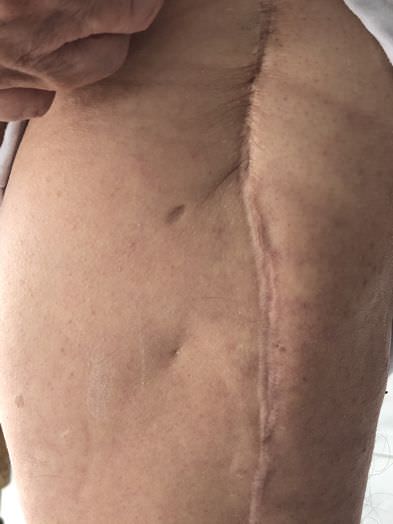
Pain, joint deterioration and hairline fractures in both hips dictated Robert’s use of crutches. For months, the morning sound of his crutches clip-clopping around the house substituted for my alarm clock, except for the inability to set the time for when I was ready to get up. But clearly it was time to schedule hip replacement surgery.

Although we lived in Rochester, New York, Robert scheduled surgery at the Cleveland Clinic in Ohio given their hip replacement expertise and dwarfism experience. But our gratitude for health insurance that covered out-of-state surgeries dissolved when my employer switched to an HMO health plan that favored in network surgery. Our prayers of desperation were answered favorably when the HMO agreed that going out-of-state was medically necessary.

Want to subscribe to receive blog updates sign up today!

Robert prepared himself mentally for surgery by snorkeling at John Pennekamp Coral Reef State Park in Key Largo, Florida. Although immediately surrounded by a fearsome school of barracudas, he blew extra bubbles when they didn’t mistake him for a meal! Robert’s spirits were lifted when he found the 16-foot underwater statue, Christ of the Abyss, with Jesus’s arms reaching out to remind Robert of His presence.

In physical preparation, Robert donated two units of his own blood. He also shared a medical article on anesthesia and dwarfism and refused any anesthetic until the anesthesiologist assured him she had read the article. In spiritual preparation, I found strength in Scripture:

Some boast in chariots and
some in horses,
But we will boast in the name

of the LORD, our God.

Psalm 20:6-7

Twenty-four years ago today, God answered our prayers. Robert returned to his hospital room after the surgery high as a kite tanked up on three pints of blood and morphine. He repeatedly shared God’s blessing with the transporter and greeted me with enthusiasm.

On his way to his first physical therapy session, a disheveled, unshaven Robert asked me, “How do I look?” I answered, “Wonderful. You look better and better every day.” A single male nurse overheard the conversation and said, “Every man should have a wife like you.”

When the medical social worker was making discharge plans, she asked about arrangements for airlifting Robert from Cleveland to Rochester. She was dumbfounded to learn that our plan was for me to drive the 250 miles with Robert reclined on the back seat with pillows, a water bottle, and urinal. No problem. Robert’s 40 inches in length easily fit across the back seat, hospital staff helped him into the vehicle in Cleveland, and church friends helped him out in Rochester. These friends also set up bathroom accommodations—a handgrip, support rails, and a platform around the toilet so that his legs didn’t dangle.

Once Robert recovered from the shock of a two-week house arrest, he made good use of his computer working at home and doing our taxes online between therapy and nurse visits. We thanked God then and now as his prosthesis remains stable.

What is your experience with body part replacements?

This is a condensed version from chapter 15 in “Pass Me Your Shoes.” For a full account, go to https://angelamuirvanetten.com for several retail links to the book and subscribe to my weekly blog.

Categories
Character

“If You Can Be Anything, Be Kind”

Kindness
Image by Prawny from Pixabay

For 13 years, I lived in a city that was twice designated as “the kindest city in America,” first in 1940 and then in 1992. Rochester, New York earned this moniker in 1992 when university students pretended to accidentally drop something, need change, or be disabled and needing assistance. The title went to Rochester because more people went out of their way to help than in 35 other cities studied.

When Readers Digest reported this story in July 1994, the kindness trait was attributed to the transformation of the city more than a century earlier when evangelist Charles G. Finney held religious revivals in Rochester in 1830, 1842, and 1856. When thousands, across all social classes and ages, converted to Christianity the moral character of the city changed for the better and people lived to do good.

Want to subscribe to receive blog updates sign up today!

I no longer live in Rochester or know the current character of the city, but I do know that God shows kindness to all people regardless of whether they follow Him: the sun comes up every morning, birds sing, flowers bloom, the list is endless. Likewise, God gave us all the capacity to be kind. Yes, everyone. Wherever we live, whatever our faith, we can be kind to one another. “Kindness is a gift everyone can afford to give.”

Kindness to a complete stranger, a family member, or a coworker makes the world less caustic and more caring. February 17th, #RandomActsOfKindnessDay, encourages kindness. According to actor Morgan Freeman, we can change the world one random act of kindness at a time. And the world surely needs changing!

We can all share examples of how a simple act of kindness made our day. I have certainly benefited from neighbors showing me kindness by bringing in my garbage bin from the end of the driveway, dragging fallen palm fronds to the vegetation pile for pick up, or helping to lift or carry something heavy. Church and family members have been kind in too many ways to count. Plus, “I have always depended on the kindness of strangers.” This is true for me when grocery shopping, pumping gas, or retrieving luggage from an airport baggage carousel. But Tennessee Williams gets credit for the quote. 

So this February 17th how will we show kindness to people with disabilities? Sometimes a smile is all it takes. According to William Arthur Ward, “A warm smile is the universal language of kindness.” Other ideas include:

  • Allowing someone with a mobility impairment to jump ahead of you in the line
  • Helping someone in distress like the driver who pulled over to help a woman whose front wheel on her wheelchair slid off the sidewalk and got stuck in a garden
  • Calling someone who is staying safe at home during the pandemic
  • Donating to a thrift store that employs people with disabilities
  • Volunteering at a food bank serving people whose disability income does not put enough food on the table

For more of my writings, go to https://angelamuirvanetten.com where you can subscribe to my weekly blog, find several retail links to my book—“Pass Me Your Shoes”—and get updates on the Fall 2021 publication of the third book in my dwarfism trilogy, Always An Advocate.

Categories
Disability Rights

Vigilante Policing of Disabled Parking Spaces

Disabled Parking

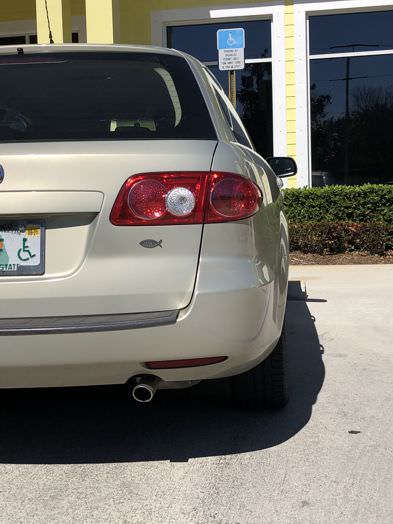
My mouth was dry as I anticipated my name being called to appear before the traffic court magistrate. Even though a law school student at the time, this was no legal clinic assignment. Nope, I was there defending myself. My offense? Parking without a disability placard or license tag on my vehicle in a space reserved for people with disabilities. Hard to believe since I had a placard, but I was ticketed because it wasn’t on display. Thankfully, the magistrate took one look at my 40-inch stature, said “this has to be a mistake,” and dismissed the charge.

Want to subscribe to receive blog updates sign up today!

My experience is ironic given how many people violate disability parking laws without getting caught. So many without a placard or license tag block access aisles to an accessible parking space making it impossible to open doors wide enough to load a wheelchair or to put down a van lift. Others have all kind of excuses for parking in reserved spaces—”I’m just unloading, I’ll only be a few minutes, there’s nowhere else to park.” Some offenders are just plain obnoxious and park wherever they want maybe even to protect their flash car from getting scratched.

But what about the vehicles with placards and license tags driven by people who don’t appear disabled? When there’s no sign of a wheelchair or walker, vigilantes often challenge these drivers for illegal parking. This assumption is prejudicial to those with invisible disabilities that do qualify for disabled parking privileges due to breathing or heart conditions, pain, extreme fatigue, and/or impaired mobility. One woman reported getting two to four comments a week, people yelling at her, leaving notes on her windshield, knocking on her car window, or calling her a liar when she explained she had two prosthetic legs. Should she have pulled up her trouser leg to show them?

Nondisabled drivers who chauffeur a passenger who is eligible for disabled parking are also subjected to dirty looks and inappropriate challenges for lawfully using disabled parking.

So what does this mean for the vigilantes who police disability parking violations? Fair enough to confront those whose vehicle is missing a disabled parking placard or license tag, but unfair to accost a driver who doesn’t look disabled. It’s not our job to question whether the driver is disabled or to assume fraudulent use of a placard. Instead, when fraud is suspected, report the vehicle’s license plate and placard number to the police and/or your state’s Department of Motor Vehicles.

The police are equipped to investigate fraudulent cases where placards are borrowed from someone with a valid permit, issued based on false information, or counterfeited. The penalties for fraud are severe with fines as high as $10,000 for a felony, jail time up to six or 12 months for a misdemeanor, community service, and restrictions on professional licenses. 

So how do you handle those you perceive to be illegally parked in spaces reserved for people with disabilities?

For more of my writings, go to https://angelamuirvanetten.com where you can subscribe to my weekly blog, find several retail links to my book—“Pass Me Your Shoes”—and get updates on the Fall 2021 publication of the third book in my dwarfism trilogy, Always An Advocate.

Categories
Etiquette

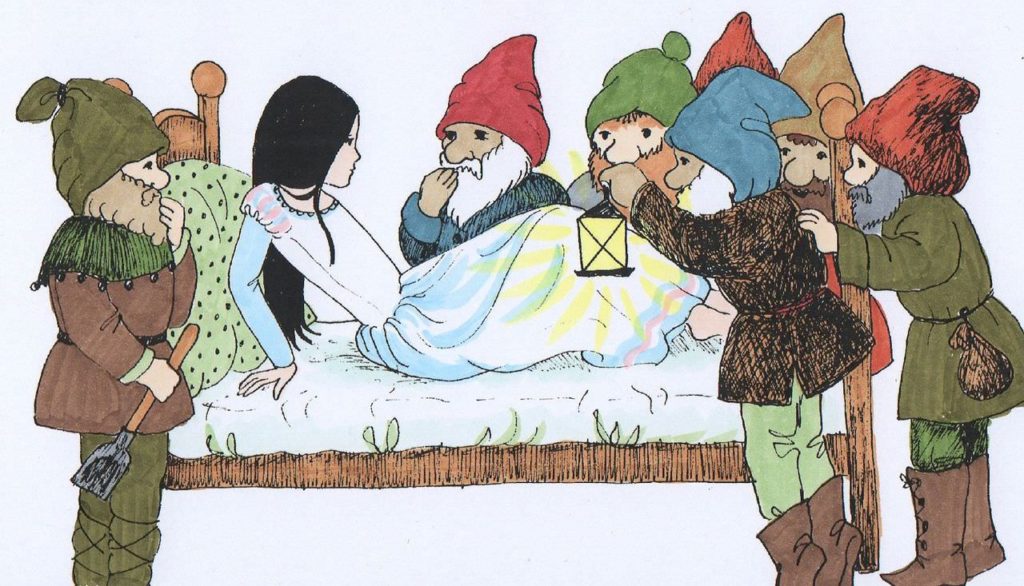
Impact of Snow White’s Fictional Dwarfs on Actual Dwarfs

Snow White
Image by Ina Hall from Pixabay

More than 200 years have passed since the Grimm brothers were inspired by European folklore to write “Little Snow-White.” But it was Disney’s release of the first full-length animated feature film—“Snow White and the Seven Dwarfs”—on February 4, 1938 that etched this fairy tale into popular culture. Seventy years later, the American Film Institute ranked the movie among the 100 greatest American films and the greatest American animated film of all time.

So how does the film and its’ progeny rank among 21st century dwarfs? Thanks to members of the Dwarfism group on Facebook, my question—“if and how ‘Snow

Want to subscribe to receive blog updates sign up today!

White and the Seven Dwarfs’ has affected your life”— was answered with many comments that meshed with my own experience. For several little people who had seen the movie or a pantomime as a child, it was our first time seeing other dwarfs. Some of our parents explained that when we grew up we would be short just like the dwarfs in the play; others figured this out on their own. But we all felt like we weren’t alone in the world.

Several little people reported simply enjoying the movie for what it was—a fairy tale, a humorous cartoon. They never gave it another thought. My husband Robert enjoyed his kiss on the cheek from Snow White when she spotted him, a dwarf, in the crowd at a Disney parade. Another fellow has fun watching people’s reactions when he wears shirts that have Grumpy on them with various slogans.

For others, the movie has bad memories attached to it: ridicule; name-calling; singing or whistling “Heigh-Ho” as they walk by; being tagged with one of the dwarf names; or hearing smart remarks like, “I didn’t know Snow White had eight dwarfs.” When our average sized friend Carol walked into a restaurant with several little people including her husband and son, she overheard patrons saying, “Who does she think she is, Snow White?”

The stereotypes associated with the seven dwarfs is also damaging. The notion that true life dwarfs are destined to be cast as one of the dwarfs in a pantomime performance of Snow White is insulting. This is especially a problem in the United Kingdom where panto is hugely popular at Christmas and little people are told about this job opportunity. Many assume our size makes us suited to this role regardless of whether we can act, sing, or clown. My husband Robert and I experienced something similar when we met for lunch in a restaurant and the maître d’ assumed we were part of the traveling Muppet Show entourage. He was appropriately embarrassed when Robert informed him that he was an engineer and I was a lawyer.

Performance is a viable choice for talented dwarfs, but dwarfs who qualify in a profession, trade or some other business don’t belong on stage and should not bow to such pressure.

How does this compare with your experience?

For more of my writings, go to https://angelamuirvanetten.com where you can subscribe to my weekly blog, find several retail links to my book—“Pass Me Your Shoes”—and anticipate the summer 2021 publication of book III—Always An Advocate—in my dwarfism trilogy.

Categories
Accessibility

ADA Compliance Challenge Continues

Cleveland Clinic Counter

January 26, 1992 is an often overlooked date in the 30-year life of the Americans with Disabilities Act (ADA). Although July 26, 1990 deservedly receives most of the fanfare for this disability civil rights law, January 26th is the date when the ADA went into effect. In other words, no-one was held accountable for ADA violations for 18 months after the law was passed. This delay was designed to allow for public education on ADA’s nondiscrimination mandate in private employment practices, state and local governments, public accommodations, and telecommunications. So how successful was that initial public education period? Let’s take a look at public accommodations for this assessment.

Want to subscribe to receive blog updates sign up today!

For the most part, ADA compliance in public accommodations has been a contentious process of people with disabilities giving notice of a public access violation and the owner or lessee complaining that they didn’t know there was a problem. Believe it or not, this is still happening 28.5 years after the ADA went into effect! Ignorance of the law is never a good excuse and, in these cases, deserves no extension of time to put things right. If this sounds harsh, remember disability access is only required in new construction, if alterations are made, and when readily achievable in existing facilities.    

People with dwarfism and disabilities have a long way to go before achieving equal access in public buildings and facilities. There are so many reminders of how much work remains to be done:

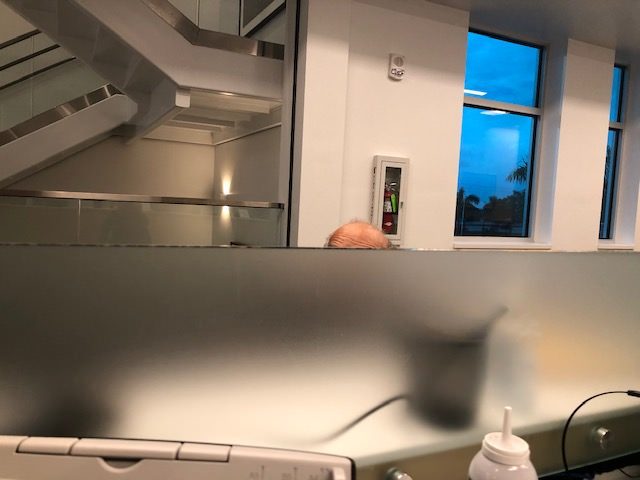
  • A medical facility, opened in 2020, installed a patient reception service desk that impedes communication between the patient and customer service representative. My attempt to walk behind the desk for eye-to-eye contact was blocked as a security violation
  • A restaurant service counter installed at an accessible height is loaded up with equipment and service is delivered at a counter so high the server and a customer of short stature or wheelchair user can’t see one another. When confronted, management denied any ADA violation 
  • A once accessible entrance door into an office building was made inaccessible when the glass door was replaced with hurricane glass making it too heavy to open
  • Bathrooms in a newly renovated building have inaccessible faucets and a door knob instead of a handle
  • Staircases have useless or missing handrails
  • Trains, taxis and ride share services often cannot be boarded
  • Poor elevator maintenance or no elevator at all
  • Inability to move around in a store due to blocked aisles or inaccessible paths of travel
  • Car rental establishments refusing to allow use of pedal extensions
  • Service animals are refused admission  
  • And so much more

As discouraging as this list appears, it’s important to remember how far we have come in the last 30 years. Equal access in public places is more prevalent and, where absent, is enforceable. The challenge is for people with dwarfism and other disabilities to claim our rightful place in society and be ready to monitor and demand enforcement of the ADA when it is denied.

Are you ready to challenge ADA public access violations?

For more of my writings, go to https://angelamuirvanetten.com where you can subscribe to my weekly blog, find several retail links to my book—“Pass Me Your Shoes”—and anticipate the summer 2021 publication of book III—Always An Advocate—in my dwarfism trilogy.

Categories
Dignity Disability Rights

“Death with Dignity” Laws Deadly to Disabled

National Sanctity of Human Life Day—on January 22—celebrates the value of every human life from the pre-born to the grave. We are familiar with threats to the unborn, but what about the seniors and people with disabilities at risk of dying from physician assisted suicide?

“Death with dignity,” as physician assisted suicide is euphemistically called, is legal in Washington, D.C. and eight states—California, Colorado, Hawai’i, Maine, New Jersey, Oregon, Vermont and Washington—by statute and in Montana by a court ruling. And the momentum is building. Indiana, New Mexico, New York, and Virginia all have bills pending in 2021.

Want to subscribe to receive blog updates sign up today!

The coalition of groups opposing physician assisted suicide span the political spectrum from right to left: pro-life groups, faith-based organizations, national disability groups, and medical organizations. I’m represented in multiple places on this spectrum, and support the reasons disability groups and leaders give for opposing laws designed to cut our lives short.

1. It’s a financial not a medical decision
The legalization of assisted suicide is a deadly mix with our broken, profit-driven health care system, where financial pressures already play far too great a role. Direct coercion is not even necessary. If insurers deny, or even merely delay, approval of expensive, life-giving treatments, patients will, in effect, be steered toward assisted suicide, if it is legal.”
Marilyn Golden, Senior Policy Analyst, Disability Rights Education & Defense Fund

2. Abuse of elders and people with disabilities is a growing, but often undetected problem, making coercion virtually impossible to identify or prevent.

3. Doctors are fallible and wrongly predict how long a terminal patient might live. This causes people to give up on treatment and accept a premature death.

4. People who ask to die could be treated for depression or given better palliative care instead of lethal drugs.

5. Some see physician assisted suicide as a duty and the only way to stop being a burden to loved ones.

6. Intractable pain is often used as the main reason for physician assisted suicide laws. Yet, Oregon death doctors haven’t reported pain as being in their patient’s top five list.

7. For anyone dying in discomfort, palliative sedation is legal in all 50 states.

8. The requirement that physician assisted suicide be limited to people who are terminal and give voluntary consent is not enforced or investigated.

9. Disability advocates have long known that ‘quality of life’ is code for ‘Better Dead Than Disabled.’ Thankfully, on March 28, 2020, the federal Health and Human Services, Office of Civil Rights, warned that policies that deny treatment based on quality of life judgments are discriminatory and unlawful.

10. Seniors and people with disabilities don’t need to die to have dignity. We reject society’s view that people who deal with incontinence and other losses in bodily function lack dignity.

I can attest that disability is not a fate worse than death. What do you think?

In preparing this post, I acknowledge the resources provided by the Disability Rights Education and Defense Fund at https://dredf.org/public-policy/assisted%20suicide/ and Not Dead Yet at https://notdeadyet.org/disability-rights-toolkit-for-advocacy-against-legalization-of-assisted-suicide.

For more of my writings, go to https://angelamuirvanetten.com where you can subscribe to my weekly blog and find several retail links to my book, “Pass Me Your Shoes: A Couple with Dwarfism Navigates Life’s Detours with Love and Faith.”

Categories
Transportation

Which Animals Fly for Free?

Service Dog
Image by Paul Brennan from Pixabay

Ever traveled on a plane seated next to a passenger with a yappy dog? Maybe even a miniature horse. Chances are you’ve been on board with one of the 319,000 service animals that airlines transport annually given the Air Carrier Access Act mandate that foreign and domestic air carriers not discriminate on the basis of disability.

Well, as of today (January 11, 2021), you can expect to see a change in which animals fly for free and which ones pay their way as pets. Under a revised U.S. Department of Transportation (DOT) rule, dogs of all breeds and types are exclusively recognized as service animals—and fly for free—

Want to subscribe to receive blog updates sign up today?

if they are individually trained to do work or perform tasks for the benefit of a qualified individual with a disability. Miniature horses and emotional support animals no longer qualify as service animals, in the context of air travel, and will be treated as pets subject to more restrictions and fees.

The DOT made the rule change fully aware that removing emotional support animals from the service animal class was a contentious issue with no perfect solution likely to satisfy all stakeholders. Here’s why they made the rule change anyway:

(1) the increase in service animal complaints from passengers with disabilities;

(2) the inconsistent definitions among Federal agencies of what constitutes a “service animal;”

(3) the erosion of public trust in legitimate service animals due to requests to transport unusual species of animals onboard aircraft;

(4) the increasing frequency of travelers fraudulently representing their pets as service animals; and

(5) the increase in misbehavior by emotional support animals—including urinating, defecating, growling, and in some instances, harming people and other animals at the airport or on the aircraft.

Of the approximately 15,000 comments in response to the Notice of Proposed Rulemaking, more than 10,000 concerned the transport of emotional support animals. About one-third of the comments favored excluding emotional support animals from the service animal definition and treating them as pets. The two-thirds who opposed emotional support animals being treated as pets instead of service animals highlighted the needs of those with a wide range of serious mental and emotional disabilities for whom medication is ineffective in relieving stress, anxiety, and depression. The low income of many in this class of disability would also make flying unaffordable given what airlines charge for pets.

Among other things, the new rule allows airlines to require—

—passengers to submit forms related to the service dogs Health, Behavior and Training and, for flight segments of eight hours or more, to attest that the dog has the ability either not to relieve itself on a long flight or to relieve itself in a sanitary manner.

—a service animal to fit on their handler’s lap or in their foot space on the aircraft.

—a service animal to be harnessed, leashed, or otherwise tethered in areas of the airport that they own, lease, or control, and on the aircraft.

There is so much more in this final rule published on December 10, 2020. You can find it in the Federal Register at 85 FR 79742, https://www.federalregister.gov/documents/2020/12/10/2020-26679/traveling-by-air-with-service-animals.

Your comments on this controversial rulemaking are welcome.

For more of my writings, go to https://angelamuirvanetten.com where you can subscribe to my weekly blog and find several retail links to my book, “Pass Me Your Shoes: A Couple with Dwarfism Navigates Life’s Detours with Love and Faith.”

Categories
Disability pride Medical

Viewing History Through Prism of Current Events

March of Dimes Poster Boy

When checking out of the grocery store recently, I was asked if I’d like to add another $5 to my bill for the March of Dimes. I politely declined. I could afford it, but the organization offends my pro-life views.  Even my recollection of an archival picture of a very cute March of Dimes poster boy—my husband Robert at age 11—did not change my mind.

Indeed I almost skipped reading the “This Day In History” entry for January 3, 1938 when Franklin Delano Roosevelt (FDR) founded the March of Dimes. I’m so glad I went beyond the headline.

Want to subscribe to receive blog updates sign up today!

I learned that FDR’s charitable concern came from his contracting poliomyelitis that paralyzed his legs 11 years before he became President. The March of Dimes began as an association of health scientists and volunteers funding physical rehabilitation and research for a polio vaccine. Paralysis disabled one out of 200 people infected and death was the end result for two to 10 of those who were paralyzed. Given the rapid pace of polio’s spread among children, the foundation could not raise money fast enough to keep pace with the contagion tagged as “the most feared disease of the 20th century.”

When the donations from wealthy benefactors did not meet the need, FDR appealed to the general public for funds. Despite a celebrity’s suggestion to send dimes to the President being said in jest, the public flooded the White House with 2,680,000 dimes and thousands of dollars in donations.

FDR died before Dr. Jonas Salk produced the first successful polio vaccine in 1955, but this March of Dimes funded research is an amazing accomplishment for FDR, Salk, and the organization. If I had only viewed the March of Dimes through the prism of their current pro-choice practices, I would have missed this historical nugget when the world is focused on COVID-19 vaccines. I would also have missed the changed perspective on how to publicly portray disability.

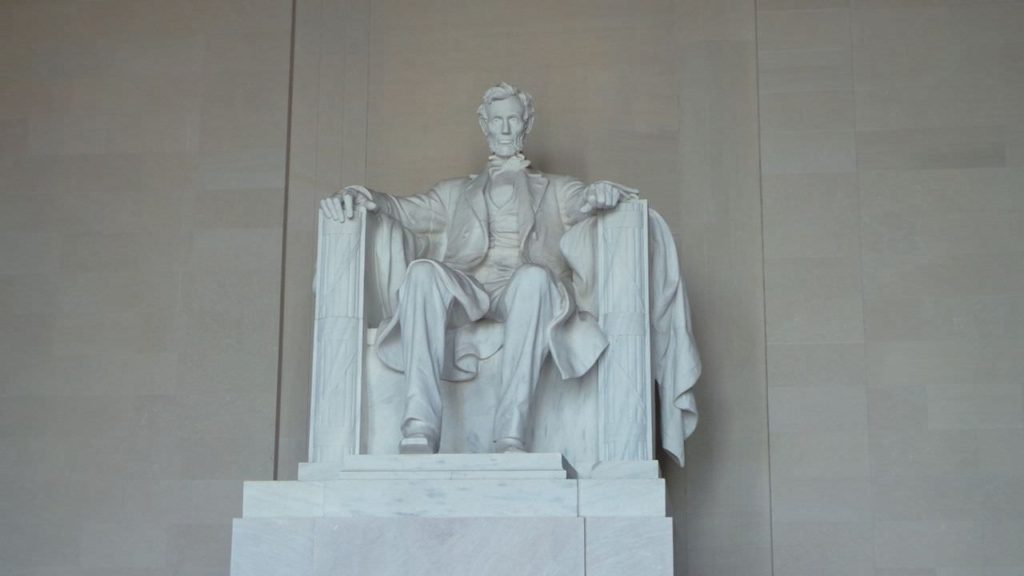
The presidential memorial commission won the debate on how to recognize FDR’s dependence on leg braces and a wheelchair for mobility. The 1997 Memorial opened with three FDR statues none of which revealed his disability. It deferred to FDR’s directive, and media acquiescence, to never photograph him in a wheelchair, walking, or being transferred from his car. As the President who led America out of the Depression and through World War II, he believed it was important to show strength.

This hiding of FDR’s disability was corrected on January 11, 2001 when a fourth statue was added. A life-sized statue shows FDR in his wheelchair at the Memorial entrance. It’s an accurate view of the man whose strength was in his leadership not his legs. One visitor teared when he saw a busload of children in wheelchairs entering the exhibit. They would see that disability doesn’t limit what people can accomplish and should not be hidden.  

What would you miss if you viewed history through the prism of current events?

For more of my writings, go to https://angelamuirvanetten.com where you can subscribe to my weekly blog and find several retail links to my book, “Pass Me Your Shoes: A Couple with Dwarfism Navigates Life’s Detours with Love and Faith.”

TRIVIA
Polio plagued America for 39 years from 1916 to 1955.
At age 39. FDR contracted the virus.
Salk tested the first successful polio vaccine at age 39.

Categories
Medical

Replace Resolutions with Decisions

Choice: one way or another
Image by Pete Linforth from Pixabay

Most New Year resolutions fall by the wayside by mid-January. So next year, why not break the cycle of failure and replace resolutions with decisions? Let’s think about December 31st in a new light and celebrate it as #MakeUpYourMindDay.

To narrow the scope, this post focuses on decisions that demand due diligence before signing a contract or making a medical decision. Remember, failure to be systematic can be hazardous to both health and safety!

People of faith will always preface every decision with prayer.

Want to subscribe to receive blog updates sign up today!

Don’t worry about anything; instead, pray about everything.
Tell God what you need, and thank him for all he has done.”

Philippians 4:6, New Living Testament

Homework is not just for kids; it’s a fundamental step in any big decision. For example, those looking to buy an accessible vehicle in which to load a wheelchair or scooter need to gather facts on the many options—a van or a car, a lift or a ramp, hand controls or pedal extensions, new or pre-owned? Homework involves an evaluation of physical abilities, financial resources, and businesses specializing in vehicle modifications.

It’s good to talk to people who have walked the same road you’re on. Disability support groups and social media are great resources for finding people ready to share their experience. Three private and moderated Facebook groups come to mind—Dwarfism, Dwarfism Surgeries & Pain Management, and Meg’s Support Group for People with Disabilities. In the case of a doctor recommending a specific medication or surgery, ask group members for their opinion on the doctor, hospital, and medical plan of action. Find out if they were helped or harmed.

A wise man will hear and increase in learning,
And a man of understanding will acquire wise counsel
,”

Proverbs 1:5, New King James Version

For complex and difficult decisions, consultation with experts is critical. For example, when dealing with a physical and/or mental health condition that precludes working, the expertise of doctors, representatives, and/or lawyers is needed to navigate Social Security benefit applications and, if necessary, appeals.

A risk/benefit analysis is imperative when making decisions about surgery and medication. Make a list of the pros and cons based on your own assessment of side effects, pain, and mobility; medical advice; manufacturer warnings in patient literature; testimonials from past patients; and the likely outcome if the recommended treatment is declined. Fear is a factor, but should not push us away from beneficial treatment.

Once you’re hovering over a particular decision, sleep on it until you have peace of mind. Finally, after you’ve made a decision, don’t question whether it was the right one. Trust the process of allowing God to lead you to the right decision.

A man’s mind plans his way,
But the Lord directs his steps.”

Proverbs 16:9, Revised Standard Version.

Let’s make 2021 a time to make wise medical decisions for ourselves and be available to help those doing due diligence on their decisions.

For more of my writings, go to https://angelamuirvanetten.com where you can subscribe to my weekly blog and find several retail links to my book, “Pass Me Your Shoes: A Couple with Dwarfism Navigates Life’s Detours with Love and Faith.”

Categories
Celebrations

Finding Joy at Christmas

Christmas joy

Many people look forward to Christmas all year long.  Every December 26th my father began the countdown saying, “There are only 364 days until Christmas.” But is there joy in Christmas 2020?

Although Christmas cards, the annual family photo, and newsletters can still be mailed, hundreds of thousands are too sad to write or take photos given the death of loved ones who succumbed to COVID-19 during the year. And for those who did not lose loved ones, the loss of jobs and income makes the cost of buying and mailing a card unaffordable.

Want to subscribe to receive blog updates sign up today!

Santa sends letters to children from Santa Claus House in the North Pole, Alaska. But pandemic safety restrictions cancel sitting on Santa’s lap and limit greetings to Zoom, or seeing Santa wearing a mask through plexiglass. Where’s a child’s joy in that? 

Does the daily pick of Christmas stories on TV bring joy? Or are they just a predictable 90 minutes watching families come home for the holidays, buy gifts, donate to charity, bake cookies, drink hot chocolate, climaxed by an unexpected romance ending with a kiss?

Neighborhoods sparkle with Christmas lights, Santas, sleighs, reindeer, and snowmen. But is there joy in the morning? The lights are off and the blow-up figures lay collapsed on the ground. Nativity scenes are hard to find. Not even the traditional Christmas stamp from the United States Postal Service bore any resemblance to the Virgin Mary and baby Jesus revealed in Scripture.

Live Christmas trees are in plentiful supply for the 30 million plus people expected to buy one this year. Perhaps the trend away from “fake” trees is a sign that people are looking for something real this year—something filled with fragrance, life, and joy.

So where do people go to find the true joy of Christmas? The answer is church— the most likely place to hear the Christmas story in Luke 2:9-12:

“Suddenly, an angel of the Lord appeared in radiant splendor before them, lighting up the field with the blazing glory of God, and the shepherds were terrified!  But the angel reassured them, saying, “Don’t be afraid. For I have come to bring you good news, the most joyous news the world has ever heard! And it is for everyone everywhere!  For today in Bethlehem a rescuer was born for you. He is the Lord Yahweh, the Messiah. You will recognize him by this miracle sign: You will find a baby wrapped in strips of cloth and lying in a feeding trough!” 

The Passion Translation

This good news is heard by regular church attendees and 124.4 million CEOs (Christmas and Easter Only). They come to hear Jesus message of full inclusion—for everyone everywhere—seniors and youth, poor and rich, weak and strong, disabled and able,  people of all colors and languages. The joy is in believing that Jesus came to rescue us all. 

So where will you go this Christmas to hear the most joyous news the world has ever heard?

For more of my writings go to https://angelamuirvanetten.com to subscribe to my blog for automatic delivery of weekly posts to your email inbox and for retail links to my book, Pass Me Your Shoes: A Couple with Dwarfism Navigates Life’s Detours with Love and Faith.