Categories
God's protection

America’s Heritage of Prayer Continues

The National Day of Prayer invites people of all faiths to pray for America on the first Thursday of each May. Although President Harry S. Truman signed a joint resolution of the United States Congress reserving this annual date in 1952, public prayer and national days of prayer were not new. In 1775, the Continental Congress asked the colonies to pray for wisdom in forming a nation and to establish America’s peace and freedom upon a solid and lasting foundation. And in four consecutive centuries, Presidents have declared national days of prayer for various reasons: 

Want to subscribe to receive blog updates sign up today!

  • Expressing gratitude to “Almighty God in peaceably allowing a form of government for the safety and happiness of the people.” George Washington (October 3, 1789)
  • Encouraging humility before God and seeking His Divine mercy during a cholera epidemic. Zachary Taylor (July 3, 1849)
  • Acknowledging “our dependence on Almighty God and to implore His aid and protection” during World War I.Woodrow Wilson (May 11, 1918)
  • Honoring the memory of the September 11, 2001 victims and comforting those who lost loved ones. George W. Bush (September 14, 2001)
  • Rededicating ourselves to extending religious freedom to all people. Barak Obama (May 5, 2016)

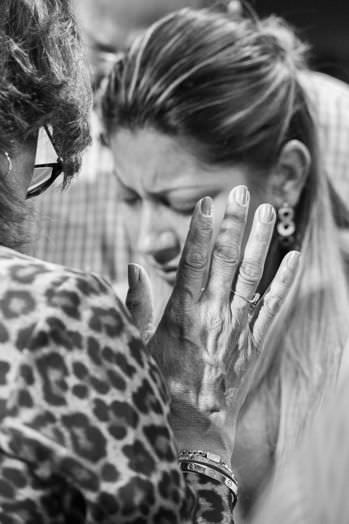
Thankfully prayers are not limited to national days. People pray every day of the year and people with dwarfism are no exception. Although we pray about the same concerns as all humanity, we have more than our share of medical requests.

In a private Facebook group to which I belong, many seek and appreciate prayers. An inclusive request invites positive thoughts from those who do not pray.

The requests range from looking for a diagnosis or a qualified physician with dwarfism experience, a helpful doctor’s appointment, successful surgeries, good physical therapy results, to pain management. Some pray for a first time surgery and others that a surgery will be the last in a long succession. Prayer for unbearable, chronic pain which reduces quality of life to nothing is common.

Group members commit to pray, share good thoughts, and send get well wishes with a generous dose of emojis. Prayers are offered for surgeries with excellent results, quick recoveries, healing, daytime pain reduction, pain free nights, sleep, peace, courage, and perseverance.

Along with the prayers comes love, hugs, encouragement, advice and comfort from those with similar experiences. It helps to know we are not alone. We accept advice from someone who feels our pain, concedes that the road is tough, encourages us to set little goals at first, reminds us to take one day a time, and confidently asserts “you’ll get there!”

God is our merciful Father and the source of all comfort. He comforts us in all our troubles so that we can comfort others. When they are troubled, we will be able to give them the same comfort God has given us.”  2 Corinthians 1:3-4 (New Living Translation).

Categories
Awareness

Plan to Stay Safe

Firemen
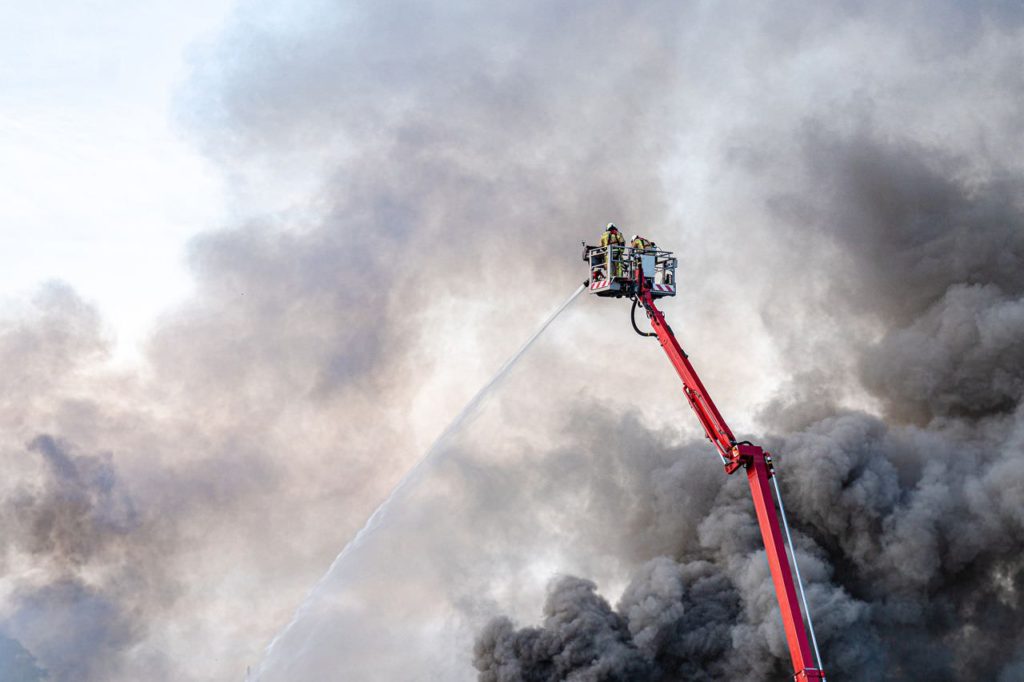
Image by Matthias Groeneveld from Pixabay

What words come to mind when you read the following list: earthquakes, floods, hurricanes, tornados, tsunamis, volcanoes, wildfires, winter storms? I think of danger, death, and destruction. But on April 30, National PrepareAthon! Day, we can plan so that death is not a consequence of any of these disasters.

Thankfully we don’t have to plan for every kind of disaster where we live. But we do need to be aware of, and ready for, potential hazards in our locale. The first step is to be informed when disaster is imminent. Signing up for emergency phone alerts gives us life-saving information targeted to our area.

Want to subscribe to receive blog updates sign up today!

This emergency alert system will also broadcast on TV and radio. But a battery-powered or hand crank radio and a NOAA Weather Radio with tone alert are essential when the power goes out.

Safety should drive our decision whether to shelter in place or evacuate. Follow advice of emergency management officials on this one. For example, if your home is built to withstand hurricane force winds, it’s okay to hunker down behind shuttered windows. But don’t wait until the last minute to ask someone for help with your shutters. They’ll be too busy with their own place and you’ll be left blowing in the wind.

If your home can’t be made safe, decide whether you’ll evacuate to family or friends in a safe area or go to a general population shelter. Check in advance which one works for your disability and plan how you’ll get there. Do you have enough gas in the car? If you don’t have a vehicle and need accessible transportation to a shelter, make sure you’re on the manifest for a ride in an emergency. If you have medical equipment that requires electricity and you don’t have a generator at home, plan on going to a special needs shelter where you can stay connected to a power source. Find out if pre-registration is required. Those dependent on dialysis or other life-sustaining treatment need to find out where they should go.

If evacuation is ordered, learn the evacuation routes. Safeguard important and valuable papers, including model numbers and providers of assistive technologies so it can be replaced if lost or destroyed. Withdraw some cash.

Update your emergency supply kit, both at home and in the car, that includes water, nonperishable people and animal food, first aid supplies, and Bible. This is critical for survival if you lose power or get stranded in your car.

If separated from family during an emergency, know how you’ll contact one another afterwards. Establish a family meeting place that’s easy to find. Create phone contact lists for family members so you can text them with your location. Help rescue workers reach your loved ones if you’re incapacitated; type “ICE,” the acronym for “in case of emergency,” before a person’s name in your cell phone so they know who to call.

So how far along are you in your emergency planning? Procrastination could be a costly mistake.

This post highlights FEMA guidance at https://www.ready.gov/plan and should be consulted for other important details. Also see Emergency Management. National Council on Disability, accessed April 20, 2021. https://ncd.gov/policy/emergency-management and An ADA Guide for Local Governments. Making Community Emergency Preparedness and Response Programs Accessible to People with Disabilities, accessed April 20, 2021. https://www.ada.gov/emergencyprepguide.htm

Categories
Accessibility Medical

Tackling Inaccessible Medical Equipment

Cornea Diagnostic Equipment
Cornea Scanner

In 2020, I had eye surgeries to remove cataracts, implant intraocular lenses, and remove scar tissue that developed behind each implant. I enjoyed throwing out my old contact lenses and donating my eye glasses to charity. But the inaccessible medical equipment challenged my independence.

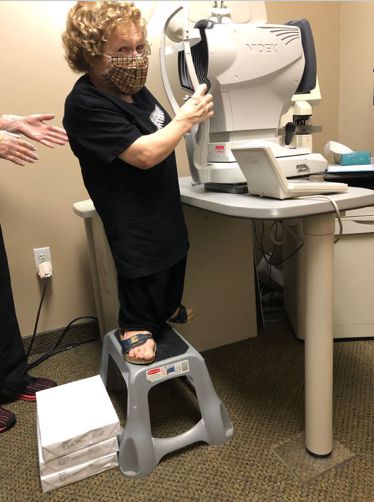
After 45 years of regular eye doctor visits, I was accustomed to being unable to reach ophthalmic diagnostic equipment. Typically, I gained the extra inches needed by stepping up onto a phone book. However, this simple solution was unavailable during my 12 pre- and post-op visits. Besides, who has phone books anymore?

Want to subscribe to receive blog updates sign up today!

I rejected the step stool staff offered explaining that my knees don’t bend and I couldn’t step onto it. Not ready to give up my independence, I also vetoed staff lifting me onto the stool. I chose to stand on reams of copy paper to gain additional height. Success. What I didn’t know was that we weren’t done.

Next was the cornea scanner. But copy paper wasn’t enough to elevate me to this machine and there was no escaping a stool. Yet I still insisted on accessing the equipment without being lifted. Fearing my fall, staff hovered close by as I used reams of copy paper to create a small step next to the stool and from there swing my leg up onto the stool. Independence maintained.

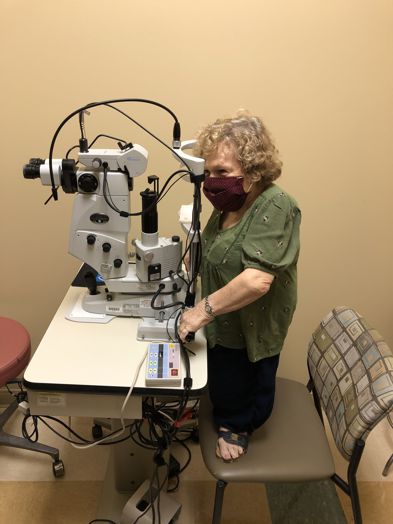
A couple of months later, I was challenged by an Ophthalmic Yag Laser System at the outpatient surgery center. The equipment accomplished two things: removing the unwanted membrane behind my lens implants and infringing on my independent access. None of my prior strategies got me high enough. I had no choice but to allow the surgeon to lift me onto a chair. But before doing so, I checked if he had a back problem and disclosed my weight. He assured me that he lifted weights way heavier than me in the gym.

Laser Surgery Machine

After the procedure, I kicked into advocacy mode. Not everyone has a surgeon who can lift weights heavier than their patients. And what about wheelchair users who can’t stand on the floor let alone a chair? Because the surgeon has a financial interest in the surgery center, I put him on notice that I would be calling on him in the future to be pro-active in ordering accessible medical equipment. Documentation with photos, laid the groundwork for my communication with the manufacturer.

I later learned that the Architectural and Transportation Barriers Compliance Board had issued technical criteria for medical diagnostic equipment (MDE) to be accessible to, and independently usable by, patients with disabilities, to the maximum extent possible. Although the MDE Appendix to 36 CFR Part 1195  has been effective since February 8, 2017, it cannot be enforced because authorities like the United States Departments of Justice (DOJ) and Health and Human Services (HHS) have not adopted the MDE Standards as mandatory requirements for entities subject to their jurisdiction.

Does anyone hear the call to advocate for making accessible MDE mandatory? What’s your experience with MDE?

For additional reading, see Standards for Accessible MDE. A Rule by the Access Board January 9, 2017, accessed on April 15, 2021. https://www.federalregister.gov/documents/2017/01/09/2016-31186/standards-for-accessible-medical-diagnostic-equipment and “Access To Medical Care For Individuals With Mobility Disabilities.” United States DOJ and HHS 2010, accessed on April 15, 2021.  https://www.ada.gov/medcare_mobility_ta/medcare_ta.htm.

Categories
Celebrations

Celebrate the Gift of Siblings

Siblings Farewell Sydney

Over two-thirds of Americans have at least one sibling. The relationship is one of the most important and usually the longest in a person’s life—typically longer than with parents, spouses, or children. So let’s celebrate our brothers and sisters on April 10, #NationalSiblingsDay.

To the outside world, we all grow old. But not to brothers and sisters. We know each other as we always were. We know each other’s hearts. We share private family jokes. We remember family feuds and secrets, family griefs and joys. We live outside the touch of time.

Clara Ortega

Want to subscribe to receive blog updates sign up today!

The siblings of people with dwarfism and disability are especially worthy of praise. As children, many siblings endure more public attention than they want and less attention from parents than they need. Parents love them just as much but, at times, the medical and other needs of their sibling with a disability are all consuming. To cap it off, siblings are often assigned extra duties to help out their brother or sister.

When I was writing “Dwarfs Don’t Live in Doll Houses,” the 1988 memoir of my childhood and young adult years, I asked my brother, Greg, and sister, Deborah, what it was like growing up with me.  Here are some of their reflections:

 It used to make me mad when people stared at you.

I received [a] bloody nose at school from Terry for teasing me about you. . . we had a fight and I came out second best.

It used to annoy me when people fussed over you, knowing that you thought them silly as well. . . but that kind of attention I never wanted anyway.

As for their response to being asked to do things for me—like carry my sun chair down to the beach or my book bag home from school—their recollections varied from annoyance to wincing when watching me carry a bag half my size. For the most part, I was independent and my disability wasn’t on their minds. “At home, I was the older sister and that’s how things were – just that.”

We enjoyed a happy childhood together in New Zealand, but as adults lived with our spouses in Australia and America. Despite the long distance, we continued to share our love and concern for each other. We have traveled thousands of miles to vacation together in all three countries. When visiting in the homes of my siblings, they made accommodations for Robert and I to be independent in the bathroom and kitchen.

As we have grown older and less mobile, Greg and Deborah have pushed wheelchairs, lifted scooters, and helped us up many stairs. In recent years, we have celebrated decade birthdays together with the destination chosen by the one with the birthday. Our 50th birthdays took us to Sydney, Australia; Key West, Florida; and Whangamata, New Zealand; our 60th birthdays were in North Carolina, New York, and Hawaii.

Why wait for your sibling’s birthday? Celebrate them his week. Share how much they mean to you.

For more of my writings, subscribe to my weekly blog at https://angelamuirvanetten.com/ Used print books of Dwarfs Don’t Live in Doll Houses are available on Amazon.com; an e-book is coming soon. 

Categories
Awareness

Shine Blue on Autism in April

Visual communication board

“People with Autism Spectrum Disorder (ASD) are like salt-water fish who are forced to live in freshwater. They are fine if you just put them into the right environment. When the person with ASD and the environment match, the problems go away and they even thrive. When the environments don’t match, they seem disabled.” Humphrey (2008).

Language impairment, social deficits, repetitive behaviors, sleep issues, gastrointestinal disorders, and anxiety are characteristics of ASD: 40% are nonverbal; 70% have average to above average IQ scores.

Want to subscribe to receive blog updates sign up today!

For the families affected by autism, each day can be an adventure in uncertainty:

  • Will Johnny have a meltdown at school forcing mom to take off work again?
  • Will Max make it through a quick stop at the grocery store or will he scream down the aisles?
  • Should we pay for Suzie’s therapy or buy Christmas presents?

The Hope Center for Autism in Stuart, Florida is a public charter school that helps families navigate these adventures. Parents entrust their children to staff dedicated to supporting sensory, communication, and self-management needs in preparation for a successful life.

“Children with autism are colorful, they are often very beautiful, and like the rainbow they stand out.” Adele Devine

One Hope Center staff member dreamed of working with ASD kids as far back as eighth grade, others saw it as a stepping stone to gain pediatric experience before graduating to working with adults. But after several years at the Hope Center, staff no longer see their jobs as temporary. They fell in love with the children, found their calling, and can’t imagine doing anything else. Excited to go to work every morning, they leave every day feeling part of a big, connected community.

“If they can’t learn the way we teach, we teach them the way they learn.” O. Ivar Lovaas

“Autism makes you listen louder. It makes you pay attention to an emotional level as well as an intellectual level.” Jace King

“Adapting our own perception, following rather than leading and building bridges are all keys to helping the child with Autism learn.” Adele Devine

Hope Center days are filled with learning, fun, and energy. Staff do things a little differently and adapt to change in unique ways:

  • Incorporate blue, the favorite color.
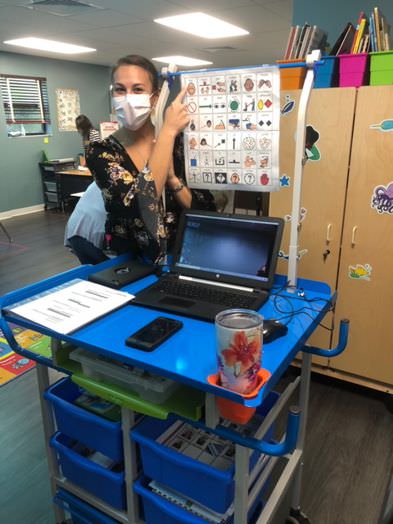
  • Use a picture symbol vocabulary board with every lesson.
  • Use fidget toys.
  • Sing skip counting songs.
  • Bond with and earn student trust.

“Cherish the children marching to the beat of their own music. They play the most beautiful heart song.” Fiona  Goldsworthy

“If we strive for the love, joy, and happiness the students have, the world would be a much BETTER place.” Gina Williamson

Special thanks to several staff at the Hope Center for Autism, https://www.hopecenterforautism.org,  who contributed to this post: ESE Teachers Natalie Rzeznik and Alexis Matonti; paraprofessionals Maria Gutierrez, Sandy Jerrells, Gina Williamson, and Sarah Zeilinga; Tundra, Jungle, and behavior staff; Theodore Hassel, PE Coach; Laura Drake, Aftercare Provider; Katarina Suarez, Speech-Language Pathologist; and Joanne Sweazey, Executive Director.

This post first appeared on Angela Muir Van Etten’s blog on April 5, 2021 at https://angelamuirvanetten.com/. Readers are encouraged to share the post, but are asked to include the website link.

Categories
Open

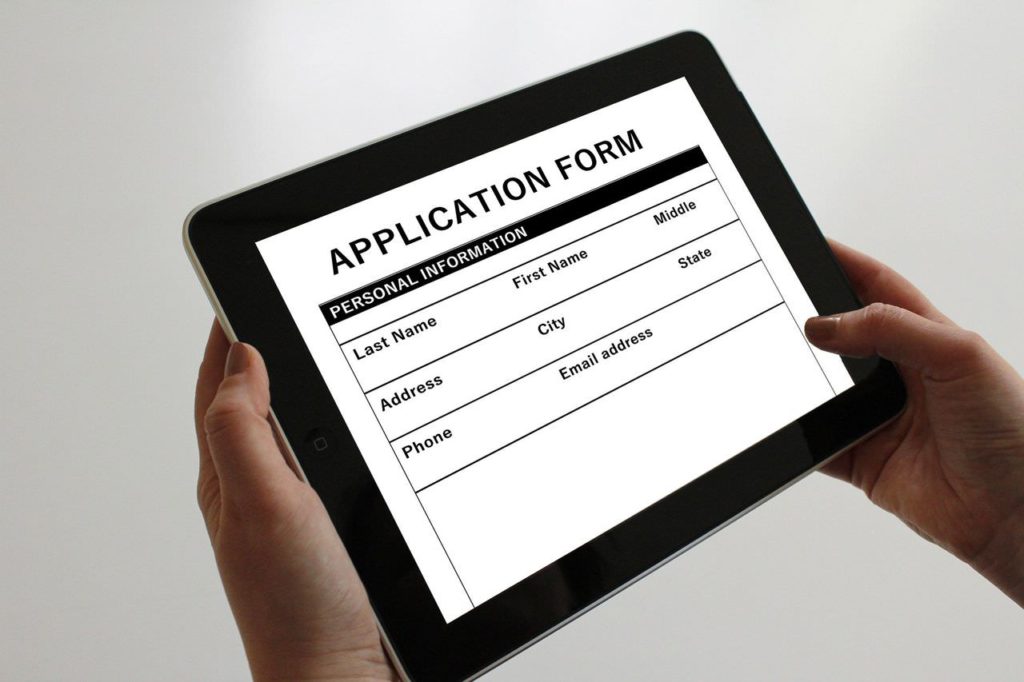
YOU’RE INVITED: Apply for Book Launch Team Membership

Application Form
Image by Gerd Altmann from Pixabay

Be on the team that launches—ALWAYS AN ADVOCATE: Champions of Change for People with Dwarfism and Disabilities—a book documenting radical changes in organization, respect, and equal access for thousands of people with dwarfism and disabilities.

Find out  (1) what it takes to lead a charity that changes lives; (2) how laws were passed to stop a morally bankrupt practice; and (3) who knocked down barriers to equal access in buildings and facilities, public transit, schools, and so many more?

Want to subscribe to receive blog updates sign up today!

As a book launch team member, share the answers found in the third book of my trilogy and show how positive changes are possible in our chaotic world.

Apply now and through April 29, the day wrecking cranes began tearing down the Berlin Wall at the Brandenburg Gate in 1990. Be active in the disability movement that continues to break down environmental, attitudinal and system barriers.

Consider the benefits of being a team member:

  • Receive a complimentary autographed copy of Always An Advocate.
  • Exclusive, private, and direct communication with me as the Author and other team members.
  • FUN! Contests with prizes reserved for book launch team members!

Never been on a book launch team before? No worries. If you agree to do the following, you can do it:

  • Subscribe to my weekly blog (if not already a subscriber).
  • Accept Angela’s invitation to join the book launch team’s secret FaceBook group.
  • Agree to visit the team’s group at least once a week to support book marketing.
  • Read a pdf copy of the book prior to the release date. 
  • Post a favorable book review on amazon.com when requested by Angela at the beginning of the book launch month. (If you can’t recommend it to others, no hard feelings, but please agree not to post a negative review.)
  • Share book news on your social media platforms; consider posting a selfie reading the book.
  •  Share your enthusiasm for the book with your LPA chapter, district and any disability organizations that you belong to.

Other book launch team contributions include, but are not limited to, the following:

  • Recommend Always An Advocate to family, friends, coworkers and anyone else who will listen.
  • Post a favorable online book review on retail outlets where books are sold, such as Barnes and Noble and Books A Million.
  • Post a favorable book review on Goodreads.
  • If you have a blog, post a book review or interview with Angela.
  • Ask your local library to order copies of Always An Advocate.
  • Gift a copy to family and friends.
  • If you belong to a book club, suggest they read Always An Advocate.
  • Write and submit a book review for your local paper.
  • Anything else the team recommends.

To apply for membership on this book launch team, please text me at 772-834-3951 or private message me on FaceBook with your email address and I’ll send you the link to my website where you’ll find the simple, one page application form. Remember to submit your application on or before April 29th.

Categories
Guest Inclusion

Celebrate People Blessed With Down Syndrome

Faith & mother

World Down Syndrome Day is 3-21-21. Down syndrome (Ds), named for Dr. Langdon Down, is the diagnosis for those blessed with a triplicate of the 21st chromosome. We celebrate this amazing group of people every March 21st because God doesn’t make mistakes; the triplicate didn’t slip his attention. In fact some people with Down syndrome will tell those of us with a typical duplicate #21 that we are the ones missing something.

That missing bit of genetic material may be why the world is such a cruel and serious place. People with Ds are vanishing at an alarming rate.

Want to subscribe to receive blog updates sign up today!

Just as life expectancy for people with Ds has expanded to 60-70 years old, babies are being terminated just because they have Ds. Iceland has virtually eliminated births of babies with Ds through abortion. Norway is close behind.

Personally, I was not expecting to have a child with Ds. I wasn’t expecting a baby at all at 42 years old. But 23 years ago, Faith burst into our family and nothing has been the same since. She survived a C-section five weeks premature, weighing just three pounds, and was born with a serious heart defect. We were quickly thrust into the medical world: Faith had closed heart surgery at four months and open heart surgery at eight months, all before hitting the ten pound mark.

When things looked up medically (our fighter would survive!), I learned about physical therapy, speech therapy, feeding therapy, occupational therapy, early intervention, and play therapy. As school age approached, I educated myself on inclusion and decided Faith should be included in a general classroom instead of being segregated in a special classroom. When no Christian schools in our area would accept Faith in kindergarten, which hurt deeply, she enrolled in the public school. What a mission she had there! She touched so many lives of students, teachers, and administrators, and continues to be somewhat of a local celebrity because of all the people she impacted. I’m proud to announce that Faith was the first student with Down syndrome to graduate with a standard diploma in our county!

All of this has been a huge trial to my faith. A lifelong Christian, I was hurt and felt God was punishing me when I thought I had been doing His will. It took some time to get over the hurt, anger, and loss of trust. When the church school our older children attended refused to admit Faith, we left after over 20 years there. But we didn’t leave our faith, and found a church preschool willing to try.

As a young woman, Faith has a boyfriend, she loves her dance classes and voice lessons and has performed in many recitals and plays. With the support of her big sister and brother-in-law, Faith got involved in our original church where she joined the praise team, altar guild, and Bible study (we ended up following her back there). The isolation of the past year has been difficult for this social young woman, but she will bounce back because she’s a fighter.

This post first appeared on Angela Muir Van Etten’s blog on March 22, 2021 at https://angelamuirvanetten.com/. Readers are encouraged to share the post, but are asked to include the website link.

Categories
Celebrations International

Presidents Meet on St. Pat’s Day

Lincoln Monument

When Bobby walked towards my desk in the New Zealand Embassy library in Washington, DC 40 years ago, for some inexplicable reason my heart beat faster. I was unnerved by the proximity of his brown eyes gazing directly into mine at the same exact height. I don’t remember a thing he said.

Bobby was all smiles as he came closer to me, a petite 27-year-old with a rare type of dwarfism. I looked nothing like the four feet tall, plump, middle-aged woman he had imagined.

Want to subscribe to receive blog updates sign up today!

As president of Little People of America, Bobby was on official business meeting me, the president of Little People of New Zealand. I was visiting America on a Winston Churchill Fellowship from the NZ government to research disability civil rights laws and public relations programs designed to improve attitudes towards people with disabilities. My intention was to interview Bobby as part of my research, but it became much more than that.

Our talks began with a three-mile trip to the Lincoln Memorial. Not so easy for this 32-year-old man raised in the small town of Jupiter, Florida. His two months living in the DC area was not enough for him to adjust to driving his over-sized car, that barely fit in traffic lanes, around the confusing DC road system. He got lost and flustered. And the more lost he got, the faster he drove. He even asked me for directions—someone who had been in DC for less than 24 hours and couldn’t see out the car window. He relaxed when we finally pulled into the Memorial parking lot.

We walked across the street and Bobby extended his hand to help me up a curb. However, he continued holding my hand after both my feet were set on the sidewalk. Not ready for such a bold move, I let go of his hand. After all, this could hardly be called a date.

I didn’t need his hand as we rode the elevator to avoid the 57 step climb to President Lincoln’s statue that towered above us at more than six times our height. Like millions before us, we were inspired by the display of Lincoln’s words from the Gettysburg address: all men are created equal. We knew what it was like to be treated as second-class citizens and shared a life mission to achieve equality for people with dwarfism and other disabilities.

Pizza was our choice for the evening meal. Corned beef and cabbage never crossed our minds until a drunken Irishman saw the arrival of two little people as good luck. He invited himself to our table to share Irish jokes. I was impressed with Bobby’s diplomacy when he persuaded him to move along and declined the offer to join him at the Saint Patrick’s Day parade.

Instead, Bobby returned me to my guesthouse where he was more interested in kissing me good night on the cheek than kissing any blarney stone.

And no, it wasn’t love at first sight; that took two weeks.

This post is a condensed excerpt from chapter 1, My Heart Beat Faster, in Pass Me Your Shoes: A Couple with Dwarfism Navigates Life’s Detours with Love and Faith. The book is available on Amazon, Barnes and Noble, and Books a Million.

Categories
Dignity

Dwarf Tossing Throwback

Prohibited
Image by OpenClipart-Vectors from Pixabay

Dwarf tossing masquerades as a ‘sport’ when barroom bullies compete for prize money awarded to whoever throws a dwarf the farthest. From 1985 to 2012, it was like a perennial weed and you never knew who would sow the seeds—a newspaper columnist, a bar owner, a business promoter, a dwarf wanting to be tossed, a radio station seeking publicity, a dwarf challenging the constitutionality of a state law ban, or a state representative filing a bill to repeal the ban as obsolete.

From the beginning, Little People of America (LPA) successfully advocated against dwarf tossing in establishments licensed to serve alcohol as a morally bankrupt practice offensive by any standard of human decency.

Want to subscribe to receive blog updates sign up today!

The debacle was grounded in Chicago with a public relations campaign and with legislative bans in Florida and New York in 1989 and 1990, respectively.

So when Representative Workman sought to repeal the Florida law during Dwarfism Awareness Month in 2011, he was deluged with resistance. LPA demanded that the bill be withdrawn and bombarded him with:

  1. protest letters from little people, family and friends, and disability organizations;
  2. negative media attention; and 
  3. 4,834 signatures on a change.org petition that each triggered a ping when landing in his email inbox.

Prior to his bill, Workman had never met anyone with dwarfism! But after four weeks of relentless advocacy, he became acutely aware of all that is wrong with dwarf tossing:

  • It generates harmful stereotypes that often marginalize even the most highly qualified and educated people with dwarfism as they try to enter the mainstream employment market. LPA President, Gary Arnold, and American Association of People with Disabilities President, Mark Perriello
  • It objectifies the dwarf community making the individual who is tossed like a shot put or a javelin thrown in a track and field event. LPA President, Gary Arnold
  • In a day and age when society is confronting bullying, it is a shame that this bill takes us backwards. It enables bullying. LPA Vice President of Public Relations, Leah Smith
  • We feel the pain all the way down deep in our bones when we have to fight for our basic dignity as human beings. LPA Advocacy Director, Joe Stramondo
  • Civil liberties are not put at risk by upholding the ban, but are supported by it.Reality TV Star, Bill Klein
  • A career in dwarf tossing is likely to secure the tossee a check from the Social Security Administration or a plot in the cemetery. LPA Advocate, Angela Van Etten
  • It creates an environment so toxic that little people fear ‘copycat’ behavior and being thrown against their will. LPA Advocate, Angela Van Etten

When two past LPA Presidents—Robert and Angela Van Etten—confronted Workman in his office, he acknowledged that his bill set back little people decades with ‘freak show’ imagery and a return to the 1930s era of circus show entertainment. Although he refused to withdraw the bill, he agreed not to promote it. And the bill died in committee on March 9, 2012.

This post is a condensed version of chapter 13, A Perennial Weed, in “ALWAYS AN ADVOCATE: Champions of Change for People with Dwarfism and Disabilities” coming in Fall 2121.

To read more of my writings, please visit my website at https://angelamuirvanetten.com.

Categories
Transportation

Tired of Waiting In Airports?

Waiting at Airports

The average person spends about an hour a day waiting. But if you have a disability, waiting only one hour in an airport would be miraculous.

Waiting begins at check-in. Although seat assignments, boarding passes and baggage tags can be issued in advance, mobility devices require in person check-ins to  answer safety questions and make departure and arrival arrangements for riding the device to and from the airplane door.

Waiting continues at the airport security checkpoint. Typical passengers reportedly wait 28 minutes in security lines, but people with physical disabilities often wait longer.

Want to subscribe to receive blog updates sign up today?

We wait for someone to lift our carry-on bag onto the conveyor belt and pass a bin in which to place items for scanning or examination. And then we wait for an agent to direct a bypass from the metal detector for a personal pat-down and test for any trace of explosives on our hands or mobility device.

The Transportation Safety Administration (TSA), TSA PreCheck™ program, expedites security inspections with removal exemptions for shoes, belts, light jackets, laptops and 3-1-1 compliant liquids, but travelers and their medical equipment are still subject to imaging and inspection. Plus the TSA PreCheck™ background check, fingerprinting and personal interview are conducted off-site prior to traveling and cost at least $85. Not worth the effort for occasional travelers and definitely a problem for people like me whose fingerprints are no longer legible.

After security clearance, there’s waiting in line for a cup of coffee or a restaurant table. Despite the generous number of stalls, there’s often a line in the bathroom. It’s especially annoying when waiting outside the accessible stall occupied by a nondisabled person changing their clothes and doing hair and makeup. Transit layovers involve lots of waiting in gate lounges and restaurants. Media, meditating/praying in the chapel, people watching, reading, shopping, writing cards and emails, and sleeping fill the time.

People mistake our priority boarding status for less waiting. But when deplaning, they learn we’re last off. We wait for baggage handlers to bring our scooters to the jetway. On a good day, the scooters are brought to us; on a bad day, instructions are ignored, the scooters are delivered to baggage claim, and we must wait for a skycap. Arriving early in the morning or during peak hours means a long wait. For example, when our plane arrived at Heathrow airport in the UK at 5:00 a.m. we had to wait one hour before any transport staff came on duty. The upside is that by the time we make it to baggage claim our bags are either circulating on the carousel or have been off-loaded. The downside is that off-loaded bags are often taken to a storage area where we wait for staff to retrieve them.

Yet those who wait for the Lord Will gain new strength; They will mount up with wings like eagles, They will run and not get tired, They will walk and not become weary.

Isaiah 40:31

To read more, go to my website at  https://angelamuirvanetten.com where you can subscribe to my weekly blog and find several retail links to my book, “Pass Me Your Shoes: A Couple with Dwarfism Navigates Life’s Detours with Love and Faith.”