
Categories
Work

Combining Fellowship with Family and Book Promo

Fellowship rve

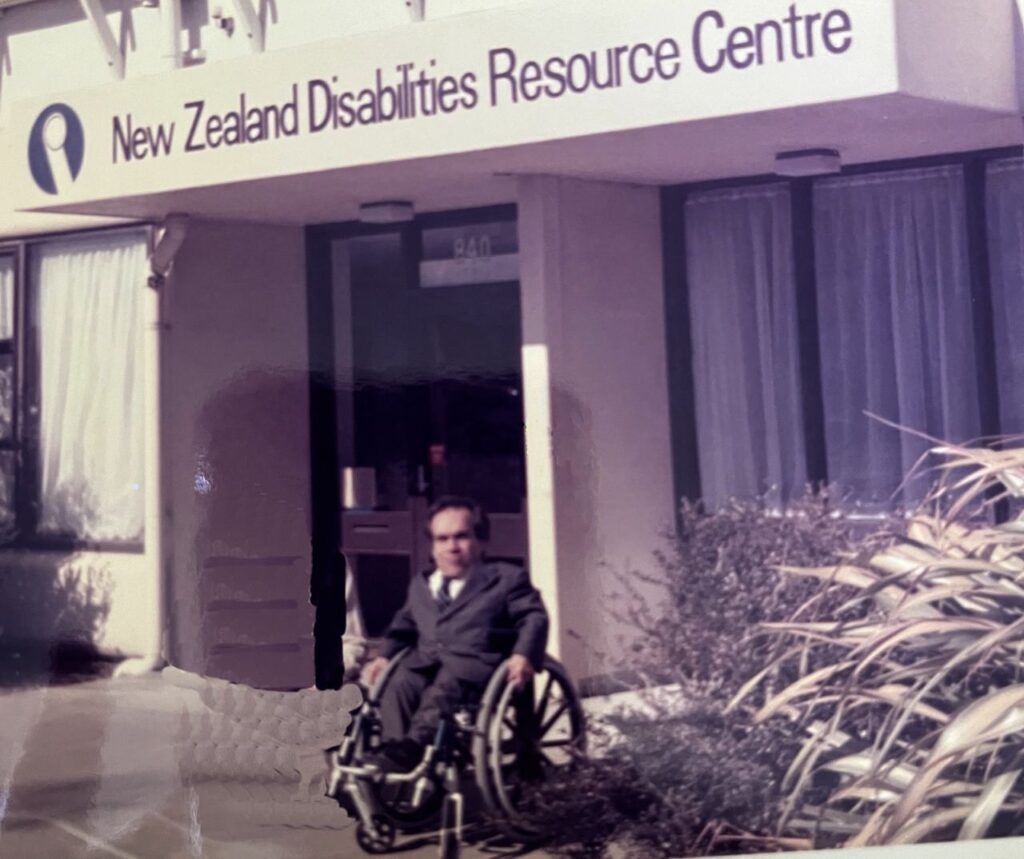
My husband, Robert, went to Australia and New Zealand on a World Rehabilitation Fellowship for six weeks in April and May of 1989. Hard to believe that was 35 years ago! His destination made it difficult for me to stay at home in Rochester, New York while he traveled my homeland and received hospitality from my family and friends. But as much as I wanted to travel with him, being limited to two weeks of annual work leave made that impossible.

After visiting more than 50 assistive technology sites, Robert could boast that he had seen more of the two countries than me. His fellowship was a study of how high-technology equipment is selected and used by people with disabilities.

Want to subscribe to receive blog updates sign up today!

The ingenuity of the rehabilitation professionals impressed him, but he was disappointed not to find a rehabilitation engineering job or business opportunity in either country. This made any talk about us relocating Down Under as wishful thinking.  

Since it was three years since I had been home, and not wanting to miss out completely, I flew over for one week in New Zealand before joining Robert for his last week in Australia. In addition to family time, my sister Deborah had organized a television interview on The Bert Newton Show in Melbourne, Victoria to promote Dwarfs Don’t Live in Doll Houses, the first book in my dwarfism memoir trilogy. The book promotion continued in Baltimore, Maryland, at the annual Little People of America conference in July 1989. Two news articles were a definite boost to sales.

Abby Karp. “Little People’s Biggest Problem: Small Minds.”The Baltimore Sun. July 3, 1989.

Shirley Marlow. “In No Small Feat, She Finds True Stature as a Writer.Los Angeles Times. July 4, 1989.

The trip Down Under caused me to cut my time at the conference back to the four-day holiday weekend. I returned to work and Robert continued his conference commitments. When he checked out of the hotel at the end of the week, he was surprised to see an expensive champagne brunch for four charged to our room. He knew he hadn’t so indulged and was almost sure I hadn’t, either. He questioned the bill, but paid it because I was not there to ask.

When Robert returned from the conference, he confirmed that I had not made this room charge and asked the hotel to remove it from his credit card. It took months for the hotel to concede that the signature on the charge to our room was fraudulent. Apparently, they had been busy investigating many such cases.

This post is excerpted from Chapter 10, Season of Travel in “PASS ME YOUR SHOES: A Couple with Dwarfism Navigates Life’s Detours with Love and Faith.”

Find information on Angela’s dwarfism memoir trilogy, blog, and media on her website at https://angelamuirvanetten.com.

Categories
Awareness

DISABILITY AWARENESS: A Years’ Worth in One Month

awareness

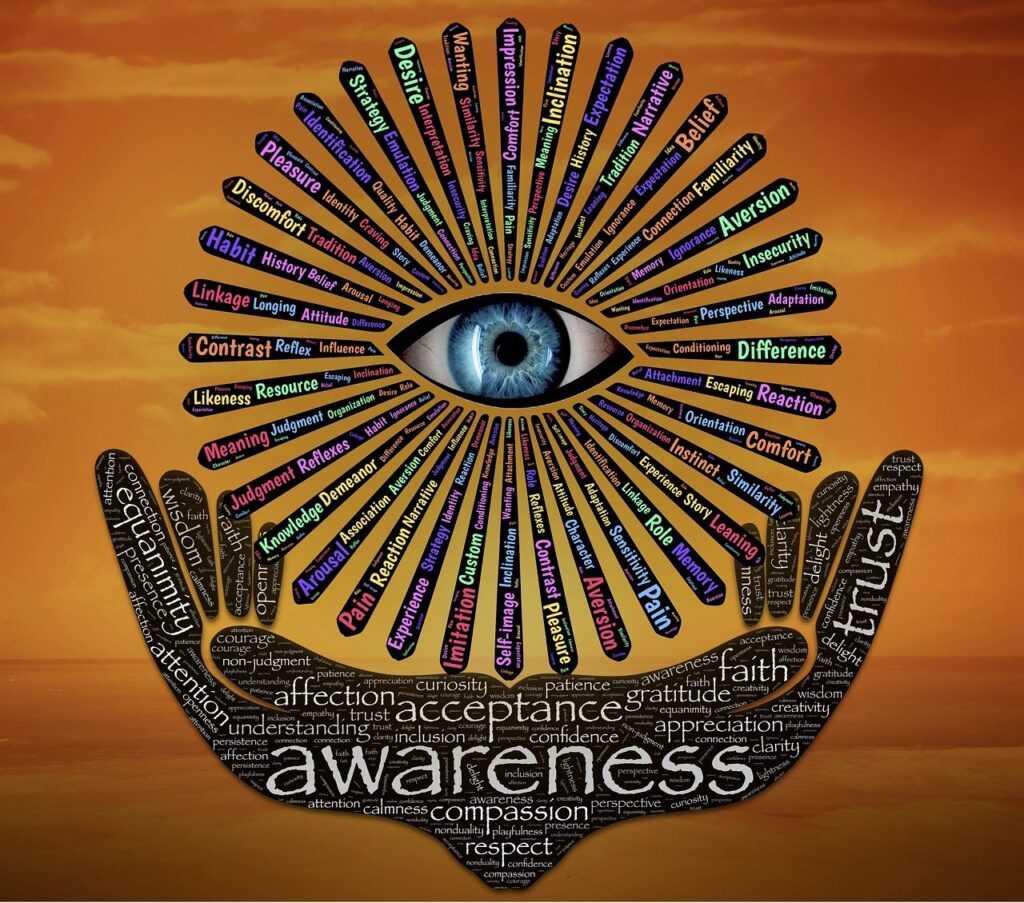
Knowledge and understanding that something is happening or exists” is Merriam Webster’s definition of awareness. So why do we need awareness months for various disabilities? Surely people know and understand that these disabilities exist. But the prevalence of months focused on specific disabilities suggests otherwise.

Take May, for example, which has multiple disabilities promoting awareness in the United States. It’s tough to keep track of them all. Hence my decision to list 12 disabilities with awareness months that promote understanding, acceptance, prevention, diagnosis, treatment, resources for living with the condition, advocacy, and/or a cure. Together we can make life better for affected individuals and family members.

Want to subscribe to receive blog updates sign up today!

1. Asthma and Allergy

      More than 100 million Americans have (1) asthma, a chronic condition that affects the airways in the lungs; or (2) allergies which cause the body’s immune system to see a substance as harmful and overreact to it. https://bit.ly/3QQhdfD

      2. Arthritis

        Nearly 60 million Americans have arthritis which involves the swelling and tenderness of one or more joints causing joint pain and stiffness. https://bit.ly/4bpKOov

        3. Mental Health

          Nearly 50 million American adults have a mental illness. Disorders range from anxiety, depression, eating, personality, post-traumatic stress, and psychosis. https://www.mhanational.org/mental-health-month

          4. Speech-Language-Hearing

          Communication disorders affect about five to ten percent of Americans (15 to 30 million). By first grade, about five percent of children have a noticeable speech disorder. About three million adults stutter and about one million adults have aphasia which impacts speech, writing, and understanding language. https://bit.ly/3V8fCEg

          5. Fibromyalgia

          Fibromyalgia affects about ten million Americans and involves chronic pain; fatigue; sleep disturbances; sensitivity to touch, light, and sound; and cognitive difficulties. https://www.fmaware.org/fibromyalgia-awareness-day-history/

          6. Celiac Disease

          About three million Americans have Celiac—a chronic autoimmune disease—which affects the small intestine making it difficult to digest food. https://celiac.org/mcam/

          7. Lupus

          1.5 million Americans have Lupus, a chronic disease that can cause inflammation and pain in any part of the body due to the immune system attacking healthy tissue instead of fighting infections. https://www.lupus.org/lupus-awareness-month

          8. Strokes

          Every year more than 795,000 people have a stroke which damages brain tissue due to loss of blood flow to part of the brain. https://bit.ly/3QOtcdy

          9. Bladder Cancer

          An estimated 725,000 people live with bladder cancer and more than 80,000 new cases are diagnosed each year. https://bcan.org/news/news/

          10. Ehlers-Danlos Syndrome (EDS)

            EDS affects fewer than 200,000 people and is a group of 13 heritable connective tissue disorders. Joint hypermobility, skin hyperextensibility, and tissue fragility are common to all types. https://www.ehlers-danlos.com/what-is-eds/

            11. Melanoma Skin Cancer

            About 100,640 new melanomas will be diagnosed in 2024 and about 8,290 people are expected to die of melanoma. https://www.aad.org/public/diseases/skin-cancer/prevent/how

            12. Cystic Fibrosis

              Close to 40,000 Americans have cystic fibrosis, a rare genetic disease that affects the lungs, pancreas, and other organs. https://www.cff.org/intro-cf#overview-of-cf

              Image credit: Word images by John Hain from Pixabay

              You may also want to read:

              Categories
              Relationships

              Mother’s Day Song of Praise

              Barbara Muir mum

              I remember with a grateful heart Barbara Mary Muir, my loving mother, whose influence in my life will never be forgotten and can never be replaced.

              Praise the Lord who chose Barbara Mary as my mother.

              Although my life started with grim predictions of an early demise followed by two years of institutional care, I’m thankful mom didn’t reciprocate my rejection of her when she visited. When it was time for my discharge, I rejoice that she brought me home and did not relinquish me to foster care.

              Want to subscribe to receive blog updates sign up today!

              If my mother had not expected the same from me as my average-size siblings—obedience, chores, and good grades—I would have grown up dependent, weak, and frustrated. In treating me according to age not size, she disciplined me when necessary and stood up to strangers who censured her for doing so in public. She offset the actions of relatives who favored me, especially elderly aunts who gave me more money than my brother and sister. On our drive home, mom insisted that I share it with them.

              I’m thrilled my mother instilled a love of books and reading and always attended parent-teacher conferences to ensure satisfactory progress. She stressed the importance of education and supported me all the way to graduation from law school. My spiritual education was attended in Sunday School, church, and Bible reading.

              Appreciation is due for mom’s instruction on how to live in a world which taunts those with differences. How empowering it is to understand words ignored cannot harm and smiles are stronger than scowls.

              I’m glad my mother managed medical needs without (1) parading me before endless doctors; (2) overexposing me to radiation with countless x-rays for research purposes; or (3) trying useless remedies like calcium tablets, stretching, or hormones.

              I’m delighted mom taught me how to be independent. She allowed me to go to kids camps and, at 15, to take a train for 300 miles to visit a girlfriend for a week.

              In her quest for me to have fun like the other kids, she tried to get me a fast ride on a handheld surf board. Instead, I was dumped onto the sand when three waves piled on top of each other. My board went flying, my bathing cap was swished off, and I rode in on the bottom of the ocean floor with my feet facing their soles to the sun. Mom expected a torrent of fury when I surfaced. All we could do was laugh.

              My joy is in knowing my mother’s generosity; hospitality; service to people in need; love of flower gardens, travel, theater, music, and vacations has spilled over into how I live my life. My regret is that mom took her last breath the day after Mother’s Day at age 45. Although I was not ready to say goodbye at age 26, I do not grieve like those who have no hope. I share my mother’s faith that we will meet again on the Day of the LORD. (1 Corinthians 15:51-57; 1 Thessalonians 4:13-17.)

              Image credit: unknown photographer of a well-known subject, my mum.

              This post was first published on May 9, 2022 and is drawn from Chapters 1 and 2—’Understood’ and ‘Educated’—in Dwarfs Don’t Live in Doll Houses by Angela Muir Van Etten.

              You may also want to read “Not Your Typical Mother’s Day Story.” May 10, 2021. Angela’s blog post. https://angelamuirvanetten.com/not-your-typical-mothers-day-story/ For information on Angela’s books, blog, and media go to her website at https://angelamuirvanetten.com/books/

              Categories
              Awareness

              FOUR MILLION NEW BOOKS A YEAR: Write Reviews to Help People Pick What to Read

              advice

              Reviews help customers make good purchasing decisions. As the author of a dwarfism memoir trilogy, I am especially interested in book reviews and the designation of May 3 as “Write a Review Day.” Even though the day was founded to help the travel industry recover after the COVID-19 pandemic, it doubles as a guidepost for readers choosing among the four million or so new books published annually in the United States.

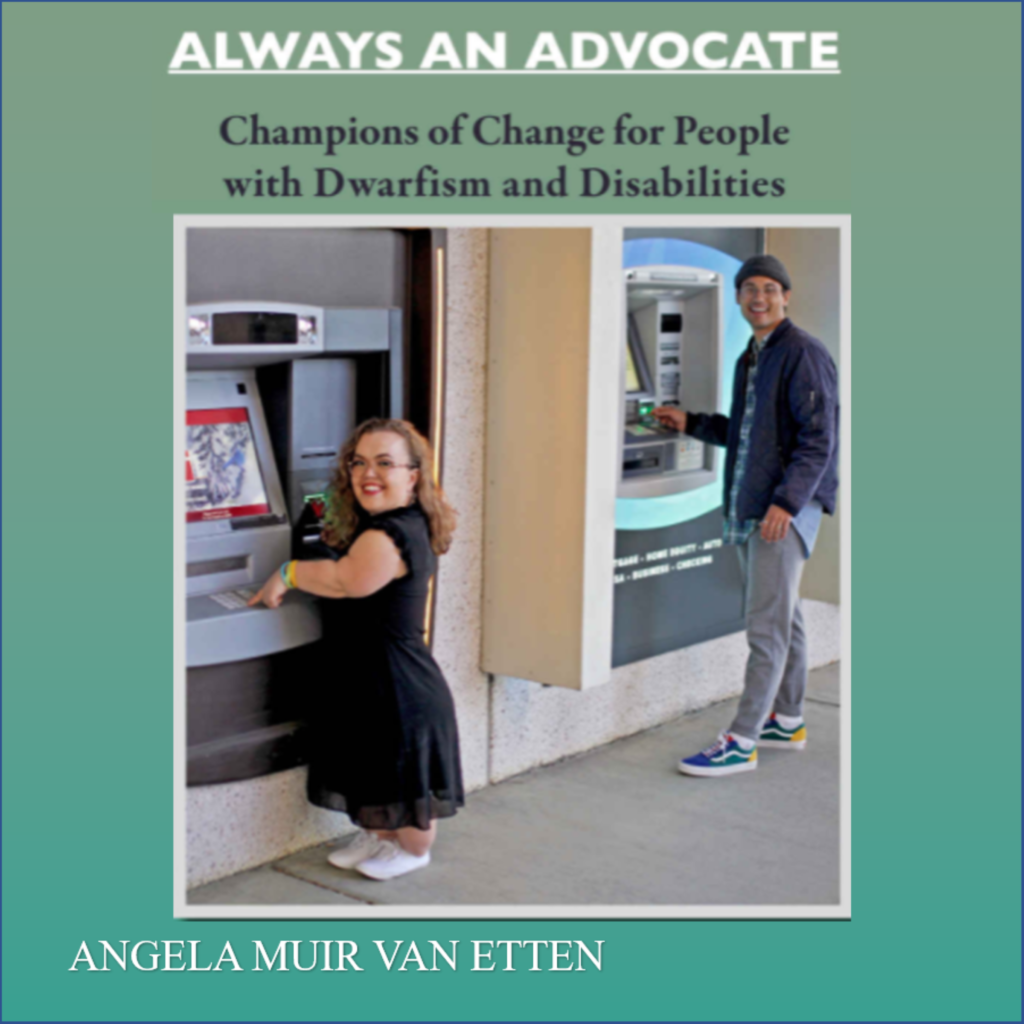
              This is an opportune time for me to thank readers who wrote a review of my book, “ALWAYS AN ADVOCATE: Champions of Change for People with Dwarfism and Disabilities.” Maybe this sampling of book review excerpts will help you decide to read the book:

              Want to subscribe to receive blog updates sign up today!

              Angela writes as if she were a close friend sharing her story over a cup of tea—infusing humor and anecdotes. . . Always an Advocate doesn’t sugar coat the work needed in accomplishing great change, or the turmoil of politics that can exist . . ., but it does show us that it is possible. . . Angela’s work speaks to me like few books have.
              ~ Juliana (September 24, 2021)

               “Angela does a magnificent job bringing you into this story. . . It’s unique, unheard, and untold. . . Must read!”
              ~ Clinton (September 24, 2021)

              I was pleased to get a copy of Always an Advocate by activist and lawyer Angela Van Etten. . . Drawing on her own personal experiences, alongside Robert, Angela demonstrates that the fight for equality for disabled people is not easy. I would definitely recommend this book to anyone interested in disability advocacy.”
              ~ Erin (September 15, 2021)

               “Angela’s many examples of her pursuit to realize remedies by agencies, boards, and governments demonstrate that achieving success in getting decisions-makers to correct problems or remove barriers is rarely easy, never automatic, and seldom a solo effort, however she shows all of us that it is do-able [and] shows us the way.”
              ~ Lee (July 29, 2021)

              In a year where we have seen a multitude of books tied to disability, and the disability rights movement, come out, Angela stands alone as THE guide book for how to actually make the changes that we need to see in society. . . I strongly recommend this book for any growing advocate from the ADA generation and after. It reminds us that the battles that we fought aren’t easy, and that the work is far from done, while also arming you with the level of analysis and thinking we need as a movement to succeed. . . Pick it up today.
              ~ Rebecca (October 24, 2021)

              “Angela has once again knocked it out of the ballpark with her new book.”
              ~ Michael (September 27, 2021)

              This is an amazing book about passion, patience and perseverance. . . She shares her faith and humor throughout the book as she talks about her journey as an advocate. . . She fought for banning dwarf tossing, improving reach barriers in public facilities and advocating for those with ADHD, just to mention a few.”
              ~ Lois (September 9, 2021)

              Image Credit: Qualityrendersmicrostock from Pixabay

              Bonus Book Reviews

              “This book gives a peek into Angela’s life, the life of a Little Person, and documents her willingness to jump into the battle to help those who are struggling due to any disability. . . Reading this book gives me hope that one day there will be ‘Equal Access’ for all.”
              ~ Debby (September 16, 2021)

              The encounters of ATMs, parking spaces, and access to public buildings are a few of the giants Angela has had to overcome. . . Angela gives God the credit for making the impossible happen. . . Read this book and know that you too can make a difference in advocating for what is right.”
              ~ Brenda (September 30, 2021)

              We should all be thankful for her grit and tenacity. A book everyone should read!!”
              ~ Becky (September 27, 2021)

              Always An Advocate’ an important book, well written, easy to read, funny at times and above all conveying Angela’s passion for fighting for and defending the rights of disabled people. I certainly recommend it.”
              ~ Geoff (September 16, 2021)

              This book will encourage you to step off the sidelines to become an advocate.”
              ~ Ava (September 16, 2021)

               “I read the whole book in one sitting. The range of her concerns and actions include not only issues of concern to little people, but those of people of many other disabilities and ages.”
              ~ Dianne (September  16, 2021)

              For information on Angela’s books, blog, and media go to her website at https://angelamuirvanetten.com/books/

              Categories
              Accessibility

              Web Access Mandated for State and Local Governments

              Web Design

              Every day, people use the web and mobile apps to access public programs and services related to courts, education, emergency information, healthcare, parking, permits, taxes, transit, voting, et al. And every day, accessibility barriers deprive people with disabilities equal access to these services. Common barriers include the following:

              • Poor color contrast makes text unreadable by people with limited vision or color blindness.
              • Use of color cues alone precludes access to information by people who are color-blind or use screen readers to speak the text appearing on a screen.

              Want to subscribe to receive blog updates sign up today!

              • Lack of text alternatives (“alt text”) on images—pictures, illustrations, and charts—hides the content from people who are blind.
              • No captions on videos fails to communicate the content to people with hearing impairments.
              • Inaccessible online forms may not be fillable by people with disabilities who need labels that screen readers can convey to their users, clear instructions, and error indicators.
              • Mouse-only navigation withholds information from people with disabilities who control their computers and other devices with verbal commands instead of a mouse, trackball, or keyboard.

              In effect, an inaccessible website can exclude people just as much as steps at an entrance to a physical location. Just as the Americans with Disabilities Act (ADA) provides for barrier removal of steps, it also sets obligations for barrier removal on websites. In accordance with this requirement, the United States Department of Justice (DOJ) has issued a final rule, under ADA Title II, clarifying the obligations of state and local governments to make their websites and mobile applications accessible to people with disabilities.

              Attorney General Merrick B. Garland signed the rule on April 8, 2024 saying:

              “This final rule marks the Justice Department’s latest effort to ensure that no person is denied access to government services, programs, or activities because of a disability. By issuing clear and consistent accessibility standards for state and local governments’ digital content, this rule advances the ADA’s promise of equal participation in society for people with disabilities.”

              Assistant Attorney General Kristen Clarke of the Civil Rights Division added:

              “This rule is truly historic and long overdue as it will help break down barriers that have kept people with disabilities from fully participating in American life. For far too long, people with disabilities have been left behind as we’ve witnessed more services and government activity increasingly move online. This rule is helping to usher us into a new era by bringing an end to the discrimination faced by millions of Americans with vision, hearing, cognitive and manual dexterity disabilities across our country.”

              As is customary with sweeping regulatory changes, the effective date for this rule is delayed. State and local governments with a population of 50,000 or more must comply beginning on April 24, 2026; those with a population of less than 50,000, as well as special district governments, must comply beginning on April 26, 2027.

              To find out more about the ADA, visit ada.gov or call the DOJ toll-free ADA information line at 1-800-514-0301 (voice) or 1-833-610-1264 (TTY).

              Image credit: Mudassar Iqbal from Pixabay

              Reference sources:

              For more of Angela’s writings, please visit her website for links to her books, blog, and media at https://angelamuirvanetten.com.

              Categories
              Accessibility

              Fed Up With FedEx

              FedEx delivery

              Normally I would be excited to see a delivery at my door within two days of the order—especially knowing that this delivery was my mobility scooter. But when I turned into the driveway and saw the scooter box in front of the garage door, I was extremely aggravated. There was no way my weight of 73 pounds could budge the 100 pound box, let alone move it out of the way!

              Common sense should have told the driver that blocking entry to the garage was a really bad idea. In anticipation of this nonsensical package drop, I had tried to use the shipment tracking number to avoid this outcome. It didn’t work. Even so, I was grateful the package did not trap me inside the garage and prevent me from taking Robert to his kidney dialysis appointment.

              Want to subscribe to receive blog updates sign up today!

              I called the FedEx customer service toll free line to ask for a driver to come and move the package. However, the computerized menu did not have a pick for packages already delivered. After listening to the menu a few times, the closest choice was “something else.” Finally, the computer transferred me to a live person!

              Although the customer service representative (CSR) was polite and apologetic, his approach fell far short of any solution. He used the tracking number to identify the station that delivered the package and sent them a message asking for a driver to come and move it. But he refused to give me a direct contact number or email address I could use to follow up with the station in the event nothing happened. At least I pried out of him the street address of the station that delivered the package.

              When the package sat in front of my garage for another eight hours, I used this address to locate a direct phone number to speak with a CSR at the station where the package came from. The CSR claimed to have no knowledge of the message sent by the toll free CSR earlier in the day. His action was to call the owner of the station closest to where I live and get his commitment to send a driver to move the package first thing in the morning. This CSR also refused to share the name or phone number of the local station, thus depriving me of direct follow up if the package was not moved in the morning.

              So what did I see when I looked first thing the next morning? The scooter package still sitting in front of the garage door! Once again FedEx failed to follow through. So I called a friend who works at FedEx and she located a driver willing to come and move the package. And I’m sure he would have come, but a cousin came by about the same time and offered to not only move the package, but also to assemble the scooter. Naturally, I accepted his offer and cancelled the service offer of my friend’s contact.

              Have you fared any better getting a delivery company to correct their mistakes?

              For more of Angela’s writings, please visit her website for links to her books, blog, and media at https://angelamuirvanetten.com.

              Categories
              Medical

              Kitchen Table or ICU Decisions?

              ICU

              As Benjamin Franklin rightly said: “In this world, nothing is certain except death and taxes.” The difference is we know the date for paying taxes, but not the day our Maker will call us to account for how we have lived. Even so, both days will go better with proper planning. Just as it’s advisable to file an accurate and timely tax return, the process of dying can be ameliorated with an advance directive, known in some parts as a living will—a legal document that explains how you want medical decisions about you to be made if you are unable to make the decisions yourself.

              Want to subscribe to receive blog updates sign up today!

              Now that April 15th is taken care of (unless you’re like me and filed a request for an extension), April 16th is the national day set aside annually to address healthcare decisions. The goal is to (1) encourage and empower people to begin or continue conversations about their wishes for care through the end of life, and (2) educate people on the importance of advance care planning. Unlike missing a tax deadline, there’s no penalty if you don’t take action on April 16th, but there’s a clear advantage to observing the day so that healthcare professionals respect and meet your wishes.

              Notably, healthcare decisions involve more than end-of-life issues. Anytime a person is incapable of making sound decisions an advance directive is critical for choosing care that matches the choice a person would make for themselves. When a person is unconscious, medical professionals often turn to next of kin to make treatment decisions on issues such as mental health, blood transfusions, and amputations, to name a few.

              According to a 2018 National Survey by the Conversation Project®, 92% of Americans say it’s important to discuss their wishes for end-of-life care, but only 32% have had such a conversation. Dr. Susan Nelson suggests that “our delay in having these conversations is because it often seems too early, then, suddenly, we find it is too late.” The Conversation Project® promotes the kitchen table as the place to begin such conversations, not the ICU.

              I recently found myself in this position when my husband Robert was struggling to breathe in a hospital Intensive Care Unit (ICU). I was asked to give consent for him to be connected to a ventilator to avoid his lungs from collapsing and then to begin dialysis treatment to clear the fluid from his lungs that his chronic kidney disease was preventing. I hated to make either decision because of the risk and skill needed to successfully intubate someone with his type of dwarfism—Spondyloepiphyseal Dysplasia—and the life sentence to dialysis treatment.

              Yet despite my reluctance to make these decisions for Robert, I knew what choices he would make. Thankfully, we had not only had the conversation about our end-of-life care but also had taken the next critical step of formally documenting our decisions with an estate attorney. Robert appointed me as his Health Care Surrogate and signed a Living Will.

              So how far along are you with advance care planning?

              For useful resources go to:

              Categories
              Disability Rights

              The History of the 504 Sit-In

              SF Sit in
              Hundreds of disabled protestors and allies gather in San Francisco’s Civic Center Plaza – Image Credit: The Disability Rights Education and Defense Fund

              On April 5, 1977, a group of people with disabilities staged a sit-in protest in San Francisco to demand greater accessibility and accommodations for people with disabilities. This historic protest became known as the “504 Sit-in.” Although there were disability protests and Sit-ins across the country, San Francisco’s was the longest.

              The protests were sparked by the government’s failure to implement Section 504 of the Rehabilitation Act of 1973 (Section 504), the first major disability rights legislation. Section 504 prohibited discrimination against people with disabilities in federal programs and activities receiving federal funding.

              Want to subscribe to receive blog updates sign up today!

              Despite Section 504 being signed into law by President Richard Nixon, Section 504 was not enforced for four years. This was in large part due to businesses and organizations lobbying against implementation, arguing that it was burdensome and unfair to expect them to implement accessibility or lose federal funding. 

              One of the 504 Sit-in participants Corbett Joan O’Toole shared, “At that time in history, there was simply no access—no right to an education, no public transit. You couldn’t get into a library or city hall, much less a courtroom.” Disabled people wanted to see the government committed to disability inclusion and access. The disabled activists warned that if Joseph A. Califano Jr., who served as the Secretary of Health, Education, and Welfare (HEW) during President Jimmy Carter’s administration, didn’t take action by April 4th, nationwide protests would ensue. 

              On April 4th, 1977, after the government did not sign the regulations into law, protests took place all over the country. In San Francisco, over 500 disabled individuals and their allies attended a rally on San Francisco’s Civic Center Plaza. Most of the protests happening across the country ended that day. But after the San Francisco rally, nearly 150 people with disabilities streamed into the HEW Federal Building and over 120 activists occupied the building, and refused to leave until their demands were met, even when threatened with arrest and eviction. 

              Government officials attempted to remove the activists from the building by cutting the phone lines and denying them food, water, medicine, and more. But the disabled protestors used sign language to communicate through the windows of the building to work with allied groups to get food, medicine, blankets, and more.  Support came from a wide range of organizations and individuals, including labor unions, religious groups, civil rights activists, and the Black Panthers.

              After two weeks of protesting, a group of Sit-in activists journeyed to Washington D.C. to intensify their efforts against Califano. They organized candlelight vigils outside of his residence and attempted to enter his office building by forcefully pushing their wheelchairs against the doors when their request for entry was denied. While in the capitol, Judy Heumann addressed congressional representatives and reporters:

              I can tell you that every time you raise issues of ‘separate but equal,’ the outrage of disabled individuals across this country is going to . . . be ignited. There will be more takeovers of buildings until finally maybe you begin to understand our position. We will no longer allow the government to oppress disabled individuals. We want the law enforced.” 

              After 28 days of the Sit-in and consistent pressure from the protestors, Califano finally signed Section 504 regulations. This protest also helped pave the way for the Americans with Disabilities Act of 1990 which expanded disability rights protections to the private sector and State and local governments. 

              As Kitty Cone shares, the Sit-ins were “the public birth of the disability rights movement. . . For the first time, disability really was looked at as an issue of civil rights rather than an issue of charity and rehabilitation at best, pity at worst.”

              Today, the legacy of the 504 Sit-in lives on, as people with disabilities continue to fight for equal access and accommodations in all aspects of society. The protest was a powerful reminder of the importance of standing up for one’s rights and fighting for change, even in the face of adversity. 

              This post is a condensed version of a blog post by Maddie Crowley. “Disability History: The 1977 504 Sit-In,” https://disabilityrightsflorida.org/blog/entry/504-sit-in-history. It is republished with permission from the author and Disability Rights Florida.

              Categories
              Disability Rights

              SSA Overpayment Relief

              SSA logo

              Social Security Administration (SSA) overpayment cases were stressful for beneficiaries and time-consuming for me as a disability advocate. For example, in the course of one year, Linda received several letters from the SSA claiming that she had been overpaid amounts ranging from $9,425 to $18,586. The SSA didn’t explain why the amount for which they claimed repayment kept increasing. Linda was on the verge of a breakdown when SSA sent a letter saying that she wouldn’t receive any benefit payment the next month. Linda had lost one home to Hurricane Frances—she didn’t want to lose her current home to a mortgage foreclosure. Sharon, another beneficiary with insurmountable overpayment SSA letters, was suicidal.

              Want to subscribe to receive blog updates sign up today!

              I worked with both Linda and Sharon—and other beneficiaries—trying to piece together records that might account for the overpayments that racked up when they temporarily returned to work and the SSA continued to make benefit payments. The SSA is notorious for waiting years before sending overpayment letters. In the meantime, the benefit amounts received were spent and records were lost. After spending time with some of these beneficiaries, I found that locating copies of letters—the ones beneficiaries said they sent the SSA reporting the times they returned to work—was a lost cause.

              I typically settled on a practical solution and made Requests for Waiver of Overpayment Recovery or a Change in the Repayment Rate. An SSA-contracted benefits consultant was skeptical about the SSA’s willingness to reduce the monthly repayment amount any lower than $75 a month. He marveled when I negotiated $50 per month withholding for Linda and $25 for Sharon.

                          Almost 15 years later—under the direction of newly appointed Commissioner of Social Security, Martin O’Malley—the SSA announced that, effective March 25, 2024, it will decrease the default overpayment withholding rate for Social Security beneficiaries to ten percent (or $10, whichever is greater) from 100 percent. The goal is to ensure SSA overpayment policies are fair, equitable, and do not unduly harm anyone. O’Malley described it as “unconscionable that someone would find themselves facing homelessness or unable to pay bills, because Social Security withheld their entire payment for recovery of an overpayment.” (Limited exceptions to this change, such as when an overpayment resulted from fraud.)

              The change applies to new overpayments.  If beneficiaries already have an overpayment withholding rate greater than ten percent and want a lower recovery rate, they too should call the SSA at 1-800-772-1213 or their local SSA office to speak with a representative.

              Beneficiaries retain the right to appeal the overpayment decision or the amount.  They can ask the SSA to waive collection of the overpayment, if they believe it was not their fault and can’t afford to pay it back.

              And O’Malley has brought even more good news. The burden of proof for a clawback of an overpayment will shift from the beneficiary to the SSA! Oh how Linda and Sharon would have benefited from this rule. And other reforms are being considered, such as a statute of limitations on clawbacks.

              This post is based on a condensed version of Chapter 19, Social Security Benefits Representation in “ALWAYS AN ADVOCATE[MOU1] : Champions of Change for People with Dwarfism and Disabilities” by Angela Muir Van Etten and a March 29, 2024 announcement by Jeffrey Buckner, Acting Deputy Commissioner for Communications, reducing the Overpayment Recovery Rate to 10 Percent.

              Categories
              Little People of America

              Running for Office

              LPA President ave
              President Angela with Board member

              Election season is in full swing in American politics. When I look back 20 years I am reminded of the time I was persuaded to run for national office. No, not as a representative of the people in the United States, but as a Vice President of Little People of America (LPA). March 31, 2004 was the day I announced my candidacy, one day before the April 1st deadline.

              My husband, Robert, completely got my attention when he said I should run for president. I was reluctant to run for any office. It meant shelving any work on our marriage memoir, Pass Me Your Shoes, for more than two years. Also, after six months

              Want to subscribe to receive blog updates sign up today!

              of unemployment, I was finally in the running for two jobs. I couldn’t imagine taking on the LPA presidency at the same time as starting a new job.

              I could see the need for an elected officer who would temper passion with patience, value staff and volunteers, work cooperatively as a team member, and promote a fair and equitable process. After much prayer and discussion with Robert, my dilemma about running for president was resolved when Jacob stepped forward as a presidential candidate. But I did put the book on hold and decided to run for VP of membership. Although I had never been on the LPA Executive Committee, I had board experience as parliamentarian, a District 4 proxy, and an administrative assistant during Robert’s two terms as president in the 1980s.

              Jacob and I recruited Rachel as a senior vice-presidential candidate who shared our campaign values of respect, integrity, accountability, and inclusiveness. Our motto was, “Vote for people who value people.” We held campaign meetings in online chat sessions. Supporters distributed our flyers at spring regional meetings and we built a campaign website called lpa4people.org. The campaign took off as we posted our platforms, biographies, endorsements, and commentaries. We prepared for a contested election and were surprised when the likely contender announced he would not be running for office.

              I received good advice from a former LPA President, Gerald Rasa. He recommended defining, prioritizing, and resolving issues; including people in the process and praising them for their work; and conducting myself with humility. Gerald’s advice hit the mark as I entered a turbulent time in LPA leadership. There were so many issues to resolve! In my two years on the Executive Committee, four different people served in the office of President! I dubbed this as the Presidential relay. I ran the last leg after the board voted me in as President on November 13, 2005.

              As President until July 2006, I determined to finish the work the original Executive Committee began in 2004. In pursuit of Solomon’s wisdom, I added his words as part of my email signature paragraph. For example, in February 2006, my 220 outgoing emails closed with this quote:

              Pleasant words are a honeycomb,
              Sweet to the soul and healing to the bones.
              ∞ Proverbs 16:24, New American Standard Bible

                          LPA primarily runs on volunteer hours. It’s important to support and encourage those willing to serve.

              This post is a condensed version of excerpts in Chapter 4, Galvanize the Group and Heal the Breaches and Chapter 7, President Angela: Last Leg of Relay in book three of my memoir trilogy: “ALWAYS AN ADVOCATE: Champions of Change for People with Dwarfism and Disabilities,” https://angelamuirvanetten.com/always-an-advocate/