Categories
Disability Rights

Calling Disabled Candidates to Help America Vote

I voted
Photo by Parker Johnson on Unsplash

Debates, fundraising, polling, and campaigning confirm that America is full swing into election season. And there’s another year before the general election on November 5, 2024! Who knows what controversies will arise between now and then.

The 2000 presidential election controversy instigated passage of the Help America Vote Act on October 29, 2002. The law funded replacement of outmoded voting equipment and created the Election Assistance Commission.

Want to subscribe to receive blog updates sign up today!

Under a lesser known provision, States and local governments can receive payments to make polling places accessible to individuals with disabilities and train election officials, poll workers, and volunteers on how best to promote access and participation of people with disabilities in federal elections. (Discussed in Chapter 17 of my book, Always an Advocate, https://angelamuirvanetten.com/always-an-advocate/.)

But none of these reforms winnow the field to the candidate that will truly represent the interests of their constituency. Even though candidates bend over backwards to identify with potential voters by sharing details of their family, education, employment, gender, and race, how many candidates identify with disability? Very few. So let’s add another help to encourage people with disabilities to vote—more candidates with disability lived experience.

This post shares details of four people with dwarfism who serve as candidate role models.

Lee Kitchens—a dwarf with Spondyloepiphyseal Dysplasia—was a two-term alderman and five-term mayor of Ransom Canyon, Texas where City Hall is situated on 24 Lee Kitchens Drive! His Bachelor of Science in Electrical Engineering took him to a distinguished career with Texas Instruments and teaching at Texas Tech University. He twice served as Little People of America President and co-founded the Coalition of Texans with Disabilities.

Joe Roach—a dwarf with Achondroplasia—a three-term Houston city councilor, was the first dwarf elected to office in a major American city. Prior to his election, Joe was an acclaimed prosecutor in the Harris County District Attorney’s Office. He wanted to be known as a good council member or a bad council member not as a “Republican midget,” as an affirmative action program manager called him; she was rebuked with a 3-day suspension without pay.

Tony Soares—a dwarf with Achondroplasia—served on the Hoboken, New Jersey, City Council for eight years. He was elected while working as an advertising executive and defeated an opponent who didn’t take him seriously. He founded and led Hoboken’s Reform movement and won respect for his persuasiveness. After stepping aside from a mayoral race, one supporter later imagined Hoboken with Mayor Soares leading it instead of the “unqualified idiots” who served after him.

James Lusted—a 43-inch dwarf with Diastrophic Dysplasia—is the first dwarf councilor elected in the United Kingdom. He represents Rhos-on-Sea, on the Conwy County Borough Council in North Wales. This actor and TV presenter is a member of the Dwarf Sports Association and carried the Olympic torch through his hometown. His appointment as the Leader’s Disability Champion gives him a nationwide platform to encourage the participation of people with disabilities in public life.

How about you? Are you brave enough to throw your hat in the ring?

Categories
Awareness

International Dwarfism Awareness Day

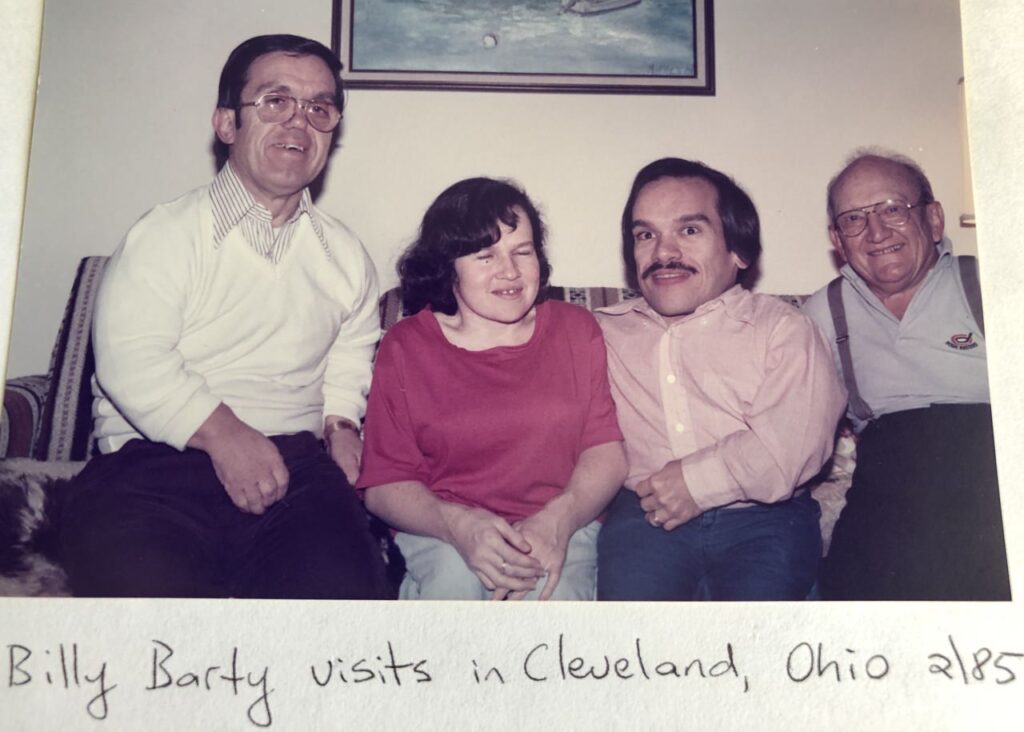
Billy Barty & friends

Every year since 2012, International Dwarfism Awareness Day celebrates little people on October 25th, the birthday of Billy Barty, the founder of Little People of America (LPA). My contribution to this day is to highlight some tweets and articles that have been published through the years.

As you celebrate in 2023, spread awareness on social media with #DwarfismAwarenessDay and #DwarfPride.

TWEETS

Little People of America:

Our 𝟐𝟎𝟐𝟑 𝐃𝐰𝐚𝐫𝐟𝐢𝐬𝐦 𝐀𝐰𝐚𝐫𝐞𝐧𝐞𝐬𝐬 𝐭-𝐬𝐡𝐢𝐫𝐭 is available now! Show off your LP pride and that #LPAisLOVE! Orders can be placed at https://bit.ly/3Qtj3DM. August 5, 2023.

Want to subscribe to receive blog updates sign up today!

The National Advisory Board:

  1. Dwarfism Awareness Month, serves as an invaluable opportunity to generate awareness: dispelling myths, and stereotypes while working to build a greater understanding and acceptance of people with dwarfism. October 16, 2023.
  2. . . . “We are people with all the hopes, dreams, passions, and faults of everyone else,” LPA Founder, Billy Barty. October 12, 2023.

Naffe Tusbola Foundation:

People with dwarfism still face barriers that limit their choices & opportunities TODAY! Please RT to stand in solidarity with Ugandan LPs who are socially & economically excluded, taunted & treated as lesser than others. October 25, 2022.

Danielle Marie Webb:

We must challenge the everyday experiences of ignorance, discrimination and hate. And celebrate the phenomenal contribution to our communities. October 25, 2022.

Gareth Mason:

Today people with Dwarfism still face social and physical barriers that stand in the way of choices and opportunities, this has to change! October 25, 2021.

Angela Muir Van Etten:

LPA Milestones. https://angelamuirvanetten.com/lpa-milestones/ from “Always an Advocate,” Part I, Volunteer Leadership Challenges, chapters 1 & 2, available on Amazon US and UK. October 25, 2021.

Jennifer Arnold, MD:

. . . Join our family in celebrating little people – unite in overcoming the barriers, discrimination, & misconceptions! October 25, 2020.

Lawrence Villepto

LES preschool teachers wore green in support of Nat’l Dwarfism Awareness Day & Month, and read “Not too big … not too small … just right for me,” designed to educate students about dwarfism. October 27, 2020.

Steph @HelloLittleLady BSc (Hons) MA

. . . In this thread, I wanted to share our perspectives of being a Dwarf through participants’ t/photos from the #YoureJustLittle exhibition. 1/ October 25, 2019.

How am I celebrating #DwarfismAwarenessDay? With my family, having an ordinary day, getting on with life, changing the world one photograph (and podcast) at a time. Please RT the first post and show the world our perspectives! Thanks! #DisabilityArts End/ October 25, 2019.

Warwick Davis two short films produced for @LPUKOnline (October 25, 2018):

  1. . . . about ‘anti-social photography’. . .
  2. . . . about using a child’s natural curiosity to teach them about dwarfism.

Cara Reedy:

It’s Dwarfism Awareness Day and in honor of that I am launching my new podcast. Infamously Short Shorts-Tales of The Average Heighted Sideshow. October 25, 2018.

Samantha Trubyk:

Happy Dwarfism Awareness Day! I’m wearing my green and excited to start the day! October 25, 2017.

ARTICLE LINKS:

Joe Pagonakis. “Parma man with a tall spirit shares his story during Dwarfism Awareness Month.” October 17, 2023. https://www.news5cleveland.com/news/local-news/parma-man-with-a-tall-spirit-shares-his-story-during-dwarfism-awareness-month

Erin Pritchard. “Why We Need to Put a Different Kind of Spotlight on Dwarfism.” October 2, 2023. The Mighty. https://themighty.com/topic/dwarfism/addressing-stereotypes-dwarfism-awareness-month/

Angela Muir Van Etten. “Dwarfism Sensitivity & Awareness.” Blog post. October 24, 2022. https://angelamuirvanetten.com/dwarfism-sensitivity–awareness/

Nick Sorensen. “Dwarfism Awareness Month.” First at 4, Erie News Now. https://www.erienewsnow.com/clip/15426993/dwarfism-awareness-month?utm_campaign=snd-autopilot&utm_medium=social&utm_source=twitter_ErieNewsNow

Sallee Ann Harrison. “This is America: How my son taught me to embrace dwarfism.” USA TODAY. October 21, 2022. https://www.usatoday.com/story/news/nation/2022/10/21/dwarfism-awareness-month-embracing-dwarfism-with-son/10544447002/

Angela Muir Van Etten. “Dwarf Tossing Throwback.” Blog post. March 8, 2021. https://angelamuirvanetten.com/dwarf-tossing-throwback/

Dwarfism Awareness Month with LPA. 2020. https://www.lpaonline.org/assets/documents/Dwarfism%20Awareness%20Presentation.pdf

Michelle Kraus. “Dwarfism Awareness Month: A Bit of LPA’s History.” [maybe 2020]. https://vimeo.com/297637342/33db98941e

Stephanie Rodriguez. “Mom shares infant daughter’s story for Dwarfism Awareness Day.” Oct 23, 2020 (Updated Aug 24, 2022). https://www.wqow.com/news/daybreak/mom-shares-infant-daughter-s-story-for-dwarfism-awareness-day/article_eee02390-6ae4-5707-8eff-f012d672cbcb.html

Jade Hayden. “Sinéad Burke and toy company team up to create little person doll for World Dwarfism Awareness Day.” Life. October 26, 2019. https://her.ie/life/sinead-burke-toy-company-team-create-little-person-doll-world-dwarfism-awareness-day-486784

Carly Kutner. “Dwarfism Awareness Month: A Recap.” The Joy of Mira blog. October 26, 2017. https://www.thejoyofmira.com/blog/2017/10/26/dwarfism-awareness-month-a-recap

“Federal Way photographer tells family’s story in Dwarfism Awareness Month photo essay.” October 20, 2015. https://www.federalwaymirror.com/news/federal-way-photographer-tells-familys-story-in-dwarfism-awareness-month-photo-essay/

To dig deeper, go to Angela Muir Van Etten’s dwarfism book trilogy, https://angelamuirvanetten.com/books/

Categories
Work

Breaking Free From Lawyer Stereotypes

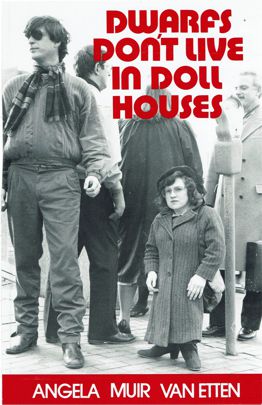
Dwarfs Don't Live

In observance of National Disability Employment Awareness Month this post presents highlights of my work experience as a barrister and solicitor in New Zealand excerpted from Chapter 3, At The Bar, in Dwarfs Don’t Live in Doll Houses, book I in my dwarfism trilogy, https://angelamuirvanetten.com/dwarfs-dont-live-in-doll-houses/

My first meeting with a client shattered stereotypes people had of how lawyers should look. In a crowded court foyer people watched me and whispered among themselves, “Is she really a lawyer?” In the office, parents’ faces brightened with embarrassment, when their curious child crawled under my desk and exclaimed in the midst of the meeting, “Mummy her feet don’t touch the floor.”

Want to subscribe to receive blog updates sign up today!

If anything, my ability to break free from the lawyer stereotype was helpful. My distinctive appearance made it easy for clients to identify and find me. Some people came into my office and before agreeing to make an appointment asked the secretary,  “Is this the office of ‘the little lady lawyer’? and gestured with their hand at waist level to make absolutely sure their appointment was with me.

In court appearances, I needed to catch the Judge’s attention when my client’s case was called. In only my second court appearance, I nervously stood to indicate that I represented the defendant, but the Judge didn’t see me (my head was only level with the shoulders of other lawyers seated at the bar). I made the mistake of waiting for my client to make his way to the dock before speaking. The Judge erroneously concluded that my client was unrepresented and assigned my case to a public defense legal aid lawyer. I was mortified.

Later, people suggested that I should have stood on a chair, but I never stood on a chair to get attention before and I wasn’t about to begin in a courtroom. Instead I moved away from the lawyer’s table, stood in the aisle in the Judge’s line of sight, and shouted “May it please your Honor, I represent the defendant.” The Judge looked up quite startled, muttered an apology, and asked the clerk to call my client again.

I found that lawyers had just as many inhibitions in their dealings with me as other people. However, lawyers that discriminated were clearly disadvantaged. In discounting me as a serious opponent, I defeated their every unprepared argument.

Being a dwarf and a member of the “smallest minority” occasionally improved my effectiveness with clients. Many were themselves in minority groups being immigrants, alcoholics, solo parents or criminals. The fact that I belonged to a different minority was irrelevant. There was immediate empathy and recognition that we both had obstacles to face and overcome.

Often in my professional capacity, I advised people of the best approach to take in a situation. Many accepted my advice, because they realized I knew what it meant to face and overcome obstacles. I was living proof that you can make it even when the going is tough. After we talked, people were encouraged to attempt to put the pieces of their lives back together.

You may also want to read:

Categories
Celebrations

Rehab Act Reaches 50

Rehab Act 50 logo

Turning 50 is a time to look back with pride and look forward with hope.

The 50th anniversary of the Rehabilitation Act of 1973 stands strong as the first civil rights legislation protecting people with disabilities from discrimination by federal agencies, federal contractors, or programs receiving federal funds.

Passage of the Rehab Act and promulgation of implementing regulations even engenders pride. The legislation survived two vetoes before it was signed by President Richard M. Nixon on September 26, 1973. And signing of section 504 regulations in 1977 during the Carter Administration took government building sit-ins of 150 disabled activists and allies. A national disability movement was launched culminating in passage of the Americans with Disabilities Act of 1990 broadening civil rights protections to the private sector.

Want to subscribe to receive blog updates sign up today!

The scope and influence of the Rehab Act then and now is huge:

  • Section 501 established a federal government interagency committee on handicapped employees (now known as the President’s Committee on Employment of People with Disabilities).
  • Section 502 established the Architectural and Transportation Barriers Compliance Board (Access Board) tasked with ensuring access to federal buildings and facilities. Later amendments strengthened requirements for access to (1) electronic and information technology in the Federal sector (Section 508) and (2) medical diagnostic equipment (section 510).
  • Section 503 prohibits federal contractors and subcontractors from discriminating in employment against individuals with disabilities and requires employers to take affirmative action to recruit, hire, promote, provide benefits, train, and any other term, condition, or privilege of employment. The Office of Federal Contract Compliance at the U.S. Department of Labor is responsible for enforcing section 503.
  • Section 504 prohibits discrimination based on disability in any program or activity operated by recipients of federal funds. The U.S. Justice Department coordinates section 504’s consistent and effective implementation with over 35 federal agencies.

And as for looking forward with hope, consider commenting—on or before November 13, 2023—on the proposed rule by the Office for Civil Rights, Department of Health and Human Service. Among other things, the rule covers accessible medical equipment, such as exam tables and scales; medical treatment decisions; value assessment, web and mobile accessibility; and community integration.

These new regulations could provide a critical framework for forcing medical providers to provide more accessible, equitable healthcare. That’s why it’s so important that you take the time to comment. Share your personal experiences as a wheelchair user and how lack of accessibility affects your medical care. It is critically important to support eliminating medical disparities that have complicated and shortened our lives and blocked us from having equal health care for the past 50 years … and into the future.”

Tim Gilmer, editor of New Mobility magazine.

To dig deeper go to:

Categories
FAQs

How Tall Are You?

Height requirement

Here’s another Frequently Asked Question addressed to little people. We’re typically willing to answer this simple question that doesn’t probe the psyche or demand intimate details. But the answer may trigger a fact check.

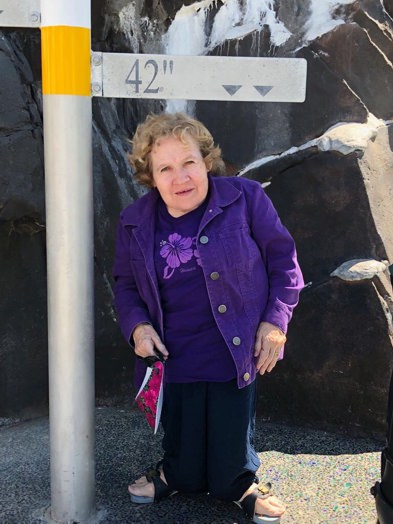
If you asked me today how tall I am, my answer would be 40 inches (1.02 meters or 102 cm). But anyone who read the first book in my memoir trilogy, Dwarfs Don’t Live in Doll Houses (1988), might remember my reported height as 42 inches (1.07 meters or 107 cm). So what’s with the discrepancy? It’s not a case of exaggeration; both are correct.

Want to subscribe to receive blog updates sign up today!

In the 35 years between now and then, I lost two inches—height I can’t afford to lose by the way! Age is the culprit for this loss from increased curvature in my spine and shrinkage in the discs that cushion the vertebrae. In the 16 years between my marriage to Robert and his hip replacement surgery, he gained an inch (2.54 cm). I married him for richer or poorer, better or worse, but who knew it would be for shorter or taller?

Some people find it hard to believe someone could be so short. Take, for example, the night a Florida traffic cop pulled Robert over for speeding. Robert willingly turned over his driver’s license to the officer, but was puzzled when he shined his flashlight backwards and forwards between him and the license. Then the officer asked Robert, “how tall are you?” When he said, “three-feet-six,” the officer retorted, “that’s not what it says here.” And the officer was right. The license recorded Robert’s height as six-feet-three! Apparently, a driver’s license bureau clerk didn’t believe a driver could be three-feet-six and flipped the numbers.

A clerk at the New Zealand (NZ) Department of Internal Affairs (comparable to the United States State Department) had the same problem. I applied for a passport and showed my height as 1.08 meters. The clerk perceived an error and called to query the height. At first, I agreed there might be a mistake. (It was about the time of NZ’s conversion to metrics and I wasn’t confident my conversion was accurate.) She said, “1.08 meters means you are only three-feet-six inches tall?” I replied, “Oh yes, I did do it right.” She decided she had done it all wrong by questioning my calculation.

Height questions are legitimate when lining up for amusement park rides. In this case, minimum height requirements for riders are imposed for safety reasons. For example, you must be tall enough for the shoulder harness to securely lock you in place. If you’re too short you could be thrown right off the ride or fall out when it’s upside down. Or, in the case of Space Mountain at Disney’s Magic Kingdom when safety standards weren’t enforced, I thought my head was going to fall off. My neck, my spine, and falling two inches short of the height requirement screamed out that this ride was hazardous to my health.

So this dwarfism awareness month, what’s your experience with height questions?

For more of my writings, go to https://angelamuirvanetten.com where you can find retail links to my dwarfism memoir trilogy and subscribe to my weekly blog on dwarfism and disability guided by faith and justice.

Categories
Disability Rights

Is Dwarfism a Disability Under the ADAAA?

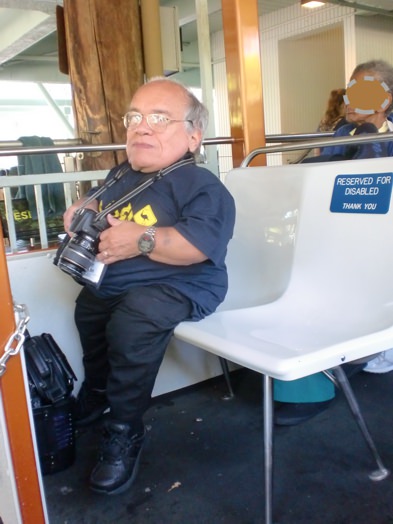
Reserved 4 disabled

Many little people don’t consider themselves “disabled,” because they are independent and productive citizens. In contrast, others assume their dwarfism automatically qualifies them as having a protected disability under the Americans with Disabilities Act (ADA). In either case, disability self-perception is not determinative. Rather, it’s a case of whether the individual meets the disability criteria defined in this landmark civil rights legislation.

Want to subscribe to receive blog updates sign up today!

On September 25, 2008, President George W. Bush signed the ADA Amendments Act of 2008 (ADAAA) 18 years after his father, President George H. W. Bush, signed the ADA. The amendment was necessary because the Supreme Court of the United States (SCOTUS) perception of disability under the ADA was too narrow. The ADAAA overrides past SCOTUS interpretations decreeing that the disability definition should be construed broadly to make it easier for individuals to establish they have a protected disability.

So what is the criteria for showing that dwarfism is covered under the ADAAA? A “yes” answer to any one of the following three questions means you’re protected.

  • Do you have an impairment that substantially limits one or more major life activities?
  • Do you have a record of such an impairment?
  • Are you regarded as having an impairment even though you don’t?

It’s not about a diagnosis, but rather whether an impairment substantially limits the ability of an individual to perform a major life activity as compared to most people in the general population. This requires an individualized assessment.

The ADAAA (42 U.S.C. § 12102) and regulations of the United States Department of Justice (28 C.F.R. §§35.108, 36.105) and Equal Employment Opportunity Commission (EEOC, 29 C.F.R. § 1630.2) spell out how the disability definition should be construed. Non exhaustive lists define “physical or mental impairment,” substantially limits,” and “major life activities.” As a little person with Larsen’s Syndrome I can pick pertinent traits from these lists to demonstrate my disability under the ADAAA. For instance, my physiological disorder (1) affects my musculoskeletal, respiratory, and cardiovascular body systems; (2) substantially limits my major life activities of walking, sleeping, standing, reaching, lifting, bending, breathing; and (3) affects normal cell growth. People with dwarfism and other disabilities can also pick from these lists to show how they meet the ADAAA disability definition.

Thankfully many people with dwarfism have qualified for ADAAA protection. Here are a few examples:

  • An applicant was compensated $20,000 after being denied a purchasing manager position because he didn’t have a driver’s license even though having a license was not an essential job function. United States vs. York County, South Carolina (2019).
  • A nine year old boy received compensatory damages from a youth wrestling league that failed to modify their policy to allow him to “play down” one age division so he could compete with wrestlers closer to his weight and size. B.K. vs. Pikes Peak Wrestling League (2016). 
  • Starbucks agreed to pay $75,000 to a trainee after denying a reasonable accommodation during training and then refusing to hire her (2012).

So let’s reframe the question. Are YOU disabled under the ADAAA? Check the regulations (cited above) to find out.

You may also want to read other ADA blog posts by Angela Muir Van Etten:

Employment note:

Under its affirmative action rules, the EEOC treats dwarfism as a targeted disability because dwarfs face significant barriers to employment, above and beyond the barriers faced by people with the broader range of disabilities, see “Questions & Answers: The EEOC’s Final Rule on Affirmative Action for People with Disabilities in Federal Employment.” January 3, 2017. https://www.eeoc.gov/laws/guidance/questions-answers-eeocs-final-rule-affirmative-action-people-disabilities-federal

Categories
Medical

PHYSICAL THERAPY: Move and Improve

heart PT

We missed World Physical Therapy Day on September 8, but let’s make sure we don’t miss the benefits of physical therapy (PT). As Albert Einstein said, “Life is like a bicycle. To keep your balance you must keep moving.” And that’s where physical therapists come in—they “move people to action” (PTProgress.com).

“It will hurt.
It will take time.
It will take dedication.
It will require willpower.
It requires sacrifice.
There will be temptation.
But when you reach your goal it’s worth it.”
Author Unknown.

Want to subscribe to receive blog updates sign up today!

The natural tendency is to resist PT because it hurts! Indeed that’s a common excuse for refusing to do assigned exercises. But as counter intuitive as it sounds, PT can help reduce pain and discomfort. For example, by strengthening muscles, tendons, and ligaments strain on the joints is eased. Therefore we need to be stronger than our excuses and follow the example of various patients:

Instead of giving myself reasons why I can’t, I give myself reasons why I can.”

(Proactivept.com)

Today it hurts, tomorrow it works.”

(teepublic.com).

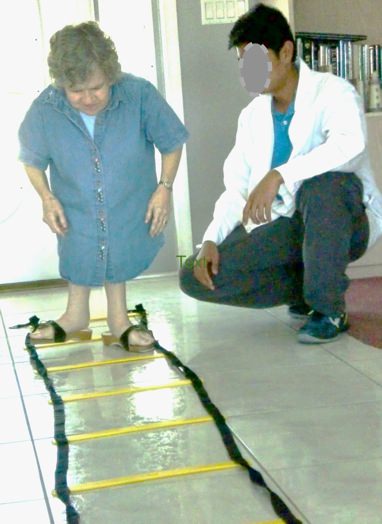
I know this from experience. At age 36, I had severe pain and immobility in my left shoulder. I’d had it before but, this time, rest and over-the-counter medication didn’t solve the problem. I was skeptical when an orthopedist referred me to PT. But after three months of anti-inflammatory pills, heating pads, ultrasound, stretching, and exercise, I was pain-free with improved range of motion. I also learned how to manage future frozen shoulder threats and flare-ups.

PT also helps with post-surgery rehabilitation. After my husband Robert’s bilateral hip replacements in 1997, he not only grew an inch, he also worked hard on his therapy. His discharge from the hospital to home depended on him being able to climb stairs into the house. He was so determined to achieve this goal that the therapist observed that he must be a workaholic. And she was right. Once at home, he continued his hard work and dedicated himself to reach his new goals of returning to the office and driving his vehicle.

After my aortic valve replacement open heart surgery in 2013, I imagined I would entertain visitors reclining on plumped up pillows in the bed. Instead hospital staff had me on my feet and walking circuits within a couple of days. The patients who stayed in bed instead of doing their daily walks were jeopardizing their recovery. I understood the connection between movement and healing, used all six of my PT home visits, and diligently did my exercises. Thankfully my therapist was very adept at modifying the exercise regime to my orthopedic limitations. He taught me how to stay physically active without breaching sternal precautions.

PT can also be an alternative to medication and surgery. It can increase endurance and strength, improve balance and breathing, and reduce joint inflammation. If you want independence without disabling pain, consider PT. Be ready to “push yourself; no one is going to do it for you.”

 “The work you do today determines where you will be tomorrow.”

(k2-healthcare.com)

The therapy examples in this post are excerpted from “PASS ME YOUR SHOES: A Couple with Dwarfism Navigates Life’s Detours with Love and Faith,” book II in my dwarfism memoir trilogy. go to https://angelamuirvanetten.com for book details and retail links.

Categories
Inclusion

Disability Inclusion and Emergency Planning

Courtney Wentz unsplash
Photo by Courtney Wentz on Unsplash
Photo credit Eden Emerald Buyers Agent
https://eebuyersagent.com.au/

This Patriot’s Day we honor the memory of the 2,977 people killed by terrorists on September 11, 2001. Let’s pause for a moment and renew our solemn vow to never forget. We can also continue our resolve for never again by appreciating the Transportation Security Administration created to prevent similar attacks in the future.

Generally, post disaster studies advance the never again resolve by focusing on future preparation, response, recovery and mitigation. The 18 separate billion-dollar weather disasters in 2022—causing at least 474 deaths—has given emergency management agencies much to review and tweak in their plans. Yet despite being

Want to subscribe to receive blog updates sign up today!

adversely and disproportionately impacted and at higher risk of dying during disasters, older adults and people with disabilities are often excluded from the planning process. This needs to change!

Integrating people with disabilities in emergency drills and exercises is a good place to start. June Isaacson Kailes, a disability policy consultant, provides practical guidance on how to make this happen (see citation at the end of this post):

1. Recruit qualified disability subject matter experts based on experience living with a disability or implementing equal access and compliance with the Americans with Disabilities Act;

2. Use people with actual disabilities not nondisabled actors;

3. Get participant feedback about what worked, didn’t work and what needs to work;

4. Budget for accommodations like handouts in alternative formats or sign language interpreters. Consider helping with the costs of transportation, personal assistants, and support people;

5. Choose an accessible location i.e. near a public transportation stop with accessible restrooms, meeting facilities, and staging area;

6. Schedule the exercise when public transportation is available; and

7. Garner feedback from disabled participants on the exercise and draft After Action Report.

Failure to follow these guidelines can result in flawed plans based on disability stereotypes and misconceptions. Also deaf or mobility impaired recruits may bail on an exercise if unable to understand an unqualified interpreter unfamiliar with the terms being used or unable to use an inaccessible bathroom.

Kathie, a blogger who is blind and participates in local emergency response drills every four years, observes that responders are good caring people, but may lack training on disability dos and don’ts. She encourages people with disabilities to volunteer to be victims and uses her participation to educate responders on disability etiquette. Her top three tips to responders are (1) don’t separate me from my service dog, but if you have to, hold his leash at all times; (2) don’t grab and manhandle me—tell me what you’re doing instead; and (3) don’t push me in front of you—let me take your elbow.

There’s a bill pending in both houses of Congress that addresses these issues—the Real Emergency Access for Aging and Disability Inclusion (REAADI) for Disasters Act Senate (S. 1049) and House (H.R. 2371). Please contact your representatives to solicit support for this law which protects the health, safety and independence of people with disabilities during a disaster.

You may also want to read:

Categories
Transportation

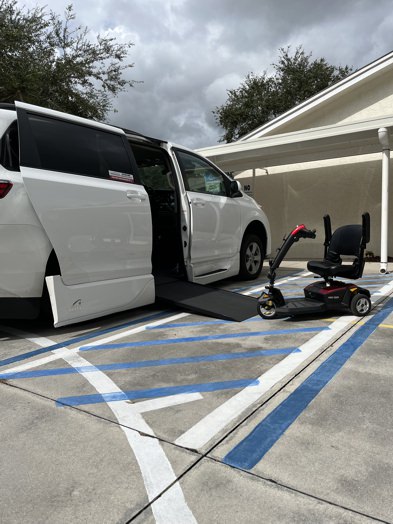
Disabled Scooter Airport Story

Disabled scooter

I landed in Sydney, Australia after a grueling 16-hour flight from Dallas, Texas (connecting from West Palm Beach, WPB, Florida). The flight was flawless, unless you count Sydney baggage handlers propensity for ignoring instructions to deliver my scooter to the plane door. They’ve done this so many times in the past, I anticipated the need to use wheelchair service to baggage claim where the scooter was delivered.

On my return trip to Florida three weeks later, check-in staff agreed for me to ride my scooter up the jetway to the plane door where a lift could take it downstairs to the

Want to subscribe to receive blog updates sign up today!

baggage hold. Yet despite being at the gate for at least an hour before boarding, the boarding agent told me I was going to make the plane late! What? She was the one who stopped me riding the scooter to the door and instead of pre-boarding me with passengers needing assistance was boarding me last because she couldn’t get anyone to take the scooter. Finally, another employee intervened. He let me ride to the door and had no trouble finding two baggage handlers to take the scooter down the lift. Clearly the boarding agent was the source of this problem.

Upon arrival in Dallas, I was pleasantly surprised when my scooter appeared unscathed at the plane’s door. But sadly my scooter story doesn’t end here. After immigration and customs clearance, the scooter broke down. A concerned passenger tried to help, but despite being a mechanic he couldn’t diagnose or fix the mechanical problem without proper tools. (Ironically this forced me to check the disabled scooter in Dallas and voluntarily pick it up in baggage claim in WPB.)

Meanwhile I had to get to my connecting gate without wheels to carry me, my CPAP, computer, coat, and handbag. This time I welcomed the wheelchair service. However, when the gate changed to another terminal requiring a SkyLink ride on the monorail, my wheelchair transporter tried to dump me onto a golf cart with a step too high for me to climb. I refused to switch. This was the first of seven gate changes—three on my original departure date and four the next day after my first flight was cancelled and rescheduled. Each change involved a prolonged wait for another transporter.

But God was in the details. I teamed up with another passenger connecting to WPB who also needed wheelchair service. We watched one others bags when we went to the bathroom, got something to eat, or requested a transporter. And when our flight was cancelled a Good Samaritan advocated to help us avoid going to gate number eight to rebook our flight and arrange vouchers for a hotel, taxi and meal.

I landed in WPB 25 hours later than planned at 12:30 a.m. Despite the early morning hour, prayers were answered when a baggage handler was there with a cart to carry the disabled scooter, a wheelchair transporter brought me to baggage claim, and good friends Lorrie and Garry brought me home.

God provided for all my needs.

For more of my writings, go to https://angelamuirvanetten.com where you can subscribe to my weekly blog and find retail links to my dwarfism memoir trilogy.

Categories
Medical

Crashing Into My 70th Birthday

70th birthday

A positive COVID test, difficulty breathing, losing consciousness, getting my clothes cut off, and a midnight birthday serenade by ER staff were not how I imagined starting my 70th birthday. Instead of gathering around a dinner table with cake and candles in Sydney Australia, my family gathered in the ER waiting room for news whether I would live or die. They had good reason for concern—hypoxia (low oxygen), bluish skin (cyanosis), a double load of carbon dioxide and lactic acid in my blood, and GCS 3 on the Glasgow Coma Scale (incoherent talk). I classified as a “crashing” patient.

Want to subscribe to receive blog updates sign up today!

The first thing I remember hours after my brother-in-law Rob carried me down the stairs on the way to the hospital, was hearing the word “intubation.” Although I was saying “no,” the decision not to intubate had already been made. Thankfully, a specialist had previously rejected this ventilation method. I speculate that my sister Deborah’s disclosure of my dwarfism type contributed to understanding that intubation came with the risk of cutting off my airway.

Fervent prayers were offered on my behalf and God graciously answered when an ER team of eight stabilized me. I was assigned an isolation (negative pressure) unit in the ICU. Among other treatments, a BiPAP machine pushed air into my lungs to improve the blood oxygen level.

70th birthday cake

Fully alert on the morning of my 70th birthday, I was cut off from typical communication lines. The wall clock was hidden behind the nonfunctioning TV screen and I had no phone, computer, or Bible. All I could do was sit quietly like a well-loved fish in a bowl looking out through the glass at the workstation of my one-on-one nurse.

I contemplated my first bout with COVID and the unraveling of birthday plans:

  • Cancelled family dinner.
  • Scrubbed trip to New Zealand.
  • COVID restrictions on interaction with people.

Despite extreme disappointment, I knew God doesn’t make mistakes! He made this clear when He walked beside me every step of the way:

  • Caring ICU visits from Deborah and my brother Greg fully garbed in personal protective equipment.
  • Covering medical expenses with my travel insurance policy.
  • Enjoying slices of an indulgent, chocolate birthday cake.
  • Limiting my hospitalization to two nights and three days.
  • Using credit from my cancelled flight to New Zealand for my matron of honor to visit me in Sydney instead of me visiting her in Christchurch.
  • Celebrating the birthday of my friend from kindergarten days.
  • Saving one week to savor Sydney sights.

Within days of returning home to Florida, a head injury from a fall required another ER visit. Hospital Chaplain Bob prayed with me and played a hymn favorite, “Great is Thy Faithfulness,” on his harmonica. My confidence in God’s faithfulness was twice confirmed. First by the lyrics—

“Morning by morning new mercies I see;
All I have needed Thy hand hath provided
Great is Thy faithfulness, Lord, unto me!”—

and second by the source of the lyrics in Lamentations 3:22-23. (Providentially these verses were in my August 27 Sunday School lesson.)

God’s protection and timing are perfect!

For more of my writings, go to https://angelamuirvanetten.com where you can subscribe to my weekly blog and find retail links to my dwarfism memoir trilogy.