Categories
International Transportation

Air Travel Shocks

Expired Passport

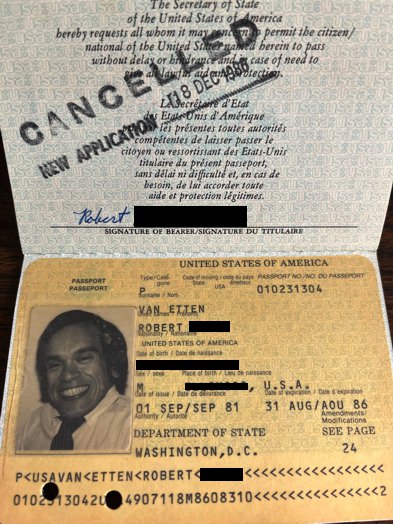
As the plane taxied to the airport terminal in Christchurch, New Zealand (NZ), my heart almost stopped when I looked at Robert’s passport. It had expired! It never occurred to me that his American passport was only good for five years since my NZ one was good for ten. Robert’s view out the plane window might be all he was going to see of NZ on our first trip back since being married. How was I going to tell him?

I quietly handed him his passport and decided it was best for Robert to hear the news from an official. This way his reaction would be completely unrehearsed. As expected, Robert was suitably dismayed when the immigration officer asked him if he knew his passport had expired.

Want to subscribe to receive blog updates sign up today!

The officer asked us to step aside while he called the main immigration office in the capital of Wellington. While we waited for an answer on Robert’s entry status, he asked if I would return to the United States with him. The reality of his situation set in when I answered, “No.” Although the trip would not be the same without Robert, I was unwilling to miss the family reunion.

Thankfully, the officer returned with good news. Robert could enter the country on the condition that he went straight to the US Consulate office in Christchurch to apply for a new passport.

A few years later, Robert and I were in transit to Sydney, Australia to celebrate my sister Deborah’s birthday on December 24th. But instead of being denied entry into the country, Robert was blocked from boarding the plane in Los Angeles. His passport was current, but this time he was missing an Australian visa! Again, it never occurred to me that he needed a visa since he didn’t need one to enter NZ.

We were held over one day while Robert got his visa at the Australian Consulate’s office, arriving just before the office closed early for the Christmas break. I was frustrated to miss Deborah’s birthday, but at least we arrived in time to celebrate Christmas together for the first time in seven years.

Another fiasco occurred when we missed a connecting flight on our way to the funeral of Robert’s mother, Irene. It was infuriating because we were at the departure gate on time. Unfortunately, during the 30-minute maintenance delay, we left the gate to get something to eat. Even though we returned to the gate within half an hour, the plane had already departed! Apparently, the plane was ready sooner than expected and we didn’t know you can’t hear boarding calls in restaurants. Despite the 12-hour delay, we still made it to the funeral.

Thankfully not all our airport stories involve trauma. On our return flight from Baltimore after my Aortic Valve Replacement surgery, we were greeted with good news at Palm Beach International airport. Upon arrival, baggage staff delivered two scooters and one hearing aid—the aid Robert didn’t realize he had left on the scooter seat when we boarded in Baltimore.

This post was drawn from multiple chapters in book II of my dwarfism memoir trilogy, PASS ME YOUR SHOES: A Couple with Dwarfism Navigates Life’s Detours with Love and Faith, https://angelamuirvanetten.com/pass-me-your-shoes/.

Categories
Accessibility Disability Rights

MAKING PUBLIC COMMENTS: Time Wasted or Well Spent?

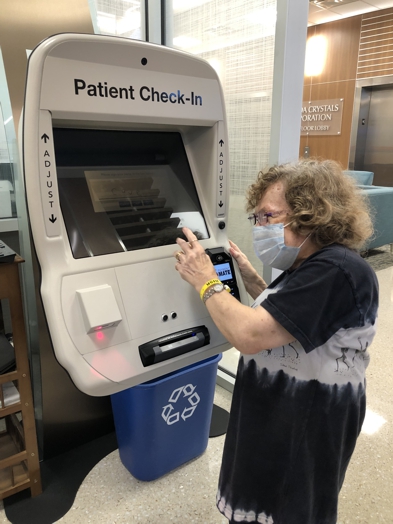
Self-Service Kiosk

Hope for people with dwarfism was rekindled on November 16, 1999. The federal Access Board published a Notice of Proposed Rulemaking (NPRM) to update the ADA Accessibility Guidelines (ADAAG). The embers ignited because the NPRM included a proposal to break the six-inch reach barrier in new or altered buildings and facilities by lowering the reach from 54 to 48 inches. If approved, ATMs, gas pumps, elevators—everything activated with a push, pull or turn—would become accessible to little people.

Want to subscribe to receive blog updates sign up today!

But wait. Wouldn’t making comments on this issue be a waste of time? Only six years earlier, Robert and I were among the 700 Little People of America (LPA) members and allies who responded to the Access Board’s call for public comments on the exact same issue. And our hopes for equal access were dashed on July 15, 1993 when the banking industry persuaded the Access Board to allow operable parts on ATMs to remain out-of-reach at 54 inches.

Yet even though our letters did not result in a rule change in 1993, our time wasn’t wasted. Our letters attracted the attention of the ICC/ANSI A117.1 Committee on Accessible and Usable Buildings and Facilities. And, in 1994, LPA was invited to join this Committee that writes a building code standard which becomes law when adopted by a municipality or State. As a committee member, LPA successfully advocated to break the six-inch reach barrier in the 1998 edition of the ANSI A117.1 access code which subsequently influenced the Access Board to incorporate the 48-inch reach standard in ADAAG’s NPRM.

LPA members, other disability organizations, and myself as LPA’s delegate responded to the call for public comments on the NPRM updating ADAAG. Five years passed before we could answer the question, was it time well spent? But when the final rule was published on July 23, 2004, the answer was an unequivocal yes! Euphoria barely described the joy of finally seeing the 48-inch standard accepted in the 2004 ADAAG federal standard which applied uniformly across the nation.

But this is not a case of one and done. Almost 20 years later, people with dwarfism and disabilities have a long way to go before achieving equal access. Two words make this very clear—self-service kiosks. These inaccessible machines are popping up in retail stores, hotels, restaurants, health care facilities, all over the place. And because they’re not regulated by the ADA, system advocacy is once again a critical need. We need to do something.

The good news is that the federal Access Board recognizes the problem and has issued an Advanced Notice of Proposed Rulemaking to address it. The Board isn’t ready to propose a rule, but seeks input on what the rule should require. November 21, 2022 is the deadline for submitting public comments to docket@access-board.gov with a subject line reading, ATBCB—2022—0004.

So let’s use our time well again and make comments about what changes are needed to make self-service kiosks accessible to little people. Let’s build on our past success.

For further reference, go to see https://www.adatitleiii.com/wp-content/uploads/sites/25/2022/10/Kiosk-ANPRM.pdf.  

You may also like: “Making the Impossible Happen.” Angela Muir Van Etten blog. October 4, 2021. https://angelamuirvanetten.com/making-the-impossible-happen/ This post is based on events discussed in book II of my dwarfism memoir trilogy: ALWAYS AN ADVOCATE: Champions of Change for People with Dwarfism and Disabilities, https://angelamuirvanetten.com/always-an-advocate/.

Categories
Celebrations International

UK Travel: Challenge, Church, and Cuisine

Afternoon Tea

Frequent flyer miles and promotion of the first book in my dwarfism memoir trilogy, Dwarfs Don’t Live in Doll Houses, led to free flights and two nights’ accommodation in Worthing, England. It was October 1990 and we were guest speakers at a weekend conference of the Restricted Growth Association, one of the English organization equivalents to Little People of America.

Our ninth wedding anniversary prompted us to extend the stay for another week. We prepaid a rental car to avoid giving advance notice of our stature. This wasn’t deceptive, but rather timing the disclosure to coincide with our arrival at the service desk. As expected, when we presented our prepaid voucher at the rental agency we were asked to explain how we would drive the car.

Want to subscribe to receive blog updates sign up today!

Robert showed the manager our pedal extensions and seat cushions. Despite obvious doubts, management reluctantly allowed Robert to install the extensions. Word of our presence spread like wildfire and Robert artfully transformed this curious audience of agency mechanics into a team of helpers. They became just as determined as Robert to attach the pedal extensions safely. He probably met every mechanic on the lot before the extensions were successfully installed two hours later.

Then it was my turn. The manager insisted on driving around the block with me to be sure we were not an insurance risk. Robert appointed me to drive since I grew up driving on the left side of the road in New Zealand. I was sleep-deprived having traveled through the night and was relieved to gain the manager’s approval to drive off the lot and finally be on our way.

We had an ambitious itinerary that included the conference, Salisbury Cathedral, Stonehenge, Bath, Stratford-on-Avon, the Lake District, and London. Most of our accommodations were in bed-and-breakfast private homes. We felt the access challenges were worth it to soak in more British culture and cuisine. Did it really matter that we had to leave our bedroom door ajar because we couldn’t reach the door handle?

We spent more time at Salisbury Cathedral, built in 1220, than at Stonehenge which is anywhere from 3,500 to 5,000 years old. The rock formations were impressive, but we preferred the cathedral laid out in the shape of a cross, the 404-foot spire designed to lift our thoughts upwards to God, and seeing one of the four surviving original texts of the 1215 Magna Carta preserving the right to a fair trial and free church.

In Bath, we saw the Roman influence in AD 75 England. Here they built baths in the only mineral hot springs in the country. Robert handled the modern-day parking problem in the historic section of town by flagging down an officer who put a sign in our car window: Driver and passenger are both disabled from U.S.A. but do not have disabled badge.

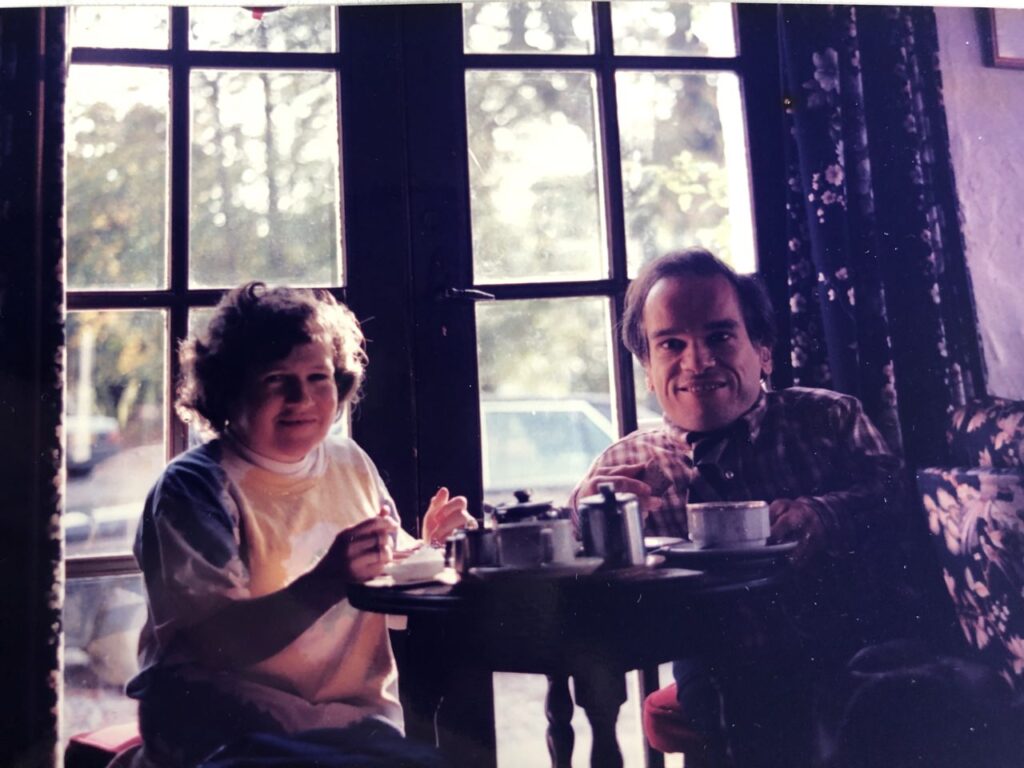
After these and many other experiences, we left England with a strong taste for a return visit one day. But we couldn’t leave the country without sitting down to a traditional English afternoon tea.

This post was adapted from Chapter 10, Season of Travel, in book II of my dwarfism memoir trilogy, PASS ME YOUR SHOES: A Couple with Dwarfism Navigates Life’s Detours with Love and Faith, https://angelamuirvanetten.com/pass-me-your-shoes/.

You may also like prior posts:

“Read And Change Your Life For The Better.” Angela Muir Van Etten blog. September 5, 2022. https://angelamuirvanetten.com/read-and-change-your-life-for-the-better/

“Car Rental and Marriage Mulligans.” Angela Muir Van Etten blog. October 19, 2020. https://angelamuirvanetten.com/car-rental-and-marriage-mulligans/

Categories
Awareness Little People of America

DWARFISM SENSITIVITY & AWARENESS

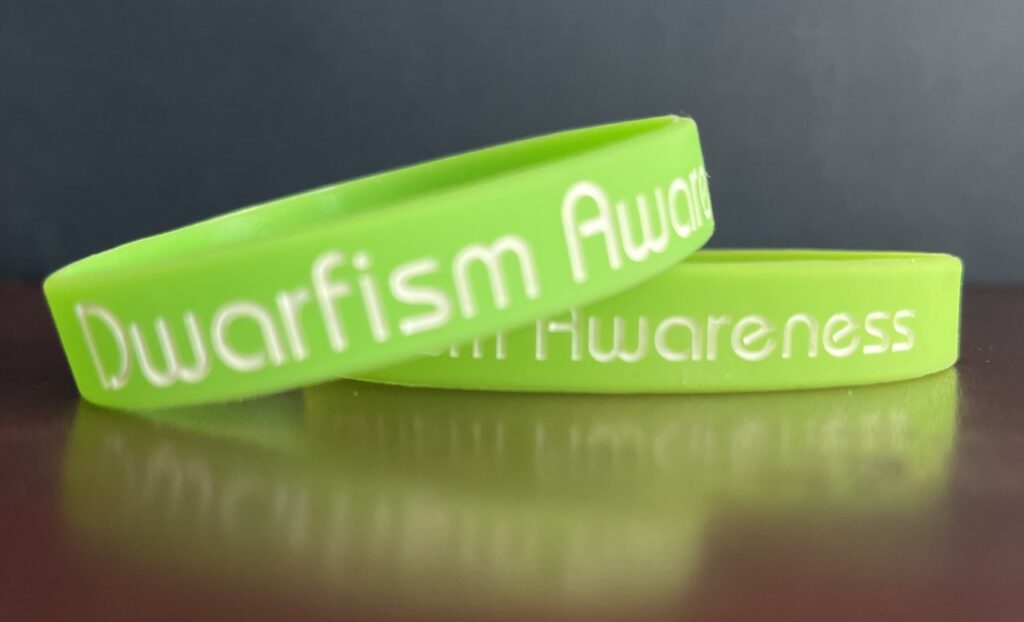
Dwarfism Awareness band

S ─ Speak with a normal voice volume, tone and subject matter. 

  • Don’t change tone of voice to match the one used when speaking to a child.
  • It’s not taboo to use idioms like “It’s a small world.” It was appropriate for an observer to say this when five years after graduation I met someone from my law school class halfway around the world.

Want to subscribe to receive blog updates sign up today!

E ─ Equal treatment is expected:

  • Not pity allowing emotions to run amok.
  • Not paternalism; offer a handshake not a handout.
  • Not a pedestal that elevates us to superhero.
  • Not special treatment, but accommodations that level the playing field.

N ─ Names matter. Call someone with dwarfism by their name rather than describe them by their height. Avoid offensive words like midget, crippled, hunchback, retarded, and dumb. Drop the list of demeaning synonyms for short-stature like pint-size, runt, shrimp, shorty, or stumpy.

S See the little person’s character and abilities not the outward appearance.

But the Lord said to Samuel, “Do not look at his appearance or at the height of his stature, because I have rejected him; for God does not see as man sees, since man looks at the outward appearance, but the Lord looks at the heart.” 1 Samuel 16:7. New American Standard Bible.

I ─ Independence is highly valued by people with dwarfism as seen in the demand for:

  • Accessible and usable public buildings and facilities.
  • Accessible work spaces and off-site events.
  • Access to public or private transportation, including driving our own vehicle.  

T ─ Treat people with dignity and respect:

  • Service representatives should talk directly to the little person in front of them not to their companion who the representative assumes speaks for them.
  • Don’t condescendingly pat a little person on the head. And certainly don’t reach over a little person’s head to avoid waiting in line.
  • Respect the personal space of someone using a wheelchair or scooter. In other words, the armrest or writing surface is not free space to be appropriated.

I ─ Imagine yourself in the other person’s shoes. Not so that you thank God you are not the one with dwarfism, but to be sensitive to needs.

V ─ Value differences.Remember each little person is an individual and will have their own way of doing things. For example, some lower counters in their homes, others use stools and climb; some drive with pedal extensions, others use hand controls; and, when talking to average-size people, some little people prefer they kneel down or crouch for an eye-to-eye conversation, others don’t want any concession to height differences.  

I ─ Interact as you do with any person. Common courtesy applies. Adults should not ask personal questions. Children are given a pass when their curiosity opens the door to a learning opportunity.

T ─ Take cues from the person with dwarfism. Ask if help is needed before rushing in and creating a problem.

Y ─ be Yourself. Relax. Joke. Smile. Encourage.

This post is based on principles and examples found in books I and II of my dwarfism memoir trilogy: Dwarfs Don’t Live in Doll Houses and PASS ME YOUR SHOES: A Couple with Dwarfism Navigates Life’s Detours with Love and Faith,https://angelamuirvanetten.com/books/.

You may also like prior posts:

Categories
Guest Independence

To Boldly Go With a White Cane

white cane pic
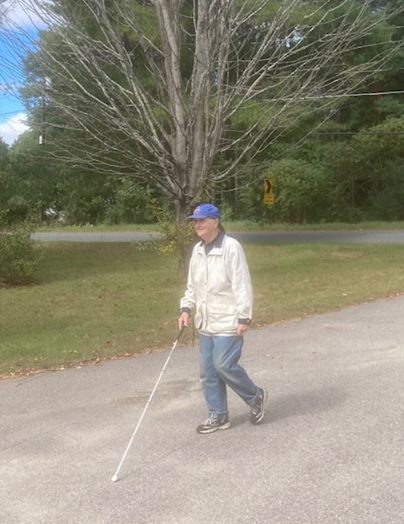
Jody W. Ianuzzi, a mentor and advocate for blind people conveying a can do attitude towards vision loss.


Through the ages blind people have used a staff, walking stick, or cane to explore their environment. This all changed in 1921 when James Big from Bristol, England painted his walking stick white to make it more visible. The concept caught on when Rotary clubs and the BBC encouraged all blind people to use white canes for identification. The concept spread to France and, in the 1930s, to the United States where Lions clubs promoted the white cane to identify blind people. By the late 1930s, state laws were enacted to protect blind pedestrians.

Want to subscribe to receive blog updates sign up today!

The next major advancement in cane mobility came after World War II when Richard Hoover used a long white cane to explore the environment along with a new method of moving the cane from side to side one step ahead of the traveler. This was the beginning of the Orientation and Mobility Specialist profession. Today O and M specialists teach young children to senior citizens how to use the long white cane and nonvisual environmental clues to negotiate around all kinds of obstacles. These techniques include listening for traffic and safely crossing the street.

In the past, blind people rarely traveled alone but now with the advanced O and M techniques blind people are able to travel independently with safety and dignity. The techniques have evolved but so have the canes. Historically the walking stick was made of wood. Now modern canes are made of carbon fiber and they are available with many different types of tips depending on the travelers preference. 

Blind adults who learned to use the white cane as a young child never knew a time in their life when they didn’t have the advantage of traveling with a long white cane. Other adults sometimes have an adjustment and resist using the white cane until they discover the freedom and independence it provides.

I was taught to use the white cane at age 16 when all of my friends were getting their drivers licenses. This was very difficult for me because I did not want to appear different from my friends. I also resisted using the white cane until I met other capable blind adults who could travel more freely than I could because they had great cane skills. I realized that I would rather travel as a competent blind person than try to fake being sighted and risk a serious injury. I no longer walked with my head down. Rather I held my head up high and walked proudly and quickly for the first time in my life!

In 1964, Congress recognized the importance of the long white cane in providing freedom and independence to blind people and passed resolution HR 753 declaring October 15 to be White Cane Safety Day across the United States. Every president since Lyndon Johnson has observed this date as White Cane Safety Day for all blind Americans. 

Now, a century after James Big painted the first white cane, blind people around the world can all go boldly with their long white canes!

Reference: https://www.njcounciloftheblind.org/brochures/history_of_white_cane.htm

For a subscription to my weekly blog on dwarfism and disability issues, go to https://angelamuirvanetten.com/blog/.

Categories
Work

Lessons From My 40-Year Law Career

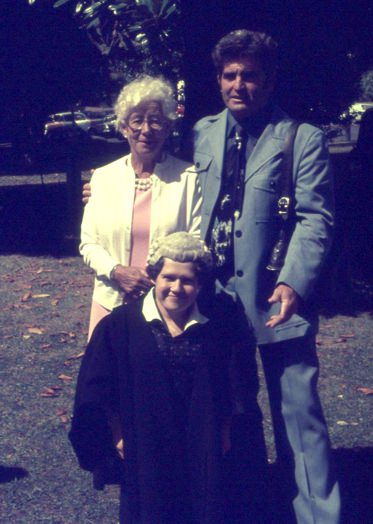
New Zealand bar admission with Nana & Dad

Law was my chosen profession. After earning law degrees and multiple bar admissions in New Zealand and the United States, I discovered that such credentials are not an automatic entry into the work force. Many prospective employers can’t imagine a client having confidence in the ability of a 40-inch-tall lawyer. Thankfully, I had enough imagination for both of us.

My entry into a legal career preceded nondiscrimination disability laws. Hence employers freely expressed flimsy excuses and abhorrent advice:

  • You won’t be able to appear in court because the legal robe will be too long!
  • Judges won’t wait for you to run up and down the stairs to get instructions from a client in custody.
  • Get a job in government service where you’ll work behind closed doors and won’t need to deal with the public.

Want to subscribe to receive blog updates sign up today!

Undeterred by discriminatory barriers, I looked for employers focused on skills not appearances. To be sure I wasn’t screened out before a job interview, I gave no hint of my height when calling or submitting a resume. It wasn’t a matter of hiding my size, rather a question of timing. It’s easier to dispel preconceived notions face-to-face.

Although not all employers are open to persuasion as shown in one interview. The attorney leaned back into his leather chair, put his feet on the desk, and his only questions were unrelated to the job or my experience. Clearly he was not considering me for the position. With nothing to lose, I challenged him for the questions he didn’t ask. This startled him into a bolt upright position followed by one open-ended query. My answer did not dint his prejudice, but at least he learned his bigotry was exposed.

Several months after I began working for an employer obligated by federal law to provide reasonable accommodations, a kindergarten height toilet mysteriously appeared in the bathroom. I was transported into the fantasy land of Goldilocks and the Three Bears: one for papa bear (wheelchair height), one for mama bear (regular height), and one for baby bear (my height). I had to ask, “What does the company think I’ve been doing all this time when I needed to use the bathroom?” The incident sparked an addition to the employee policy manual: Always ask the person with a disability before making an accommodation!

October is National Disability Employment Awareness Month. The range of law jobs I engaged in during my 40-year law career demonstrates a few of the many directions a law degree can take:

  • Barrister and solicitor in a legal aid court practice.
  • Legal writer and project editor of disability civil rights and other law books for Thomson Reuters.
  • Staff writer on religious liberty issues for the Christian Law Association.
  • Advocacy Specialist and Coordinator for the Coalition for Independent Living Options.

My first thought of becoming a law correspondent for a media outlet never happened, but my interest in writing featured for the majority of my career. So don’t be afraid to pursue your passion and don’t succumb to the bigots who ignore your talent. This post includes excerpts from books I and II in my dwarfism memoir trilogy: Dwarfs Don’t Live in Doll Houses and PASS ME YOUR SHOES: A Couple with Dwarfism Navigates Life’s Detours with Love and Faith, https://angelamuirvanetten.com/books/.

Categories
Transportation

Add Teeth Not Candles for Birthday of Air Carrier Access Act (ACAA)

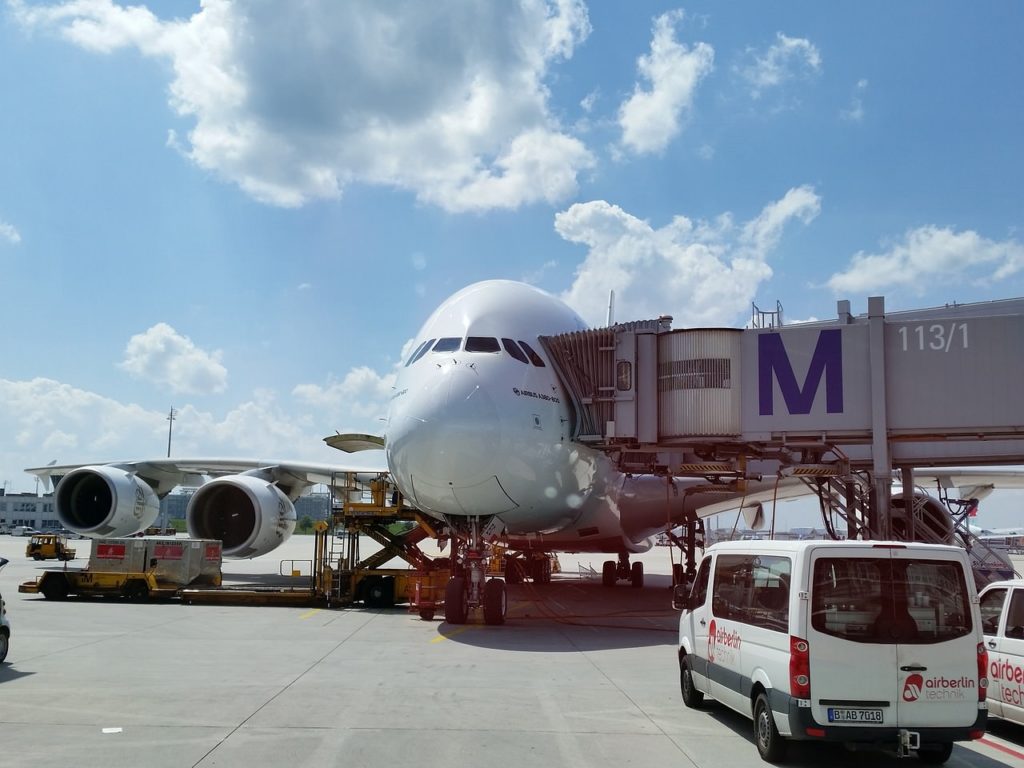
Airport

Wheelchairs and scooters are not baggage; they are like legs to those whose mobility depend on them.

Yet over 20,000 wheelchairs were reported lost, damaged or destroyed since December 2018, the first month airlines were required to report numbers to the U.S. Department of Transportation (DOT). This represents nearly 1.5 percent of mobility devices loaded as cargo and, in January 2022, was double that of baggage! This breaks down to about 29 a day.

Want to subscribe to receive blog updates sign up today!

And according to the Paralyzed Veterans of America September 2022 survey, almost 70% of those traveling with a wheelchair or scooter have had their device damaged. Although the Airline Passengers with Disabilities Bill of Rights, published in July 26, 2022, mandates that the airline compensate up to the original purchase price of the wheelchair or device, this falls far short of redressing the hardship experienced by device users.

Wheelchairs are not bought off the store shelf; they are customized to fit the user’s body and medical needs.

As one disability advocate explained, “You can’t just say, ‘The chairs’ broken, here’s another chair.’” A loaner wheelchair or scooter will lack the custom features needed to maintain health and safety. In a most egregious case, Engracia Figueroa, an amputee with a spinal cord injury died from a severe infection of a pressure sore that developed when she was using an airline loaner after they totaled her power wheelchair.

Repairs to damaged wheelchairs often take weeks or months to complete. The process involves an evaluation, a prescription, insurance approval, ordering parts, and making the repairs. In the meantime, the user loses mobility, independence, possibly the purpose of their trip, and maybe the ability to go to work or play their sport.

Wheelchairs are not simple technology; they are sophisticated, fragile, and should be handled with care.

Airlines often choke when asked to pay the original purchase price of the wheelchair or scooter. Some airlines have responded to passenger complaints about damages with low ball offers like 5,000 travel miles or monetary compensation of $125. In Figueroa’s case, it took months of fighting before the airline agreed to pay the $30,000 needed to replace her wheelchair. And yes, high tech power wheelchairs can cost more than some cars.

Under the ACAA passengers can’t bring private legal action against offending airlines. They’re limited to filing complaints with the airlines and the DOT. But only three times since 2018 has the DOT exercised its’ authority to fine an airline for ACAA violations, despite receiving about 30,000 disability-related complaints annually.

So on October 2nd let’s give the ACAA a 36th birthday to remember. Let’s jump start the Air Carrier Access Amendments Act of 2021 (H.R. 1696/S. 642) introduced by U.S. Senator Tammy Baldwin and U.S. Representative Jim Langevin, on March 9, 2021. Among other things, the bill increases penalties for damaged wheelchairs or mobility aids, gives air travelers the right to sue in court for damages, and requires better stowage options for assistive devices.

Please contact your representative today and ask for their support.

You may also like to read:

For a subscription to my weekly blog on dwarfism and disability issues, go to https://angelamuirvanetten.com/blog/.

Categories
Celebrations Transportation

Finding Hugo: Our Wheelchair Accessible Van

Finding Hugo

Eighteen weeks without a vehicle parked in our garage was a constant reminder of our quest for independent transportation. Robert’s struggle to get into a sedan, SUV, and wagon made it clear that our next vehicle would be a Wheelchair Accessible Van (WAV)—one he could enter riding his scooter up a ramp.

Our seven trips to three different WAV dealers took us from 20 miles to 125 miles from home. We considered the Chevrolet Traverse, Chrysler Town & Country, Dodge Grand Caravan, Honda Odyssey, and settled on a 2020 Toyota Sienna. In addition to sales spiels, we paid attention to consumer reports and conferred with little people in the “LP Adaptations” Facebook group. And we prayed for God’s direction.

Want to subscribe to receive blog updates sign up today!

Given the technology needed to customize a WAV to our driver and passenger needs, one dealer would only sell to us if a Certified Driving Rehabilitation Specialist (CDRS) gave a thumbs up on the primary safety questions:

  • Pedal extensions or hand controls?
  • Seat cushions, power adjustable height driver seat, or both?
  • Remove and replace the existing steering wheel or add an extension?

But after waiting three weeks for this driver evaluation, the CDRS erected a major road block.

Although I had driven with pedal extensions for 50 years and most little people I consulted use extensions on their WAV, the CDRS recommended hand controls. She rejected a seat back cushion and proposed modifying the driver’s seat depth. Her idea of replacing the steering wheel with a smaller wheel meant relocating the controls on the original wheel. She gave no cost estimate for any of these “safety” changes. But clearly such customizations would add insane expense to an already costly purchase. And when we rejected the CDRS evaluation, the dealer discontinued any effort to sell us a WAV.

As with any road block, God showed us the detour that got us back on the road to WAV ownership. My online query to a dealer in Fort Myers, Florida was answered the same day and was quickly followed with an offer to send a driver to transport us free of charge from Stuart to their location. And in a surprising twist, the dealer representative wore two hats: sales and DRS credentials. Her knowledge of mobility technology squelched any safety concerns about driving with pedal extensions or a back rest seat cushion strapped in place. She retained the existing steering wheel and attached an extension in the front. Thus no modifications to the seat depth or steering wheel controls were needed.  Both CDRSs recommended an adjustable height transfer seat, but only one found a vehicle that fit two scooters.

In a perfect world Hugo would not have cost more than the starter home we bought 35 years ago! Plus we would never have bought a vehicle with a fuel cap above my head. But God gave us a miracle when He steered us to Auto Express South in Fort Myers, https://www.autoexpresssouth.com. Thanks to team Yasmin, Tom, Cris and Eddie. You all are the best!

You may also like prior posts:

For a subscription to my weekly blog on dwarfism and disability issues, go to https://angelamuirvanetten.com/blog/.

Categories
Celebrations

My Path to Citizenship

American Passport

At 4:00 PM on September 17, 1987, the 200th anniversary of the United States Constitution, I joined the Bells Across America tribute. I was the only one at my workplace to ring a bell in remembrance of church bells ringing in Philadelphia calling people to hear the first public reading of the newly signed Constitution. This was ironic given that as a legal permanent resident alien from New Zealand I was celebrating more than my American-born citizen colleagues.  

Even though I was eligible to apply for U.S. citizenship, I wasn’t ready. Ringing a bell was one thing, but taking the Naturalization Oath of Allegiance to the U.S. required me to “absolutely and entirely renounce and abjure all allegiance and fidelity” to New Zealand. But by 1998 my perspective had changed.

Want to subscribe to receive blog updates sign up today!

After 17 years as a legal permanent resident alien, I was tired of sitting on election sidelines. I wanted to vote. And on January 17th when news broke of President Clinton’s alleged White House sex scandal with a White House intern, I knew I needed to vote. So on June 26th, I applied for citizenship. And my decision was confirmed in December when President Clinton was impeached for perjury and obstruction of justice.

Approval of my naturalization application involved more than living lawfully in the country as the spouse of an American citizen. An immigration officer would interview me and ask questions about my application and background. In addition, I had to show the officer my ability to read, write, and speak basic English and have a knowledge and understanding of U.S. history and government. Thankfully my dwarfism was not an issue.

For the English test, I had to correctly read out loud and write one out of three sentences. No problem. The civics test was more challenging. I studied a list of 100 questions, but at the immigration interview the officer randomly picked ten questions from the list. A passing score was six out of ten. I questioned the officer when he stopped after six questions and wrote 60% on the test paper. But he saw no reason to continue and left me feeling like I fell short of the 100% mark.

September 25, 1999, the day of my naturalization ceremony in Miami, Florida, was emotional and stressful. There were no tears of joy, but rather sobbing in the car when six lanes of traffic came to a standstill for so long that we arrived late to the venue. Robert dropped me near the entrance, but was denied entry after he parked the car. I made it in by the skin of my teeth, but had to sit in a back row unable to see anything. When it was time to take the citizenship oath, applicants stood when their country’s name was called. I waited expectantly, but New Zealand was never mentioned. Instead, I stood on the last call for anyone whose country had not been named! I took the oath of allegiance, but was in no mood to ring any bells.

For a free subscription to my weekly blog on dwarfism and disability issues, go to https://angelamuirvanetten.com/blog/.

Categories
Transportation

Acts of Encouragement

Driver Carol Paul

I was sitting in the garage waiting room when the manager asked me to step into another room. Bad news was not what I expected to hear. But she hit me with an accident report. A worker had crashed my car when moving it into a service bay. The rear end was smashed in. The car was not drivable, not now, not ever! Written off. Junkyard inventory.            

My mind started spinning as I contemplated the ramifications. Repairs on the 18-year old Mazda wagon would cost more than it’s worth. We had sold Robert’s van a few months earlier so now we were without wheels. Modifying a rental vehicle was difficult. Locating and modifying a replacement vehicle was time consuming and costly.

Want to subscribe to receive blog updates sign up today!

These thoughts spun in my head as I observed the distress of the worker who had slammed his foot on my left foot accelerator instead of the brake. He was mortified. The manager was effusive with apologies and assurances that the garage would fully compensate me for the loss. And the garage faithfully followed through with funds for both the car’s value and cost of rides in the interim. But how could they compensate for the loss of time, independence, spontaneity, and plans that had to be cancelled?

I clung to the knowledge that God is in control and allowed this to happen. And it occurred to me that this was God’s way of expediting our long term plan of replacing my car with a wheelchair accessible van (WAV)! We had known for some time that Robert’s difficulty getting in and out of my car meant a WAV was in our near future. The accident made it clear the future had arrived. 

            Even so, I was disheartened and discouraged. Our plans for driving to the Little People of America Florida weekend meeting in Sarasota were scrubbed. The opportunity for making in person book sales was lost. COVID had made in person marketing inadvisable and now this!

The words of the psalmist struck a chord with me.

Why am I discouraged? Why is my heart so sad? I will put my hope in God! I will praise him again—my Savior and my God!” Psalm 43:5, New Living Translation (NLT)

And God reminded me that He is a worthy source for my hope and praise! He activated our church and biological families to encourage us by meeting our transportation needs. They acted in accordance with New Testament instructions:

And we urge you, brothers and sisters, . . . encourage the disheartened, . . .” 1 Thessalonians 5:14, New International Version (NIV)

But God, who encourages those who are discouraged, encouraged us by the arrival of Titus.” 2 Corinthians 7:6 (NLT)

            This #NationalDayofEncouragement, I reflect on our 18 weeks without wheels. Our 21 member driver team transported us to 58 destinations primarily for church activities, medical, and vehicle shopping. We also had personal couriers pick up prescriptions and mailed packages.

We are encouraged beyond what words can express! We salute you all.

For a subscription to my weekly blog on dwarfism and disability issues, go to https://angelamuirvanetten.com/blog/.