Categories
Awareness

Read and Change Your Life for the Better

Dwarfs Don't Live

Reading is good for your health. According to the promoter of National Read A Book Day on September 6, reading renews energy, elevates mood, promotes more restful sleep, and slows the progression of dementia. Another study shows that adults who read at least 30 minutes a week are 20% more satisfied with life than those who spend less time reading.

Add to that the wisdom of others who promote the value of reading:

  • Reading is an exercise in empathy; an exercise in walking in someone else’s shoes for a while.” ~ Malorie Blackman
  • The more that you read, the more things you’ll know. The more that you learn, the more places you’ll go.” ~ Dr. Seuss, I Can Read With My Eyes Shut! 
  • Read to make yourself smarter! Less judgmental. More apt to understand your friends’ insane behavior, or better yet, your own.” ~ John Waters, Role Models
  • We read to know we’re not alone.” ~ William Nicholson

Want to subscribe to receive blog updates sign up today!

Even though most of us know what’s good for us, we often don’t do it. Reading is one of those activities. Reportedly, 81% of people don’t spend as much time reading as they’d like. I’m one of those people. As a result, my “want to read” list has 235 books! 

So how do we decide what to read? Actress Emma Thompson gives us a hint. “Books are like people, in the sense that they’ll turn up in your life when you most need them.”

After writing part one in my memoir trilogy—Dwarfs Don’t Live in Doll Houses— https://angelamuirvanetten.com/dwarfs-dont-live-in-doll-houses/, I was surprised how many parents of young children were hungry for the information I shared about my growing up years in New Zealand. One mother told me, I keep your book by my bedside and refer to it frequently. Elizabeth, a parent of a short-statured adult, revealed:

I thought I knew a great deal about what it was like to be a short-statured person but like so many others, I was not realistically seeing life as a Little Person experiences it.”

And Rosemary wrote:

In this book is pure wisdom and great help! As I am petite and short in height, I had experience with stares and oglers in life. . . Bravo and cheers for a wonderful, in-depth analysis!”

Susan, the grandparent of a teenager with Down Syndrome said:

Your book has answered my questions. With this new understanding, I now see ‘little people’ in no need of pity, but as my equal and capable of achieving all God has planned for them.”

Two colleagues of average height appreciated having misconceptions dispelled and being informed of everyday obstacles a little person overcomes.

So this year, how about enjoying National Read A Book Day by reading a Kindle e-book or used paperback of Dwarfs Don’t Live in Doll Houses available on Amazon.com? Or, due to my sister’s discovery of a box of print books in her basement, order a new print and autographed copy for $4.99, plus $4.00 postage, from angela@angelamuirvanetten.com. Need more information? Go to https://angelamuirvanetten.com, read about my memoir trilogy, and subscribe to my weekly blog.

Categories
Disability Rights International

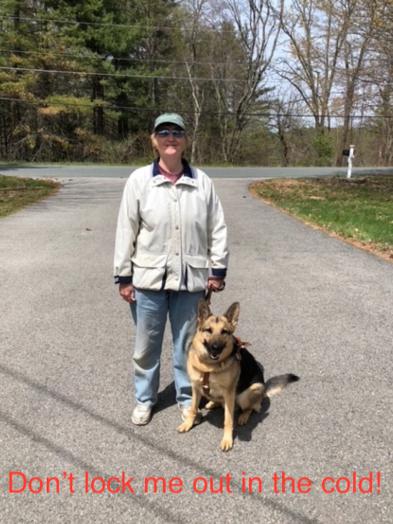
Welcome Service Dogs; It’s the Law

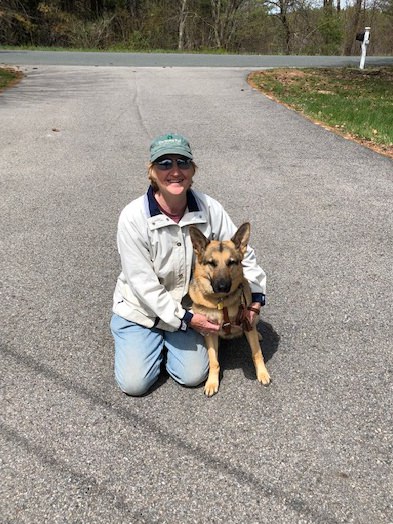
Jody & Chief

Exclusion
Your dog can’t come in here.
You and your dog must leave immediately.

These are the words service dog owners frequently hear when seeking to enter hotels, restaurants, stores, and the like. And some dogs are excluded without words. This happens when drivers of buses and taxis refuse to stop after seeing a service dog with a passenger waiting for a ride.

So how frequently are service dogs excluded? The numbers are extraordinary. Access has been refused to three-quarters of American and British guide dog owners and half of Australian handlers and their dogs in the past two years.

Want to subscribe to receive blog updates sign up today!

Exasperating civil rights violation

How can this be when the Americans with Disabilities Act (ADA), 33 State laws, and civil rights laws in other countries make it unlawful to withhold the welcome mat? Service dogs must be allowed to accompany their handlers into any facility, or portion thereof, open to the public. It’s the law!

Exception

Removal of a service dog is permitted if the dog is out of the handler’s control, behaving badly, poses a public health and safety risk, or is not housebroken.

Excuses don’t hold water

Businesses are either ignoring the law or ignorant of what the law requires. But neither excuse condones comments like the following:

I’m allergic to dogs.
I don’t want my car to get dirty.
I thought the dog was a pet since he wasn’t wearing a vest.
You don’t look disabled.

Besides, ignorance of the law is no excuse. For an employee to say, “I didn’t know,” at best, shows poor training or, at worst, a reckless disregard for the well-being of those whose safety and security is dependent on their service dog.

Examine

Staff challenging the legitimacy of a service dog can legally only ask the handler two questions: (1) is the dog a service animal required because of a disability? and (2) what task has the dog been trained to perform? Staff cannot demand that the dog be registered, certified, or identified with a harness, ID card, or vest. Training documentation and a demonstration of tasks the dog performs cannot be required. Questions about the handler’s disability are off limits.

Exercise your right to enter

When service dogs are denied entry, handlers can take one or more of the following steps:

1. Explain how the dog’s entry is legally mandated. Consider sharing a one page summary of the ADA, State, or other pertinent law.

2. Ask to speak to a manager or owner if lower tier staff still refuse entry.

3. Consider calling the police if the law provides for criminal penalties and ask for a police report.

4. If feasible, use your cell phone to record the refusal.

5. Document the refusal by making contemporaneous notes of the words spoken and actions taken against you and your dog.

6. File a complaint with the appropriate State or federal enforcement agency, see https://beta.ada.gov/file-a-complaint/

7. Get a lawyer to bring a private civil action against the offending business or entity.

You might also like:

Categories
Disability Rights

Respect Service Dogs

Jody & Chief

Are you among the 79 million American pet dog owners with reason to celebrate National Dog Day on August 26th? If not, you can celebrate service dogs by showing them respect. They are trained to perform individualized tasks for people with disabilities.

Most of us are familiar with a guide dogs role of helping people with visual impairments independently and safely navigate everyday obstacles. But there are four other categories. A medical response dog assists individuals with a medical disability. For example, a diabetic alert dog detects high or low levels of blood sugar in people with diabetes and alerts their owners to dangerous changes in blood glucose levels. A seizure response dog helps during or after a seizure.

Want to subscribe to receive blog updates sign up today!

Then there are psychiatric assistance dogs serving people with mental disabilities like anxiety, autism, depression, and schizophrenia or disorders like bipolar, obsessive-compulsive, and post-traumatic stress. With training customized to their owner’s need, the dogs can help by waking them up from a night terror, guiding them to a safe space during an anxiety episode, giving medication reminders, standing between their owner and other people in claustrophobic situations, or fetching help for an owner immobilized by fear.

A hearing dog assists people who are deaf or hard of hearing by alerting their owner to sounds like doorbells, smoke alarms, telephone rings, alarm clocks, or someone calling the owner’s name. A mobility service dog helps wheelchair users and those with poor balance with tasks like retrieving dropped items, opening and closing doors, turning lights on and off, or pulling a wheelchair up a slope.

In order for service dog assistance to be effective, the public needs to respect their work. The dogs should not be fed, touched, talked to, or approached without the owner’s consent. As one guide dog owner said, “Distracting the dog is a safety risk, not just an inconvenience.” For example, one owner fell and injured herself when a woman made a grab for her dog’s lead just as she was stepping off a train. 

Sadly 71% of guide dog owners in the United Kingdom reported such distractions occurring on a daily basis and 24% said this happens weekly. On the flip side, 30% of the public admitted to distracting a guide dog while it was working. This disrespect needs to stop.

Even though emotional support dogs and therapy dogs do not require training customized to their owner’s disability and do not qualify as service dogs, they are also worthy of respect. Emotional support dogs provide comfort and companionship to individuals living with emotional and other mental health disabilities.  Therapy dogs are commonly found in hospitals and nursing homes and their task is simple: to comfort people other than their owners. For example, veterans with post-traumatic stress disorder are often comforted when visited by a therapy dog. And unlike service animals, the work of a therapy dog often involves touching, petting, and playing.

For discussion of the rights of service dog owners to take their dog into public places, see next week’s post “Welcome Service Dogs.”

You might also like:

Categories
Humor

Sparkle with Laughter and Jokes

Tell a Joke

Laughter is magic that dispenses clouds and creates sunshine in the soul.” ― Richelle E. Goodrich

 “A day without laughter is like living in darkness; you try to find your way around, but you can’t see clearly.” ― Emily Mitchell

Always laugh when you can, it is cheap medicine.” ― Lord Byron

Just as well there’s a day dedicated to helping us laugh. National Tell A Joke Day on August 16 encourages us to celebrate by telling a joke, keeping the mood light, and enjoying a good laugh. After all, people have been telling jokes for thousands of years.

Want to subscribe to receive blog updates sign up today!

But as Erma Bombeck said, “There is a thin line that separates laughter and pain, comedy and tragedy, humor and hurt.” As a result, when choosing what jokes to tell we should follow the golden rule and not be offensive or insensitive. So how do we avoid jokes that are crass, racist, religionist, sexist, homophobic, or ableist?

A safe place to start could be a corny joke kids often tell:

  • Why shouldn’t you write with a broken pencil?

Because it’s pointless.

  • Why can’t your nose be 12 inches long?

Because then it would be a foot

  • What did the ocean say to the shore?

Nothing… it just waved.

But if we start with kids play, the joke will more likely elicit a groan than laughter dispensing medicine.

So what about a malapropism, the unintentional humorous misuse or distortion of a word? Church bulletins are a great place to find such bloopers:

  • Potluck supper Sunday at 5:00 PM – prayer and medication to follow.
  • Carol is asking prayer for a good autopsy result.
  • Hear an excellent speaker and heave a healthy lunch.

And then there’s the humor in choosing correct words that are strung together poorly: 

  • The cost for attending the Fasting and Prayer Conference includes meals.
  • Ladies, don’t forget the rummage sale. It’s a good chance to get rid of those things not worth keeping around the house. Bring your husbands.
  • Eight new choir robes are currently needed due to the addition of several new members and deterioration of several others.

So what about all those disability jokes? Do they distinguish between humor that denigrates and humor that enlightens?

  • I’m not saying short people are inferior, but I do look down on them.
  • I dated a girl with a lazy eye once, but she was seeing someone else on the side.
  • How do you end two deaf people arguing?

Switch off the light.

  • What test does a person with Down syndrome do well on?

A DNA test, they get a 47 out of 46.

Is disability humor off limits? Do people with disabilities need to get a thicker skin when cruel or tasteless jokes are made at our expense? Do we agree with Nicolas Steenhout that disability humor is part of disability culture? Perhaps the answer lies in understanding that jokes about people with disabilities are not funny, but jokes by people with disabilities can be.

To dig deeper, I highly recommend reading “Disability Humor, Insults, and Inclusive Practice” by Robin M. Smith and Mara Sapon-Shevin, December 12, 2012. State University of New York, Cortland. http://sites.cortland.edu/sasc/wp-content/uploads/sites/12/2012/12/Disability-Humor-Final.pdf And to automatically receive weekly posts in your email inbox subscribe to my blog at https://angelamuirvanetten.com.

Categories
Vacations

Water Adventures

Jet ski

I’ll never forget the day mum helped me catch a wave as a teenager. As we stood in the ocean waiting for my ride on a handheld surf board, three waves piled on top of each other and the shallow water receded into the approaching triple-decker. There was no turning back. Three waves crashed me onto the sand, my board went flying, my bathing cap swished off, and I surfed underwater. My feet were the only evidence of my feat—they rode into shore facing their soles to the sun.

Although we laughed at the absurdity of the situation, I resolved to stay above water in the future. This decision has stuck with me

Want to subscribe to receive blog updates sign up today!

throughout married life with Robert, a man who loves the water—swimming, snorkeling, diving, sailing, fishing, and boating. I only participated when I was on the water and not in it. Even so, Robert had his own share of excitement.

In the 1980s we crewed on the sailboat of my co-worker, David. Robert steered the rudder, I worked the ropes, and David unfurled the sails. But Robert couldn’t see what lay ahead, I couldn’t tie the ropes, and Robert abandoned the rudder to help me. As we headed dead center for a moored boat, David jumped in to avert a collision! And he never invited us to crew for him again.

In the 1990s, Robert courted three different water disasters.

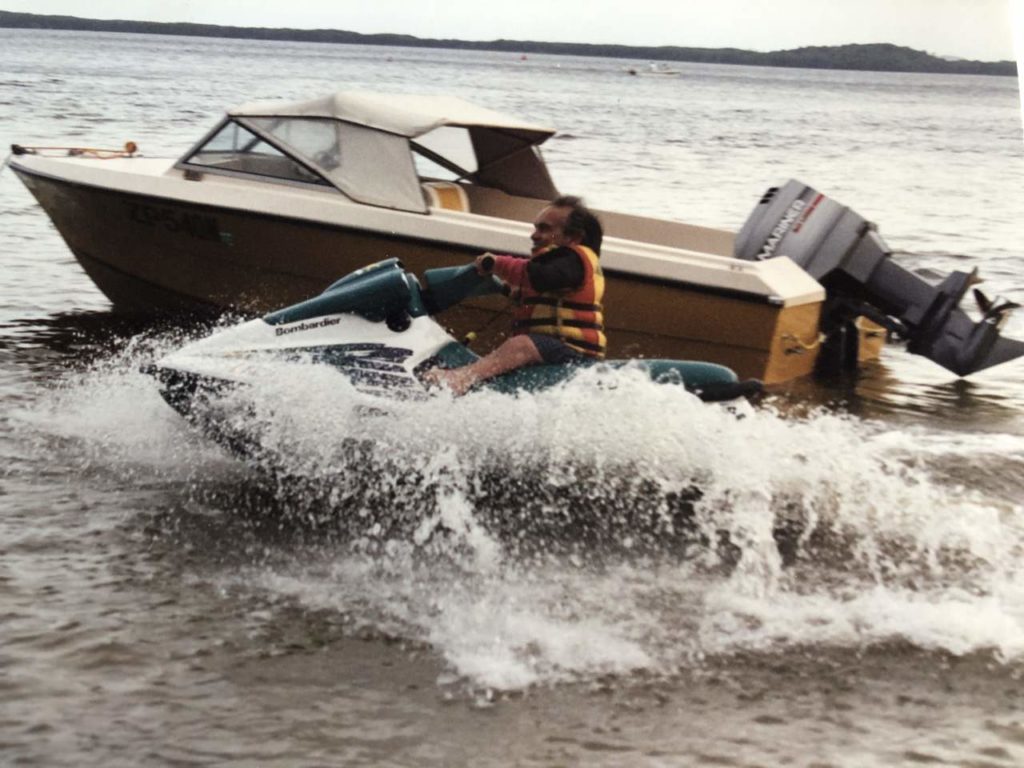
His joyride on a Jet Ski turned into terror when he got lost on his way back to our lakeside camping ground. He tried a shortcut across the lake, but it was so cold and choppy that he went numb and his joints hurt from cutting through the waves. When he went back to the shoreline, the weeds clogged up the Jet Ski, twice. It took him three hours to find his way to our campsite.

When snorkeling on the Coral Coast of Viti Levu, Fiji, an electric eel engraved its teeth marks across Robert’s second and third fingers. Medical attention was needed. The good news was that the doctor on call was at the hotel; the bad news was that the doctor was in the bar having a few drinks. We reluctantly went with the doctor to his off-site clinic, but only because another staff member was the designated driver. Given the doctor’s inebriated state, Robert accepted a tetanus shot, but declined sutures.

Robert’s way of preparing himself for hip replacement surgery was to snorkel at John Pennekamp Coral Reef State Park in Key Largo, Florida. But in addition to swimming among fish common to the reef, a school of barracudas surrounded him. Happily, he did not look like a menu item.

On Robert’s bucket-list trip to Australia’s Great Barrier Reef, his dwarf body shape prevented him from managing a scuba-diving oxygen tank. Unwilling to give up, he safely descended about 12 feet donned in a glass diver helmet attached to an oxygen hose. I was content to view the fish and coral from a glass-bottom submarine.

This post includes scenes from the second book in my dwarfism memoir trilogy, “Pass Me Your Shoes: A Couple with Dwarfism Navigates Life’s Detours with Love and Faith.” Read more at https://angelamuirvanetten.com/pass-me-your-shoes/.

Categories
Disability Rights

Ask the Author

what who how why

What books are in your dwarfism memoir trilogy?

  • Dwarfs Don’t Live in Doll Houses

Discover how my first 25 years paved the way to independence and determination.

  • PASS ME YOUR SHOES: A Couple with Dwarfism Navigates Life’s Detours with Love and Faith

Find hope and humor in this complicated international marriage story.

  • ALWAYS AN ADVOCATE: Champions of Change for People with Dwarfism and Disabilities

See how advocacy impacts volunteerism, entertainment, and equal access.

Want to subscribe to receive blog updates sign up today!

Why did you write this series?

My frustration with media that misses the mark in describing our dwarfism experience often leading to inspiration porn. I write to stir understanding not pity, advocacy not apathy, and hope not despair.

Who will appreciate this trilogy?

Nobody skates through life without some kind of hardship—abuse, divorce, financial, grief, health—so whether the hardships are the same or different, everyone can relate to positive messages that emerge from painful experiences.  

Where can I get more information?

Visit my website at https://angelamuirvanetten.com/books to see the description, editorial reviews, product details, and author biography.

How can I get a copy of your books?

Buy links to Amazon.com, Barnes and Noble, and Books a Million are on my website at https://angelamuirvanetten.com/books/.

Where do I find media interviews about your books?

Go to the media page on my website, https://angelamuirvanetten.com/media/, for links to several podcasts and one written interview.

When do you do book signings and presentations?

Just email me at angela@angelamuirvanetten.com with a proposed time and place so we can schedule a virtual or in-person engagement. 

How do I get the book(s) I already bought autographed?

Email me your name and mailing address and I’ll send you a signed sticker to paste in your book.

What are you writing these days?

I’m no longer working on a book manuscript, but I do write a weekly blog post and the occasional article. See https://angelamuirvanetten.com/blog

Where can I follow you on social media?

What advice do you have for people who want to write a book?

Everyone has a story to tell, the question is whether you need 40 to 60 thousand words to tell it. Before launching into a book project, I recommend refining your writing with smaller pieces like articles and newsletters. Read other books similar to the one you want to write. Open yourself to reader feedback and professional editing. Once your book is written and edited, you’re only half way there. You still need a publisher. Decide whether to pursue traditional or independent publishing. Develop and implement a marketing plan. These steps can be even harder than writing because they are out of your control.

What questions do you have?

Write your question as a comment and I’ll answer in the reply.

For answers to more questions, read Ask the Author About ‘Always an Advocate.’ August 2, 2021. Angela Muir Van Etten blog post.https://angelamuirvanetten.com/ask-the-author-about-always-an-advocate/

Categories
Disability Rights Transportation

ADA and Taxi/Rideshare Services

WAV in Melbourne AU

People with disabilities should not be made to feel like second-class citizens or punished because of their disability. These are welcome words from Assistant Attorney General Kristen Clarke in a United States Department of Justice (DOJ) press release on July 18, 2022.

As we commemorate passage of the Americans with Disabilities Act (ADA) on National Disability Independence Day (July 26, 1990), it’s heartening that the DOJ—tasked with enforcing this disability civil rights law—remains committed to this directive. DOJ’s July 18th action holding Uber accountable for discriminating against people with disabilities makes their commitment clear.

Want to subscribe to receive blog updates sign up today!

In November 2021, the DOJ filed an ADA lawsuit against Uber for charging passengers wait time fees. The fees, dating back to 2016, started two minutes after the Uber car arrived at the pickup location and were charged until the car began its trip. The DOJ complaint alleged that Uber violated the ADA by failing to reasonably modify its wait time fee policy for passengers who, because of disability, needed more than two minutes to get in an Uber car. For example, passengers who use a wheelchair or walker may need more time to fold or stow it in the vehicle.

The DOJ settled the case on July 18th when Uber agreed to pay several million dollars in compensation to more than 65,000 Uber riders who were charged discriminatory fees due to disability. Going forward, Uber will no longer charge wait time fees for all Uber riders who certify that their disability causes them to take longer to get in an Uber car. Uber will advertise the wait time fee waiver program and train its customer service representatives on the waiver program and refund process to ensure that people with disabilities are not charged illegal fees. 

This is great news for riders with disabilities who are able to board an Uber vehicle. But what about riders who need a wheelchair accessible vehicle (WAV) to use a ridesharing or taxi service? Their issue is not with wait time fees, but with waiting for Uber, Lyft, and taxis to provide a WAV service. These riders are denied the opportunity to book a trip.

After flying 2,500 miles from West Palm Beach, Florida to Spokane, Washington two weeks ago, the toughest leg of my trip was getting a ride eight miles from the airport to my hotel. Uber and Lyft had no WAVs and Orange taxi only had two. Despite being grateful that Orange cab honored my reservation when my flight was delayed, I cringed at the $100 surcharge. Since I had no other way to get to the hotel, I had to pay the equivalent of a triple fare for the “privilege” of riding in a WAV. Surely this is a violation of the surcharge prohibition found in the ADA Title III regulation at 28 CFR § 36.301(c).

As much as the ADA has accomplished, there is so much more to be done. So what is the next step for achieving accessible rideshare and taxi services?

For discussion of other advocacy issues, go to “ALWAYS AN ADVOCATE: Champions of Change for People with Dwarfism and Disabilities” available on Amazon in print, e-book, and audio formats. Read more at https://angelamuirvanetten.com/always-an-advocate/. To subscribe to my weekly blog on dwarfism and disability issues, go to https://angelamuirvanetten.com/blog/.
Categories
Celebrations

Two-Year Blog Anniversary Favorites

Like image
Image by Gerd Altmann from Pixabay

A Trendy Olympic Sport—Hotel Bed Climbing? July 26, 2021. https://angelamuirvanetten.com/a-trendy-olympic-sport-hotel-bed-climbing/

Post excerpt: . . . The bed was level with our chest and must have been at least 27 inches tall. At our height of 40 inches, this was an impossible feat. There was no stool in sight and none were available at the front desk. . . So how could this happen in an accessible room? Doesn’t the Americans with Disabilities Act (ADA) address bed height? . . .    

Pat & Rich comment: With the newer beds being so tall our regular foot stool we carry in our luggage would not accommodate us! This situation has become an issue for traveling.

Want to subscribe to receive blog updates sign up today!

DWARFISM TRILOGY COMPLETE: Recurring Pattern of Three Emerges. September 27, 2021. https://angelamuirvanetten.com/dwarfism-trilogy-complete-recurring-pattern-of-three-emerges/

Post excerpt: After 33 years, my dwarfism trilogy is complete. Three books in a little more than three decades about God’s three gifts of grace in my life—faith, hope, and love. As it happens, the word “three” has emerged as a thread in this cradle to retirement memoir series.

Making the Impossible Happen. October 4, 2021. https://angelamuirvanetten.com/making-the-impossible-happen/

Post excerpt: Characterized as the biggest state and local building code change in 20 years, October 8, 1997 is a date few know to commemorate. This is when. . . the six-inch reach barrier was [broken making] ATMs, gas pumps, elevators accessible to people with dwarfism and half a million others whose disability involved a reach limitation.

Be Thankful in All Circumstances. December 27, 2021. https://angelamuirvanetten.com/be-thankful-in-all-circumstances/

Post excerpt: I’m thankful that God protected us from being exposed to COVID-19 and that our double vaccination came without side effects. One way of staying safe at home was to order home delivered groceries. Our neighbors even benefited when my order for nine individual bananas was misinterpreted as an order for nine pounds of bananas!

Take Action Against ADA Access Violations. January 24, 2022. https://angelamuirvanetten.com/take-action-against-ada-access-violations/

Post excerpt: Thirty years after the effective date of the Americans with Disabilities Act (ADA) on January 26, 1992, I didn’t expect to read about an accessibility nightmare. But that’s exactly what a Little Person wrote about her recent experience trying to order fast food from a McDonald’s self-serve kiosk.

Honeymoon Romance Takes A Dive. February 14, 2022. https://angelamuirvanetten.com/honeymoon-romance-takes-a-dive/

Kathleen comment: Angela, great story! I can picture the whole scene.

The Gift of Being Distinctive. May 2, 2022. https://angelamuirvanetten.com/the-gift-of-being-distinctive/

Post excerpt: I have come to see my size is a gift that should not be wasted. I can use it to positively influence how people perceive disability, illustrate our abilities, interact with kindness, increase integration into the mainstream, and identify barriers that demand removal. I can impede the impact of negative behaviors by being impervious to the impertinence, isolating offenders, and indicting those who interfere with civil rights and impose both inequality and injustice on people with disabilities.

Juliette comment: The message to embrace who we’re created to be is so timely for us all right now. Love it.

To subscribe to my weekly blog on dwarfism and disability issues, go to https://angelamuirvanetten.com/blog/.
Categories
Little People of America Transportation

Successful Spokane Trip

LPA Expo Table

Airfares doubling, flight delays and cancellations, and Robert’s inability to travel combined to make a trip from West Palm Beach, Florida to the LPA conference in Spokane, Washington questionable. Yet I needed to be there. Not because it was LPA’s 65th anniversary, but it was the first opportunity to market my dwarfism memoir trilogy since its’ completion in 2021.

So after prayerful consideration and organizing at-home support for Robert, I flew to Spokane on July 3rd. Given that Delta pilots were on strike, I was grateful to be flying with American Airlines. Prior weeks of airport chaos had me anticipating trouble. Instead, there were no major hiccups.

Want to subscribe to receive blog updates sign up today!

TSA staff were friendly and helpful. Just as well, because head-level tables were too high for me to lift my bags onto. Plus a sophisticated scanner negated TSA’s need to unpack my computer and CPAP from carry-on bags. Technology also kept me informed of flight delays. Upon arrival at my Dallas, Texas connection, the American Airlines App on my phone notified me of a delay and gate change. No need to line up for flight information or strain to read departure screens.

As with any trip, I encountered a mixed bag of fellow travelers. Passenger allies provided interesting encounters and helped with things like retrieving my suitcase from the baggage claim carousel. A hostile passenger complained about how long it took TSA to process a veteran with a prosthetic leg. And an inconsiderate passenger used the accessible bathroom stall as a personal dressing room.

A late arrival in Spokane put my accessible taxi reservation in jeopardy. Thankfully the driver waited for me to be reunited with my scooter and checked luggage. I reserve my objection to the $100 surcharge for the accessible taxi for another day—it was my only way of getting to the hotel with my scooter and I didn’t want to be stranded at the airport. 

A midnight arrival at the hotel eliminated a check-in line, qualified me for a two-day breakfast treat of soft peanut brittle, and resulted in a bellhop being immediately available. Even though the room had been prepared for LPA guests, I needed the bellhop to not only bring my bags to the room, but also to remove the soap and shampoo from the wall holders and lower the coffee maker and iron. Despite not noticing the need for a step stool to climb into bed until after he left, I didn’t call him back. I used an overturned trash can. A five o’clock rise and shine message at dawn meant I also overlooked asking how to lower the blinds.

Not only was travel trauma avoided, but also my book marketing objectives were accomplished. All but two of the books shipped were sold at the LPA Expo! And the bonus was attending and presenting at workshops, participating in conversations on sensitive topics, receiving DNA confirmation of my dwarfism diagnosis, connecting with LP past and future friends, and exploring Spokane. All my prayers were answered.

For information on my dwarfism memoir trilogy, go to https://angelamuirvanetten.com/books/.

Categories
Celebrations Little People of America

LPA Conference Destinations

Map
Image by alijoy313 from Pixabay

Before Robert and I married, he promised to show me every state in the union. Although not the reason I accepted his marriage proposal, I was ready to see the sights, meet the people, learn the history, understand the nation I was adopting as my home. Today on my 40th July 4th celebration, I can report visiting 37 of 50 states! And more than half of those visits were for national LPA conferences in July.  

            Our reasons for attending 29 conferences in 19 states were diverse—board meetings, leading workshops, Expo coordinator and exhibitor, tourism, and friendships.

Want to subscribe to receive blog updates sign up today!

Traveling to and from conferences was part of the adventure. As newlyweds, we arrived at the airport with one bag missing! Each of us assumed the other had loaded the forgotten bag into the cab—the critical bag with all the materials Robert needed for board meetings. Incredibly, he raced home and back to the airport in time to be on the right side of the door when it closed.

Ground transportation was key to navigating destination cities:

  • In California, we hired a car to drive to Fisherman’s Wharf in San Francisco with friends from Little People of New Zealand. Frustrated by lack of direction from his alien passengers, Robert stopped the car on the highway in the yellow-striped V between two lanes that forked in different directions. A motorcycle cop let him off with a warning.
  • In Texas, we delighted in Dallas Area Rapid Transit accessibility with David and Lisa. But it took time to learn the system. Lisa and I boarded successfully and watched David and Robert standing on the platform as the train pulled out of the station.
  • In California, Robert and I rode accessible public buses to the San Diego zoo when no accessible cabs were available.
  • In Colorado, Robert rode in an ambulance to the hospital in respiratory distress while I battled with cab companies that refused to transport me with my scooter. As a sea level resident of Florida, Robert was adversely affected by the mile high altitude of Denver. Upon discharge, he traveled home with a portable oxygen concentrator.

Mostly our appreciation of area attractions came after completion of LPA commitments:

  • In Nevada, we valued a day trip to Virginia City in Bonanza country and rafting on the Truckee River.
  • In Oregon, we witnessed the aftermath of the Mount St. Helens volcanic eruption.
  • In Michigan, Robert—undeterred by Do Not Enter signs—led a group of little people to Tom Thumb’s pool table in a restricted zone of the Henry Ford Museum.
  • In Utah, we took a boat trip on the Great Salt Lake without a fishing pole—the lake is too salty for fish.

In all 19 states, we connected with our LPA family at restaurants, coffee shops, off-site events, chatting in hallways or a quiet corner. We laughed, and smiled, and supported one another. We didn’t always agree and sometimes we annoyed each another, but this community has greatly enriched our lives.

This post includes references to the second and third books in my dwarfism memoir trilogy, “Pass Me Your Shoes: A Couple with Dwarfism Navigates Life’s Detours with Love and Faith” and Always An Advocate: Champions of Change for People with Dwarfism and Disabilities.” Read more at https://angelamuirvanetten.com.