Categories
Transportation

Public Participation ADA Violation

Public Participation

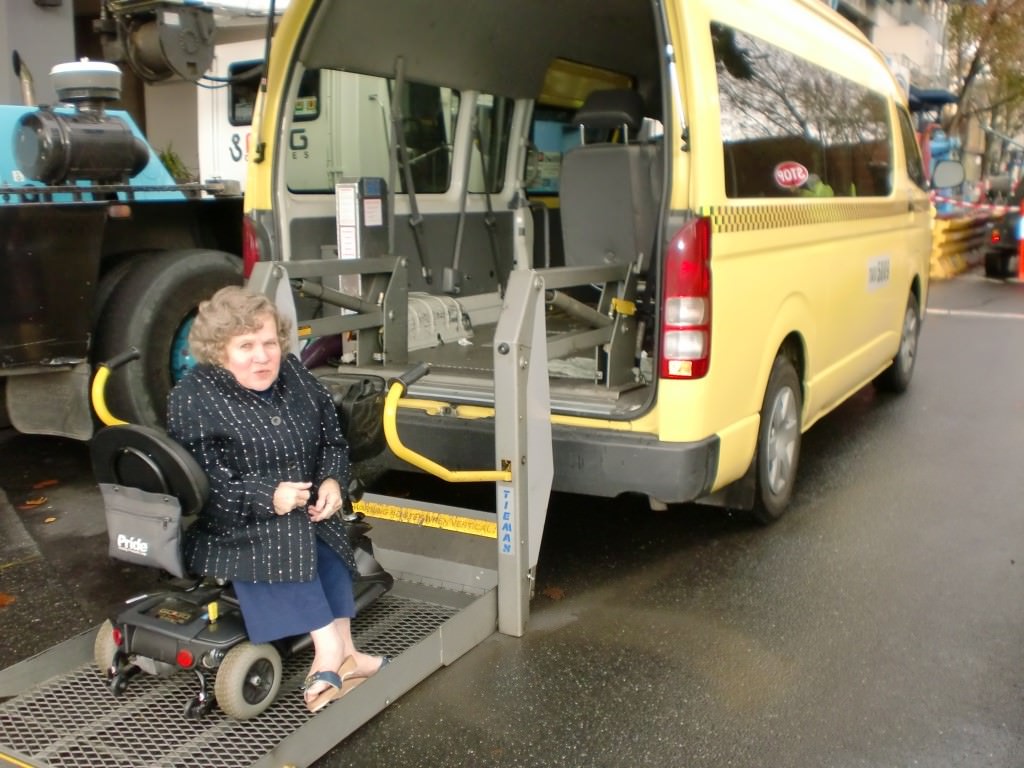
In my role as an advocate for a Center for Independent Living, I monitored county compliance on the Americans with Disabilities Act (ADA). In January 2012, I spotted a public transit issue. Not only was it an ADA violation, but it also violated the principle “nothing about us without us.”

County staff was seeking Board of County Commission (BOCC) approval of an ADA Paratransit Plan—door-to-door service for those unable to ride fixed-route buses—without giving adequate notice or opportunity for the public participation required by the ADA.

Want to subscribe to receive blog updates sign up today!

Specifically staff had failed to reach out to paratransit riders or people with disabilities and groups representing them in the community. The public notice of the proposed plan had been posted in a newspaper, but not the newspaper read by the Radio Reading Service for blind or visually-impaired listeners. And no notices were posted on buses or distributed to organizations whose clients used county transit services.

I recruited paratransit riders to join me in making public comments to ask the BOCC to postpone approval of the paratransit plan until public participation was provided. After five years advocating at the BOCC in support of public transit funding, the entire BOCC knew my name. The BOCC Chair declared me trustworthy and responded favorably to our comments.

Our advocacy achieved the desired result when the BOCC declined to adopt the ADA Paratransit Plan and directed staff to come back after working out the notice and public participation issues with me. Although county staff also knew me, they weren’t so appreciative. The staff member who had prepared and presented the ADA Paratransit Plan to the BOCC cried when the plan was not adopted. Still, she had no choice but to work with me.

After following my lead on giving adequate notice to riders and meaningful outreach to disabled organizations, public participation on the plan was scheduled in March 2012. Even so, county staff still saw this as “Angela’s” meeting that would only need a small conference room. When 30 people turned up, staff had to open the county commission chamber at the last minute.

County staff were astounded that 15 people and disability organizations made public comments—nine riders, five disability professionals, and one employer—giving meaningful input on the plan. Staff listened to the public input and responded with many improvements to the plan relating to eligibility recertification, the trip pick-up window, consideration of weather conditions that affect a person’s ability to get to a bus stop, and the appeal process. Finally, I was ready to support the revised ADA Paratransit Plan when staff resubmitted it to the BOCC four months later.

Another recurring issue was the county Metropolitan Planning Organization’s scheduling of public participation transit workshops on evening and weekend hours when there was no transit service. We dealt with this issue at a Florida Transportation Disadvantaged (TD) Local Coordinating Board (LCB) meeting. The motion to schedule public workshops at times when TD riders could get there either by providing after-hours transit or scheduling daytime meetings passed unanimously.

This post is a condensed excerpt from chapter 18 in book three of my dwarfism memoir trilogy, “ALWAYS AN ADVOCATE: Champions of Change for People with Dwarfism and Disabilities,” https://angelamuirvanetten.com/always-an-advocate/.

Categories
Character

Legalization of Infanticide Looms After Dobbs

Infanticide unsplash

Almost 50 years of fighting for pro-life values paid off when the United States (U.S.) Supreme Court overturned Roe v. Wade with its June 24, 2022 ruling in Dobbs v. Jackson Women’s Health Organization. The Dobb’s decision eviscerated the former federal constitutionally protected right to abortion and upheld Mississippi’s ban on abortions after 15 weeks of pregnancy.

Yet Dobbs does not herald the end of abortion.  The polarizing positions of pro-life and pro-choice advocates are now duking it out in Congress, 50 state legislatures, and the ballot box. The fight is fast and furious.

Want to subscribe to receive blog updates sign up today!

The Women’s Health Protection Act of 2022—prohibiting governmental restrictions on abortion services—passed the House of Representatives on July 15, 2022 (it was not approved in the U.S. Senate). In 2022, states enacted 50 pro-life laws and 77 pro-abortion laws. In the November 2022 election, California, Michigan and Vermont all passed referendums enshrining reproductive rights in their state constitutions.

In the past, pro-choice rationalizations for abortion claimed “life begins at birth, not conception” and “a fetus is not a baby until it can live outside the womb.”  Today’s ardent pro-choice advocates make an even more egregious attack on life by alleging that  babies born alive after a botched abortion should not be protected because they’re not “actual persons,” “morally relevant,” or fully human until they are “self-aware.” In so doing, they promote infanticide—euphemistically called after-birth or perinatal abortion. They hold that the well-being of parents outweighs the interests of a living child. Just as progressive is the idea that a newborn imposes no obligations on a parent because whether a child will exist as a person in the future is a parent’s choice.

Are these the reasons why—as of 2019—19 States allow infanticide and let abortionists leave babies to die if they survive an abortion?

Does this explain why California passed an infanticide law in September 2022 permitting perinatal (post-birth) abortions of babies due to a pregnancy-related cause without civil or criminal liability or penalty?

Will the California law be a forerunner of similar laws in other states, or will states back off because the Maryland bill sanctioning “perinatal” deaths up to the first 28 days after birth did not pass?

Will infanticide—a deliberate killing of a child that is under a year old—be decriminalized or denounced as murder subject to criminal penalties?

Will American society sacrifice the lives of innocent infants born to women who choose not to raise a child with a disability or illness and decline to take advantage of abortion alternatives like safe haven laws and adoption?

The answers to these questions lies squarely with the American people.

So let your voice be heard on January 22, 2023, Sanctity of Human Life Day, with a stand for prenatal and perinatal life. Celebrate the January 11, 2023 passage in the 118th Congress of the Born-Alive Abortion Survivors Protection Act in the U.S. House of Representatives (H.R. 26), and call your Senator to nail down a vote for the bill when it comes up for a vote.     

You may also want to read:

Categories
Disability Rights Medical

COVID-19 AT THREE-YEAR MARKER

Mitigation measures

COVID-19 entered the dictionary after the first confirmed American case on January 21, 2020. Three years later, the virus has claimed the lives of well over one million Americans and 6.5 million worldwide.

Although pandemic isolation and lockdowns took its toll on everyone, people with disabilities were disproportionately impacted as shown in the following examples:

  • People with developmental disabilities lost home and community based services and adult day programs closed.

Want to subscribe to receive blog updates sign up today!

  • Students receiving special education services regressed on their learning goals and missed out on speech, physical, occupational, and behavior therapies.
  • Disruption to healthcare services increased disability for patients, like stroke survivors, who were unable to access rehabilitation services.
  • Employment of working-age people with disabilities was reduced by 20 percent.

Today in a populace weary of COVID-19 restrictions and emboldened by herd immunity from vaccines and prior COVID waves, getting “back to normal” is a priority. Students are back in school, employers have called their staff back to the workplace, and travelers are on the move in record numbers. What’s more, the three-W guidance—wear a mask, wait six feet back, and wash your hands—has gone by the wayside. This is bad news for people with disabilities who have an underlying medical condition—such as cancer, chronic kidney disease, COPD, Down syndrome, or immunocompromised. They have a higher risk for severe illness.

As a result, discarding mitigating measures is a bone of contention between those at risk and those who are risk averse. The impassioned pleas of people with underlying medical conditions has largely fallen on deaf ears. To obtain a different result, parents of immunocompromised children with disabilities in Virginia public schools went beyond impassioned pleas to protect their children when Governor Younkin issued an executive order to stop mandatory mask wearing. They filed a federal lawsuit and won. Armed with words backed by the force of federal disability laws, public school teachers and students in the state of Virginia can be required to wear masks as a reasonable modification, under the executive order, for students with disabilities who request the masking.

            Likewise, under the Americans with Disabilities Act employers cannot exclude high-risk employees from the workplace unless the employee’s disability poses a direct threat to the employee’s health or safety that cannot be eliminated or reduced by reasonable accommodation. A High Efficiency Particulate Air filtration system is one example of a possible reasonable accommodation.

Despite President Biden’s assertion that “the pandemic is over,” COVID-19 not only persists, but is spreading. As of January 4, 2023, the Center for Disease Control weekly COVID-19 report included 2,731 deaths, 470,699 new cases, and 46,029 new hospital admissions. And these counts are an underestimate given how many don’t test at all, or don’t report home test results. And, due to the surge of cases in China, travelers from China must now show a negative COVID-19 test before entering the U.S.

So let’s add another W to COVID-19 guidance. Be Wary of positive political predictions—it ain’t over ‘til it’s over

You may also like:

Categories
Celebrations

MIDNIGHT STRIKES ANOTHER NEW YEAR

Fireworks

The clock strikes twelve as it does every night. But one midnight strike stands apart from the other 364—over one billion people across the globe watch New York’s Times Square ball drop 70 feet in 60 seconds.

For 2023, the Ball lit by 32,000 plus LEDs twinkled with 2,688 Waterford Crystal triangles designed to represent ten gifts—love, wisdom, happiness, goodwill, harmony, serenity, kindness, wonder, fortitude, and imagination. The million or so celebrants in Time Square skipped the champagne toasts—no alcohol allowed—but enjoyed midnight kisses, Auld Lang Syne, and a one ton confetti shower inscribed with thousands of New Year wishes.

Want to subscribe to receive blog updates sign up today!

Actually the Times Square party was a symbolic welcome to the New Year given that 28 time zones preceded New York in starting the party. A cascade of spectacular fireworks and light celebrations circled the globe from Sydney, Australia to Dubai, United Arab Emirates to London, United Kingdom to Rio de Janeiro, Brazil.

In December 2018, when visiting my family in Sydney, Australia, my husband Robert saw it as his chance to see the Sydney fireworks in person. My family worked very hard to convince him that he could not just roll up on his scooter a couple of hours before midnight. He’d have to be there for hours ahead of time and would be roped in by security for several more hours after midnight. On top of that, the crushing crowd of one million partygoers would block his 40 inch line-of-sight and make public transport home a nightmare. He reluctantly settled for a view from my brother’s balcony a few miles away.

About 20 years earlier, I messed with Robert and another New Year’s tradition. We were on vacation in Florida when he and his brother Peter were asked to dress up as Father Time and Baby New Year. I objected when Robert was chosen to dress as the baby. As little people we work very hard at being taken seriously and treated as adults. Age is not related to size. The last thing we needed was for Robert to be stereotyped as the baby with photos to prove it for years to come. The compromise came when Robert dressed as Father Time personifying the old year and his brother dressed as Baby New Year illustrating the new year.

As I close out 2022 and look forward to 2023, my perspective as an author and blogger draws me to quotes related to writing:

“Do not let kindness and truth leave you; write them on the tablet of your heart.”

~ Solomon

 “The new year stands before us, like a chapter in a book, waiting to be written.”

~ Melody Beattie

“New year—a new chapter, new verse, or just the same old story? Ultimately we write it. The choice is ours.”

~ Alex Morritt

 “Tomorrow is the first blank page of a 365-page book. Write a good one.”

~ Brad Paisley.

Praying you have a Happy New Year filled with God’s light and love.

For more information on my dwarfism book trilogy and weekly blog posts, go to my website at https://angelamuirvanetten.com.

Categories
Open

2022 Year in Review: Now and Then

looking back

January. A positive interview on The Morning Glory Project podcast, helped market book three in my dwarfism trilogy, “Always an Advocate.” This was in stark contrast to a 1990 interview with a radio shock-jock who ridiculed little people.

February. The message in my 40th Valentine’s card from Robert—I’m a lucky husband and better man for having your love in my life—generated smiles instead of tears when he had no card to give his bride in 1982.

Want to subscribe to receive blog updates sign up today!

March. The release of “Always an Advocate” Audiobook generated favorable reviews by listeners with vision impairments. In contrast, John Stossel’s “Give Me a Break” ABC TV segment on dwarf tossing 20 years earlier earned my negative review.

April. Our LPA trip to Lion Country Safari in Palm Beach, Florida was reminiscent of our 1984 trip to an African Lion Safari in Canada minus the need for directions from a farmer who laughed at the idea of lions roaming the landscape.

May. A garage worker totaled my car when his foot got caught on the accelerator! Twenty-two years earlier, a truck driver totaled Robert’s van when the thin metal edge of the flatbed sliced open the passenger’s side like a can.

June. My blog post, “Give Blood, Give Life,” highlighted the difficult blood draw process for many little people and need for donated blood during elective surgeries. Many years earlier, Robert was disqualified from a Hepatitis C research study because staff were unable to draw his blood.

July. Although I chaffed at the $100 surcharge it cost to ride in an accessible taxi with my scooter from the Spokane, Washington airport to the LPA conference hotel, this was better than being denied taxi service at the Denver LPA conference five years earlier.

August. An involved debridement appointment with my dental hygienist was a solemn reminder of the day nine years earlier when I needed a thorough debridement and teeth cleaning before the periodontist would write a letter clearing me for aortic valve replacement surgery.

September. After 18 weeks without wheels, we bought a 2020 Toyota Sienna Wheelchair Accessible Van equipped with pedal extensions, a power adjustable height driver seat, and steering wheel extension. It was a far cry from the Austin Mini car my parents gave me on my 18th birthday.

October. The “Ten Steps to Effective Advocacy” workshop I presented at the Florida LPA regional in Gainesville, Florida reminded me of the many advocacy workshops I presented as far back as 1986 to people with dwarfism and disabilities, parents of special education students, and disability professionals.

November. My interview on the Joni and Friends Ministry Podcast to discuss advocacy to change discrimination against people with dwarfism and other disabilities was a perfect follow-up to the two 2020 podcasts the ministry recorded after publication of “Pass Me Your Shoes.”

December. On December 29, 1999 a newspaper called the dwarf tossing atrocity one of the ten worst inventions of the millennium. My June 27th blog post, “Florida Bans Dwarf Tossing in Bars,” explains why the June 28, 1989 law was needed. For more book, blog, and media information, go to my website at https://angelamuirvanetten.com

Categories
Awareness Disability Rights

Disabled Caught In Homeless Crisis

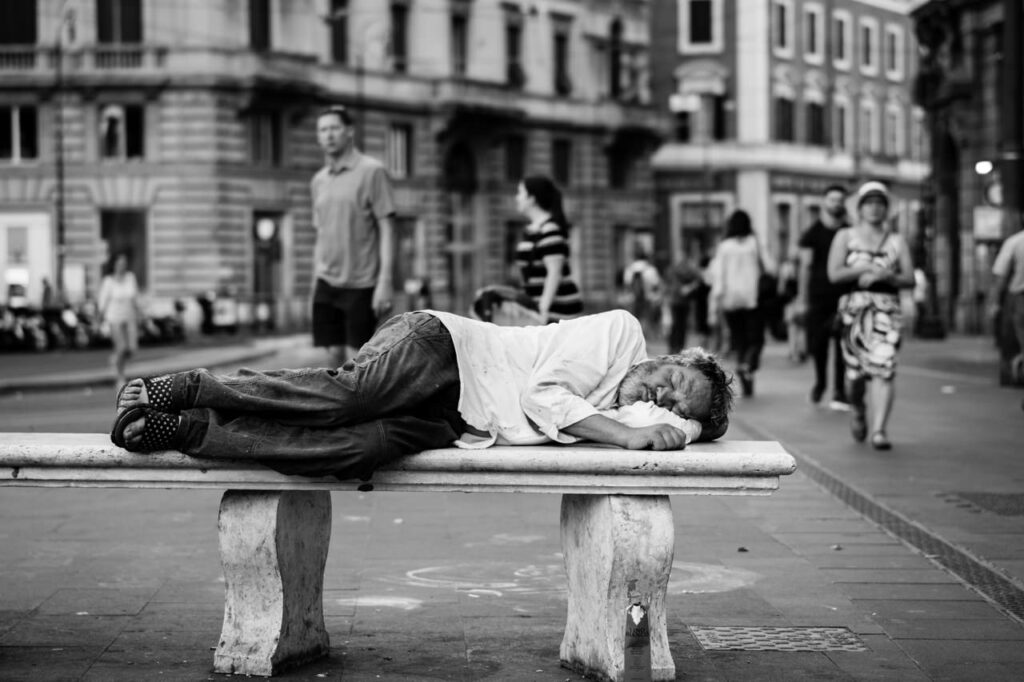
homeless man

People with disabilities make up almost one quarter of the half million plus homeless in America. And more than half of homeless veterans are disabled. So on December 21, National Homeless Persons’ Remembrance Day, let’s zoom in on the homeless crisis for people with disabilities.

Homelessness is primarily concentrated in cities. As exciting as it is for tourists to visit the likes of Boston, New York City, and Washington DC, it’s troubling to see so many homeless people sleeping on the streets.  The national rate for homelessness is 17 per 10,000; in these cities, the rate is well over 100 per 10,000. One fifth of America’s homeless population live in New York City.

Want to subscribe to receive blog updates sign up today!

According to the United States Department of Housing and Urban Development, a person is homeless if they:

  1. Lack a fixed, regular, and adequate nighttime residence;
  2. Stay overnight at a place not ordinarily used for sleeping, such as a car, park, or bus depot;
  3. Occupy temporary residences like homeless shelters or motels paid for by the government or a charity;
  4. Live in a place not meant for human habitation; or
  5. Have nowhere to go after eviction for nonpayment of rent or mortgage, or when fleeing domestic violence and/or human trafficking.

The leading causes of homelessness—unemployment, lack of trustworthy relationships, lack of affordable housing, disability and illness, and abuse—are too complex and diverse to discuss in this post.  But here’s a light touch on disability and illness.

An illness can take away a job, health insurance, a home, and a car. A disability can prevent someone from even entering the workforce. A 2019 national study on homelessness, showed that of those living on the streets 46 percent had physical disabilities. Mental illness accounts for 25 percent of the homeless. And mental illnesses—such as post-traumatic stress disorder (PTSD), anxiety, depression, and substance abuse—reportedly affect half of all homeless veterans. Also, veterans who have PTSD often use substances as a way to cope with PTSD symptoms.

The magnitude of the crisis mandates that we take action. Sitting around and doing nothing is unacceptable. Our duty to help those in need dates back to ancient times. In the words of Asaph, we must:  

Give justice to the poor and the orphan;
    uphold the rights of the oppressed and the destitute.”
Psalm 82:3, New Living Translation

To help you get started, here are some ideas for helping homeless people with disabilities. Acknowledge their existence. Stop walking by without making eye contact. Say hello. Smile.

Be polite if asked for money. If not comfortable giving money, direct people to a nearby food pantry, meal site, or homeless service center. Support that organization with donations of food, toiletries, clothes and blankets, tents, or whatever else is on their needs list. Volunteer.

And on a larger scale, advocate for the homeless with local businesses and elected representatives to increase resources to address the causes of homelessness and meet the need of those needing a job, training, transportation, health care, and affordable housing.

You may also like to read:

Categories
Celebrations Hospitality

Poinsettias and Christmas

Poinsettia

December 12th is National Poinsettia Day in the United States. The date marks the death of Joel Roberts Poinsett, an American botanist, physician and the U.S. Ambassador to Mexico from 1825 to 1829. He shared his love for the Poinsettia when he  sent cuttings from Southern Mexico to his home in Charleston, South Carolina.

In Mexico, where the plant is called La Flor de la Nochebuena (Flower of the Holy Night), Poinsettias have featured in the nativity procession—the Fiesta of Santa Pesebre—since the 17th century. Mexican legend has it that a little girl, too poor to buy a gift to present to the Christ child at the nativity scene on Christmas Eve, gave baby Jesus weeds she picked from the side of the road. Given in love, the weeds were transformed into the beautiful red stars of the Poinsettia.

Want to subscribe to receive blog updates sign up today!

And so the Mexican association of Poinsettias with Christmas continued in America. On one level, the red leaves fit right in with all things Christmas—red nosed reindeer, Santa, bows, ornaments,  and candles. On another level, red symbolizes love and the blood of Christ. Whether you are enchanted by Poinsettias for their legendary charm, Christian symbolism, or their decorative beauty, they are now one of the most popular plants in the world. Annual sales are 90 million units and the global retail impact is nearly one billion dollars. In the United States most of the $250 million in retail sales occur in the six weeks leading up to Christmas.

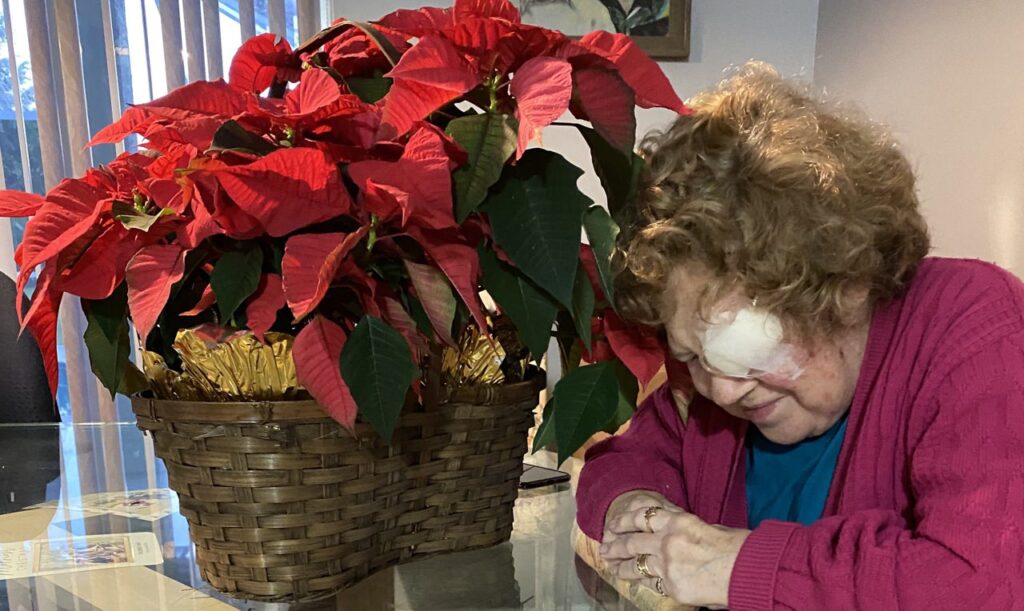
Over the years, I’ve been the beneficiary of Poinsettias in the prelude to Christmas for various reasons. Last December when recovering from eye surgery for a hole in the macular and a partially detached retina, my aunt blessed me with gorgeous Poinsettias in a twin basket. 

Surgery gift poinsettia

This year when hosting a chapter meeting for Little People of America, I received a beautiful Poinsettia as a hospitality gift from one of the members.

Hospitality gift poinsettia

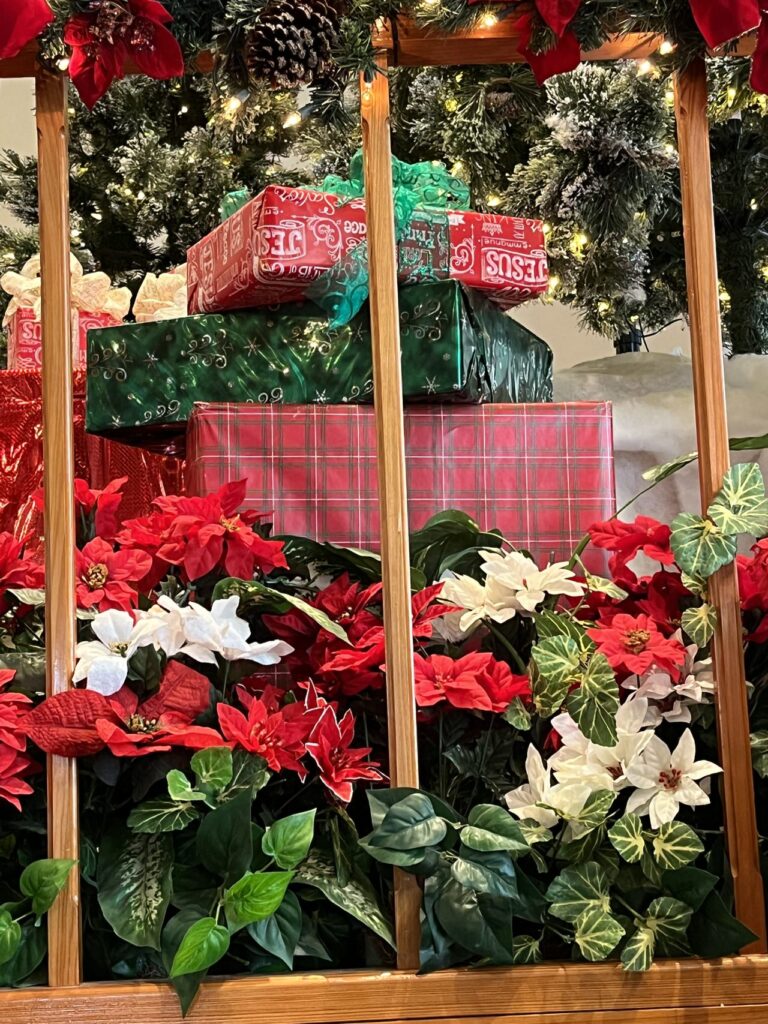
I’m also enjoying the Christmas decorations at church that incorporate both red and white Poinsettias.

Church poinsettia

So in this season of Christmas giving, it’s time for me to bless family and friends with Poinsettia gifts. No need to worry if they have one already. The more Poinsettias they get the more magnificence they have to delight in.

So what part do Poinsettias play in your Christmas?

You may also like to read:

Categories
Inclusion International

Global Inclusion of People with Hidden Disabilities

How can 15 per cent of the world’s population be counted as a minority when it numbers one billion? Yet people with disabilities do fit minority classification due to routine denial of equal access to society and services. We are often excluded from the built-environment, education, employment, health care, transportation, et al.

For three decades, the United Nations has highlighted global disability inequities with the annual observance of the International Day of Persons with Disabilities (IDPD) on December 3rd. The goal is to promote understanding of disability issues and mobilize support for the dignity, rights and well-being of persons with disabilities.

Want to subscribe to receive blog updates sign up today!

This resolve was strengthened in 2006 when the United Nations Convention on the Rights of Persons with Disabilities (CRPD) recognized accessibility and inclusion of persons with disabilities as fundamental rights.

The 2022 IDPD theme of “transformative solutions for inclusive development recognizes the role innovation plays in fueling an accessible and equitable world.” Some organizations have narrowed the scope of this year’s theme to the vast majority of disabilities that are hidden, such as: chronic fatigue, diabetes, hearing loss, learning difficulties, mental health disorders, speech impairments, low vision. Their “Not All Disabilities are Visible” slogan brought to mind the Hidden Disabilities Sunflower global program which has recently emerged as an innovative way to include people in public places that need additional support, help or a little more time.

The Sunflower program began in 2016 at the United Kingdom’s Gatwick Airport as a way to support travelers with hidden disabilities. Travelers wearing a green lanyard with a yellow sunflower send a subtle signal to staff self-identifying as someone who may need assistance. Staff are trained to (1) provide clarifying instructions, (2) keep family members together, (3) read departure boards, (4) give more time to prepare at check-in and security, (5) find a place to sit and rest, or (6) deliver whatever else is needed.

By 2018, the Sunflower program spread to all major UK airports and rail providers. It also expanded to anywhere people meet, such as: banks, charities, entertainment and sports venues, hospitals, insurance companies, retail establishments, universities, schools and colleges, and the like.

Global recognition began in 2019 with the opening of the Hidden Disabilities Sunflower online store and sharing on Facebook. In early 2020, the program expanded to other international venues and is now available at airports in 24 countries, including: Australia, Canada, Denmark, Italy, Japan, the Netherlands, New Zealand, Peru, the UK and the United States.

My reservation about the program is how the Sunflower lanyard tags the person as vulnerable and needy. On one hand, I question why a person with hidden disabilities should have to wear a special lanyard to get help. On the other hand, I understand that those of us with visible disabilities get offers of help without even asking. But is it inclusion if the person wearing a lanyard is set apart and made to feel different? What do you think?

Read more at:

Categories
Celebrations

Thankful Through the Years

Happy Thanksgiving
Happy Better Wiser, https://www.pinterest.com/HappyBetterWiser/

How did inflation affect your Thanksgiving holiday? Possibly your gathering was smaller. Perhaps the rise in food prices meant fewer dishes on the table, no second helpings, or chicken instead of turkey. Worse yet, maybe you joined the 25% of Americans who skipped the holiday altogether.

Yet whatever our circumstance, it helps to maintain a spirit of gratitude not just at Thanksgiving but always. In reviewing how successful I’ve been on this front, I ran a word search in the manuscripts of my dwarfism memoir trilogy, https://angelamuirvanetten.com/books/. I found derivatives of the word thankful and grateful 54 times! Here’s a sampling of what I found:

Want to subscribe to receive blog updates sign up today!

  • I couldn’t buy clothes off the rack. Thankfully, our family had an excellent dressmaker.
  • I’m grateful for my education. I was not kept out of school or sent to a school for children with “handicaps.”
  • Thankfully, I found employers who were not fazed by my size.
  • Thankfully not all children find pleasure in ridicule.
  • [Robert and I] were extremely grateful in 1982 when Little People of America granted me an educational scholarship.
  • When the fire alarm went off on our first day in [a 14th floor] apartment in 1983, Robert called to see if we should evacuate. Thankfully, the car explosion in the parking garage was quickly controlled and we were able to stay put.
  • In 1984, I prepared for the [Ohio bar] exam with endless hours of study, but had not prepared for a blizzard. My fear was that my pre-ordered cab would be a no-show. I thanked God when cabs came for me.
  • At age 36, I had severe pain and immobility in my left shoulder. Thankfully, after three months of [treatment], I was pain-free and had improved range of motion.
  • I was grateful our house cleaners were there when we got home from Robert’s outpatient hernia surgery in 1985. He definitely needed a stronger arm than mine to lean on to get from the car to the bedroom.
  • In 1997, Robert prepared himself for hip replacement surgery by snorkeling with a school of barracudas in Key Largo, Florida. Thankfully, he did not look like a menu item.
  • Moving to Stuart [Florida] in 1998 put us in the market for a church. Thankfully, it didn’t take long to feel comfortable at Tropical Farms Baptist Church.
  • The radio station cancelled the 2002 dwarf-tossing contest. But thankfully, the DJs threat to sue the state of Florida was stymied when the Department of Business and Professional Regulation removed the likelihood of successful litigation.
  • In 2003, I was caught in a 25% staff layoff. Despite the uncertainty that comes with unemployment I was thankful.
  • In 2014—one year after my aortic valve replacement surgery—the flowers were blooming, my electrocardiogram was boring, and my echocardiogram was very good. I gave thanks to the Lord for His goodness.

“Do not be anxious about anything, but in everything by prayer and pleading with thanksgiving let your requests be made known to God.” ∞ Philippians 4:6, New American Standard Bible.

HOLIDAY DEAL: Use promo code TRIO22 and order a personally autographed paperback trilogy set for a 50% savings i.e. a $50 value for only $25 (includes sales tax, shipping and handling). Hurry while supplies last and enjoy a surprise free gift. Email your order to Angela at angela@angelamuirvanetten.com.

Not in the mood to wait, order your Kindle or audio edition on Amazon. Go to https://angelamuirvanetten.com/books/ for trilogy details: Dwarfs Don’t Live in Doll Houses, PASS ME YOUR SHOES: A Couple with Dwarfism Navigates Life’s Detours with Love and Faith, and ALWAYS AN ADVOCATE: Champions of Change for People with Dwarfism and Disabilities.

Categories
Disability Rights FAQs Medical

Why Are You So Short? Is the Answer in the Genes?

GINA sig ceremony
White House photo by Eric Draper. 
President George W. Bush Signs H.R. 493, the Genetic Information Nondiscrimination Act of 2008 in the Oval Office. May 21, 2008.

Every day little people are asked to explain why they are so short. The answers given are often more amusing than educational:

  • I was born this way, what’s your excuse?
  • My mother puts me in the dryer every night.
  • Cigarettes stunted my growth.
  • I didn’t eat all my vegetables.
  • I was six-feet-two-inches when I went swimming and four feet when I came out of the water. [Note, the prankster had to retract this ‘short story’ told to a young boy before he was willing to take a bath.]

Want to subscribe to receive blog updates sign up today!

On the more serious side, I often say, “God makes people in all shapes and sizes.” But I went way over the head of one young girl when I answered her with a question, “what color are your eyes?” After telling me they were blue, I asked “why aren’t they green? She shrugged. I anticipated this reply and said, “neither do I know why I didn’t grow.” Although this exchange did nothing to help her understanding, it did move me closer to incorporating genetics into my explanation of why I’m short.

Geneticists have identified almost 400 distinct types of dwarfism. And just as genetics determine eye color, two different genes determined that I would be a dwarf with Larsen’s syndrome—Filamin B and CHST3. Even so, knowing the specific genes for my dwarfism type doesn’t adequately explain why I got genes that resulted in my short stature. So let’s pivot to a more important question about the explosion of genetic information.

Is it legal to use genetic information against people whose genes identify a disability? November 21st—the 12th anniversary of the effective date of the Genetic Information Nondiscrimination Act (GINA)—makes this a timely question. The good news is that GINA was enacted to protect people from genetic information discrimination in (1) health coverage and employment as it relates to family history of a disease or disorder; (2) genetic tests of individuals, family members, or a fetus; or (3) any request for or receipt of genetic services, participation in genetic testing or genetic counseling by an individual or family member. 

Title I of GINA prohibits health insurers from using genetic information to determine if someone is eligible for insurance or to make coverage, underwriting or premium-setting decisions. However, GINA does not cover insurance policies for long-term care, life, or disability.

Title II of GINA prevents nonmilitary employers with 15 or more employees from using genetic information in employment decisions like hiring, firing, promotions, pay, and job assignments. GINA also protects employees or applicants by prohibiting employers from (1) requiring or requesting genetic information and/or genetic tests as a condition of employment; (2) intentionally requesting or obtaining genetic information; (3) harassment based on genetic information; or (4) retaliation for action taken against activities made unlawful by GINA. However, provided confidentiality of genetic information is maintained, an employer is allowed to obtain genetic information based on narrowly-drawn inquiries for medical information in connection with a reasonable accommodation request, or for voluntary participation in an employee wellness program.

 For more information on GINA, go to:

This post is based in part on examples found in book I of my dwarfism memoir trilogy: Dwarfs Don’t Live in Doll Houses, https://angelamuirvanetten.com/dwarfs-dont-live-in-doll-houses/.