
Categories
Awareness

Popular Children’s Books on Dwarfism

Girls reading

“We all need to read books where the heroes are relatable to our own selves. It’s even more important for kids. It helps develop hope, solutions, connection and a strong sense of identity, belonging.”

Meriah Nichols, deaf mom to three children with disabilities

In honor of International Children’s Book Day on April 2nd, I compiled a list of children’s books on dwarfism in order of their popularity on Amazon. A complete booklist is available in the resources section of my website at https://angelamuirvanetten.com/resources/#childrenbooks. Please contact me if you know of books missing from the list.

Want to subscribe to receive blog updates sign up today!

Stand Tall, Molly Lou Melon 
by Patty Lovell (Author), David Catrow (Illustrator)
August 27, 2001

Molly Lou Melon is short and clumsy. When bullied on her first day in a new school she remembers her grandmother’s advice.
Reading age: 3 – 6 years

Break the Mould: How to Take Your Place in the World
by Sinéad Burke
October 15, 2020

Drawing on her own experiences as a little person, Burke encourages readers to believe in themselves, have pride in who they are, and make the world a more inclusive place.
Reading age: ‎ 9 – 13 years

Being Small (Isn’t So Bad After All) 
by Lori Orlinsky 
February 11, 2022 

A picture book about the shortest kid in the class who is scared to go to school. Her mother instills self-confidence in her by pointing out the advantages of being short.
Reading age: ‎ 2 – 6 years

Short 
by Holly Goldberg Sloan
January 9, 2018

Julia is very short for her age, but she discovers her own sense of self when playing a munchkin in “The Wizard of Oz” after befriending Olive, an adult with dwarfism in the production.
Reading age: ‎ 8 – 12 years

The Thing About Georgie 
by Lisa Graff  
August 26, 2008

A warm and humorous novel starring an unforgettable young boy with dwarfism.
Reading age:‎ 7 – 10 years

Little Imperfections: A Tall Tale of Growing Up Different
by Peet Montzingo & Rockwell Sands 
November 1, 2022 

In this picture book, Montzingo is the only “tall” sibling in a family of little people. He addresses being different, feeling like you don’t fit in, and finding yourself.
Reading age: ‎ 4 years and up

Short Or Tall Doesn’t Matter At All
by Asaf Rozanes
February 3, 2018

This illustrated story delivers the anti-bullying message about a little girl who is picked on in school because she is short and helps young kids understand they are not alone.
Reading age: 3 – 8 years

Mummy There’s a New Girl 
by Danielle Webb
June 24, 2021

When a new girl joins the class, children pick on her for her looks, but one little boy looks past her differences and learns that really – size is no big deal!
Reading age: ‎ Baby – 7 years

Louie’s Together Playground 
by Dr. Nicole Julia (Author), Jeff Crowther (Illustrator)
January 23, 2023

Louie is a llama with dwarfism who, together with his friends, dreams up a plan to bring the very first all-inclusive playground to their town.
Reading age: 2 – 7 years

Image credit: https://pixabay.com/photos/girls-books-reading-read-library-5711423/

Categories
Medical

Appreciating a Doctor Is in a Patient’s Interest

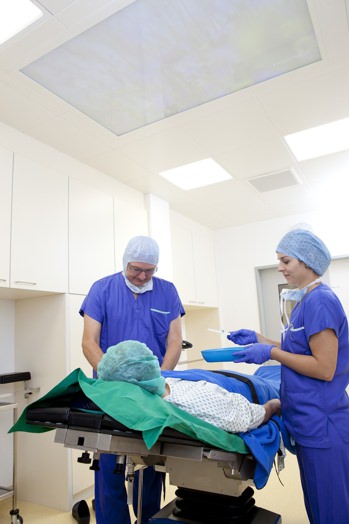
Operation

Gone are the days when we had a family doctor who attended the needs of everyone in the household. Instead I have 17 doctors entered in my phone contacts list, each with their own specialty. Add to that eight doctors unique to Robert and we have a whole classroom of doctor’s being schooled on aging issues and dwarfism.

Where would we be without our cadre of physicians? Good question for National Doctors Day on March 30th, a day set aside every year since 1933 to honor physicians for the work they do for their patients, the communities they work in, and for society as a whole.

Want to subscribe to receive blog updates sign up today!

Doctors invest a decade or more in medical training and have student loans averaging around $200,000. Despite healthy physician salaries—averaging $223,000 for primary care and $329,000 for specialists—these loans take years to pay down. Doctors typically work 60 to 70 hours a week thereby sacrificing time with their families and for personal needs.

It’s in the patient’s interest to appreciate the doctors we depend on for our health care needs because they’re quitting medicine in alarming numbers. Nearly half of doctors experience physician burnout caused by bureaucratic tasks, insufficient time with patients, and long hours, to name a few. The 10 to 20 hours a week spent on administration detracts from the most rewarding part of a doctor’s job and their reason for being drawn into the profession in the first place—patient care.

A doctor shortage is exacerbated by the growing number of aging patients and physicians. Patients age 65 or older generally require more specialty care and, in the next five years, 35% of working physicians will be of retirement age. And even before retirement, about one third of doctors report their intention to reduce work hours in the next 12 months. The effects of this shortage are already being felt. Patients often have to wait weeks to get an appointment with a specialist.

There are several steps patients can take to encourage physicians to continue practicing medicine. Please consider doing one or more of the following: 

  • Since physicians rely on online reviews to bring new patients through the front door, take the time to write a fair and accurate review that reflects the positive aspects of your patient experience with the doctor. This will help offset your doctor’s worry about receiving negative reviews.
  • Send thank-you cards to physicians you value.
  • Bring your doctor a red carnation, the representative flower of National Doctor’s Day.
  • Follow your doctor’s sound medical advice so that they don’t feel like you’re wasting their time.
  • Ask your doctor how they’re doing. When I did this at my annual cardiology check-up last month, I was surprised when my cardiologist disclosed his personal struggle navigating a divorce with two teenage children.
  • Pray for your doctors.
  • Make an honorary donation to an organization that would recognize the doctor you honor. For example, worthy candidates would be doctors on Little People of America’s (LPA) Medical Advisory Board, https://www.lpaonline.org/index.php?option=com_content&view=article&id=106:medical-advisory-board&catid=19:site-content&Itemid=103. They volunteer their time at free medical clinics and workshops at LPA national and regional conferences.

Image credit: https://pixabay.com/photos/operation-operating-room-doctor-540597/

For more of my writings, go to https://angelamuirvanetten.com where you can subscribe to my weekly blog and find information and buy links to my dwarfism trilogy memoir.

Categories
International

War Impact on Disabled in Ukraine

Ukraine map

When Russia invaded Ukraine one year ago we knew it would be bad, but who could have predicted the largest refugee crisis since World War II? At the six month marker, the UN Refugee Agency reported well over a third of Ukrainians (14 million people) as being displaced—half within Ukraine and half across borders. Who knows what the numbers are after one year? Their suffering and pain is unimaginable to those of us living in the comfort and security of our homes. But this post will attempt to bring home a sliver of the tragic reality for people with disabilities left behind in their war savaged country. 

Want to subscribe to receive blog updates sign up today!

Many of Ukraine’s 2.7 million people with disabilities couldn’t flee from danger—those with high support needs; disabled children in orphanages; those without transportation, unable to cross the border on foot, and nowhere to go. They were left with insufficient caregivers or without help to navigate stairs in their high rise apartments.

The terror of war is compounded as lack of transportation to metro stations and inaccessible bomb shelters in underground subway stations strand many mobility impaired people in buildings being reduced to rubble and ashes by explosions and fires. People with vision or hearing impairments don’t receive information in accessible formats on emergency evacuation, shelter locations, and how to seek assistance. People with intellectual disabilities don’t respond to air raid warnings because they don’t understand they must get to a bomb shelter.

Necessary routine has been ripped from people with autism. The noise of shelling can cause seizures, screaming, or aggression in those with developmental disabilities. Speech, language and physical therapies are terminated. Education is disrupted for those unable to access online learning offered in mainstream schools. Access to medication and food is limited. Hundreds of hospitals have been destroyed, damaged, and have drastic shortages of staff and live-saving medical supplies.

Add to this the underserved needs of thousands of war wounded joining the disabled ranks. Amputees need surgeries and prosthetics. Spinal cord and burn injuries need specialized care and rehabilitation. Post-Traumatic Stress Disorder is rampant among war veterans, prisoners, and scarred civilians.

Although the human toll of Russia’s war is colossal, the international response is also gigantic. Weapons are not only being sent to help Ukraine win the war, but humanitarian resources help alleviate the suffering. For example,           

  • Samaritan’s Purse operates an emergency field hospital and has stationed scores of disaster response specialists in the region. 
  • Doctors Without Borders transports patients in a specially fitted medical train to  safer hospitals in the west.
  • Fight for Right arranges delivery of essential medications, financial support and legal advice for more than 4,100 individuals with disabilities.
  • The World Health Organization is replacing some Assistive Technology equipment.
  • Joni and Friends provides in-country support.
  • Revived Soldiers Ukraine brings wounded troops to America for specialized healthcare treatment.
  • I’m adding my name here. How about you? Stopping the war is beyond our control, but we can pray for God’s intervention and show compassion with donations to our preferred humanitarian organization.

“and if you spend yourselves in behalf of the hungry
    and satisfy the needs of the oppressed,
then your light will rise in the darkness,
    and your night will become like the noonday.”

Isaiah 58:10 (New International Version)

Image credit: https://pixabay.com/photos/map-ukraine-help-hearts-7106584/

You may also want to read:

Categories
Medical

Sleep Your Way to Better Health

Sleep Apnea

Many Americans bemoaned losing an hour of sleep when Daylight Saving Time began on March 12. So Sleep Awareness Week, March 12-18, is timed to encourage us to prioritize sleep to improve overall health and promote the prevention and management of sleep disorders. According to the National Institutes of Health, sleep is as important for good health as diet and exercise.

Twenty percent of Americans have a sleep disorder with half having Obstructive Sleep Apnea (OSA). In OSA the repetitive pauses in breathing are caused by relaxation of soft tissue in the back of the throat that blocks the passage of air. Central Sleep Apnea (CSA) affects less than one percent of people and occurs when the brain doesn’t send the right signals to muscles that trigger breathing.

Want to subscribe to receive blog updates sign up today!

Although 22 million people are estimated to have OSA, about 80 percent are undiagnosed. Their lack of oxygen comes with a high mortality risk. Sadly, I knew multiple little people who died in their 40s due to undiagnosed sleep apnea.

Until about 20 years ago, I too was undiagnosed. I didn’t know that my excessive daytime sleepiness put me at twice the risk of having a car accident. But I was jolted awake one afternoon after falling asleep at the wheel and my car veering off the road onto the grass. Thankfully, I didn’t hit a power pole or cross the center line into oncoming traffic and avoided being among the 100,000 auto crashes or 1,550 crash-related deaths the National Highway Traffic Safety Administration annually attributes to fatigue.

I had ignored sleep apnea symptoms like loud snoring, waking up with a dry mouth, and feeling as tired as when I went to bed. I forget if I had trouble remembering. Other symptoms didn’t bother me—insomnia, morning headaches, mood or behavior changes, and lack of energy. Other than being middle aged, common risk factors for sleep apnea were absent—allergies, drug use, family history, being a male, obesity, nasal blockages, large neck circumference, sleeping on my back, smoking, and enlarged tonsils or tongue. But failing to address my sleep apnea symptoms also put me at risk for life-threatening conditions like: diabetes; cardiovascular diseases; psychiatric comorbid diseases; cancer; neurological disorders; and brain damage.

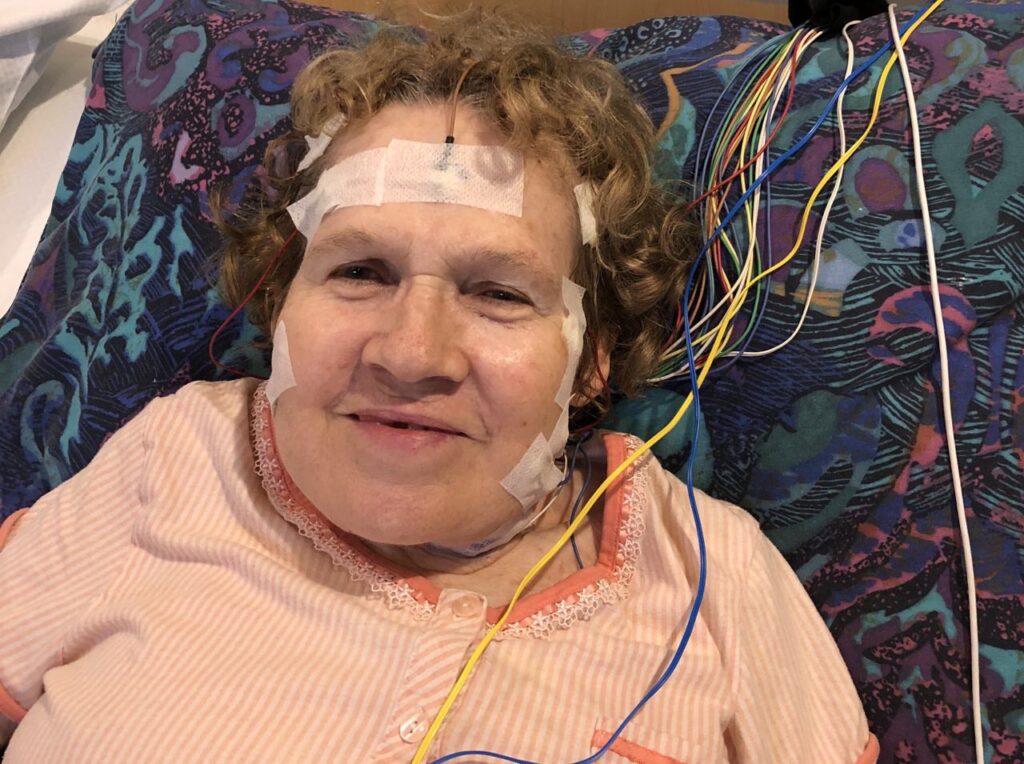
Soon after my wake up call, I had a sleep study and was officially diagnosed with severe OSA. I slept overnight in a sleep clinic dotted with sensors that measured my sleep stages, breathing, muscle movement, and oxygen levels. I was prescribed a Continuous Positive Airway Pressure (CPAP) machine with a tube blowing pressurized air into a mask and through my airway to keep it open while I slept. 

Adjusting to the CPAP was challenging. However, I was determined to benefit from the health benefits of the device and refused to give up. With the help of a respiratory therapist, I chose a nasal pillow and comfortable headgear. The CPAP came with a compact carry bag making travel easy; airlines have made it a free carry on.

So how well are you sleeping?

You may also want to read:

Categories
Accessibility International

International Wheelchair Day Celebration

International Wheelchair Day Celebration

For 15 years, celebrations of International Wheelchair Day on March 1 have occurred around the world, including in Australia, Nepal, Senegal, South Africa, Bangladesh, Pakistan, United Kingdom and America. It’s a celebration of the positive impact wheelchairs have in the lives of 5.5 million adult wheelchair users in the United States and more than 130 million  users worldwide. 

            One powerful purpose of the day is to change the mindset of those who perceive a wheelchair as a sad part of someone’s life. Because quite the opposite is true as shown in the following comments of wheelchair users:

Want to subscribe to receive blog updates sign up today!

  • “The only sad part about this vital piece of equipment for me, is where we would be without it.” AJ’s Journey.
  • “I am so grateful for my wheels. They have enabled me to do so many things I couldn’t do without them. Pitying me for my chair use makes no sense.”  Hannah Ensor.
  • Without my wheelchair I wouldn’t be able to go anywhere or do anything. My wheelchair has given me independence, freedom, life.” Wheels2Walking.
  • My wheelchair is like another part of my body. I love my wheelchair. My wheelchair is called Freeda and she’s not something to pity.” The World of One Room.
  •  “I am not bound or confined to the chair, I am empowered by it.” Michele Lee
  • My wheelchair liberates me.” Becky
  • If you took my wheelchair off me I would be disabled! My wheelchair is like my best mate; it enables me to do so much and comes to so many places with me!” Claire Lomas MBE

Misconceptions about those who use wheelchairs are also busted:

  1. Users have various disabilities and are not all paralyzed; leg movement doesn’t make them a fake.
  2. Users may be able to stand or walk short distances and use wheelchairs because walking is exhausting, painful, slow, and the risk of falling makes walking hazardous.
  3. Users are not wheelchair bound or confined; they get out of their wheelchairs for activities like driving, exercising, swimming, sleeping, et al.

Many concede that using a wheelchair can be limiting, but attribute that to lack of access and public attitudes that suck. As Catarina Oliveira observed, “The barrier is not the wheelchair, but the world around the wheelchair”—sidewalks, curb cuts, ramps, bollards blocking accessible paths, and parking.

Considering that the first wheelchairs were developed in Europe in the 1100’s, were common in the 1700s and 1800s, and the 1932 Jenning’s folding wheelchair invention allowed users to roll outside their homes, what excuse is there for not developing an accessible infrastructure? Imagine if cars were mass produced without highways and bridges to drive on.  As Tara Moss opined, “if we made the world even half as accessible for wheelchairs as we have for cars, we’d make a far better world.”

Despite posting almost a week after International Wheelchair Day, it’s never too late to emulate the cause.  Just as every day is International Wheelchair Day forWheelTipsJoe, every day is a good day to take action to make the world a more accessible place for wheelchair users. 

You may also want to follow:

  • WheelTipsJoe (Joe Russel), https://www.facebook.com/joe.russel.921.
Categories
Awareness Disability Rights

Tips for Achieving Positive Media Coverage

Microphone

The media is often the public’s first introduction to little people. The image portrayed will be what sticks in people’s minds when we meet in person. As a result, it’s critical for people with dwarfism to conduct interviews that generate positive pieces in print, digital, online, radio, or television outlets. The following headlines show this can be done:

  • “What’s so bad about being little?”
  • “Short is pretty good: Children with dwarfism learn to stand tall in world proportioned for others.”
  • “Honest Reaction Beats Being Ignored says Little Person Lawyer.”
  • “Little People Group Wants To Show Size Isn’t Everything.”

Want to subscribe to receive blog updates sign up today!

During my 40 years in public service as a legal professional and volunteer advocate, I’ve been interviewed almost 11 dozen times on issues related to organizations of people with dwarfism and disabilities, my Winston Churchill Fellowship, marriage, employment, dwarf tossing, public transportation, and publication of my dwarfism trilogy memoir. This experience informs the views expressed in this post.

Before deciding to do a media interview, I consider the reputation of the media outlet. If I don’t believe my message will be fairly presented, I decline the interview. This doesn’t mean I avoid forums with an opposing viewpoint, rather I strive for an equitable hearing. However, I do steer clear of outlets inclined to sensationalism and erroneous reporting, such as the paper with this headline about a doctor: “He turns Dwarfs into Giants.”

After agreeing to be interviewed, I focus on my objective—to educate the public or advocate change for people with dwarfism and disabilities. Preparation is the key to meeting this goal. I must be ready to share my message with reporters who don’t know what questions to ask and push back against reporters who ask questions based on a presumption that our lives are miserable. Unless loaded questions about our problems are turned around, little people will continue to be plagued by headlines like this:

  •  “The tall problems of little people.”
  • “Little People Have Big Problems.”
  • “Little People Have Big Woes.”

This is not to say I won’t acknowledge that little people have problems. We do. But to avoid selective reporting on the negative side of my experience, I only mention difficulties that increase the likelihood of effecting change or improving understanding. For example, I often talk about attitudinal barriers that limit my activity. If I mention physical limitations it’s in the context of barrier removal—reasonable accommodations in public facilities or modifications in private spaces.

To avoid the risk of being viewed as sympathy seekers, I stress our similarities, abilities, and equality. It’s better to discuss how we are alike, what people with dwarfism can do, and our equal rights as integrated members of society. This is reflected in the following headlines:

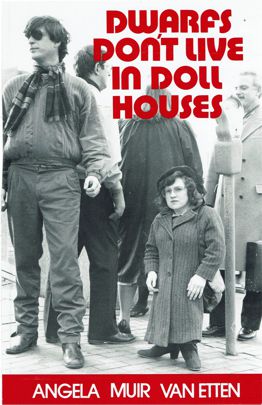
It’s also important to give a quick tutorial on ‘four letter words’ in disability land, defect, victim, burden, afflicted, abnormal, midget.

For more of my writings, go to https://angelamuirvanetten.com, subscribe to my weekly blog, and find buy links to my dwarfism memoir trilogy.

Categories
Relationships

Presidential Impact

Presidents Day

The New Zealand Embassy in Washington, D.C. was the meeting place of two presidents representing two countries in March 1981—not the White House or Camp David. The venue was chosen because the Little People of New Zealand president asked to meet the Little People of America President. And in an extraordinary turn of events, the meetings continued in civilian quarters for another 41 years as a married couple! 

As husband and wife, we now look back on Presidential influences in our lives. On January 20, 1981, President Ronald Reagan ordered a retroactive hiring freeze that eliminated 1800 federal jobs, including Robert’s position as a communications engineer with the Access Board.

Want to subscribe to receive blog updates sign up today!

Because the national media covered Robert’s story as a hardship case, I had the advantage of boning up on his background before we met. And with his job frozen, Robert had the time to be my tour guide during my five-week visit.

The Lincoln Memorial was our first stop. President Abraham Lincoln’s statue towered above us at more than six times our height. We were inspired by the display of Lincoln’s words from the Gettysburg address: all men are created equalbecause we shared a life mission to achieve equality for little people and others with disabilities.

On July 26, 1990, President George H.W. Bush advanced this goal when he threw open the door to equality for people with dwarfism and disabilities by signing the Americans with Disabilities Act.

In October 1993, President William Clinton inspected a three-foot-high Lego replica of the White House with Secretary of Labor, Robert Reich. The president joked that the four-foot-ten secretary “could almost live in there.” Kyle Smith, a New York Post reporter, sought my reaction to Clinton’s quip. My answer reported in Smith’s article—“Labor Sec is a living doll, says big Bill”—made me a target of two polar opposite radio personalities, Howard Stern and Rush Limbaugh. Both Stern and Limbaugh took umbrage with my saying the joke was inappropriate and didn’t help our cause. Limbaugh said, “What cause?”

After 17 years living in America as a legal permanent resident alien, I tired of sitting on election sidelines. I wanted to vote. And on January 17, 1998 after news broke of President Clinton’s alleged White House sex scandal with a White House intern, I knew I needed to vote. So on June 26, 1998, I applied for citizenship. And the basis for my decision was confirmed in December 1998 when President Clinton was impeached for perjury and obstruction of justice. My application was approved and my naturalization ceremony followed in Miami, Florida on September 25, 1999.

President Franklin D. Roosevelt’s directive to hide his dependence on leg braces and a wheelchair for mobility was reversed on January 11, 2001. A life-sized statue showing FDR in his wheelchair was added at the FDR Memorial entrance and accurately demonstrates that his strength was in his leadership not his legs. Disability doesn’t limit what people can accomplish and should not be hidden. 

So how have American Presidents impacted your life?

You may also want to read:

Categories
Relationships

Marriage Vows and Valentines

Valentine

Our love journey did not begin on Valentine’s Day. In February 1981 we didn’t even know each other. Rather we made our love commitment in marriage vows on October 31, 1981:

We will stand by each other no matter what happens, respecting each other’s individuality, understanding the other’s needs, accepting our changes, and enjoying our love until death parts us.

Nonetheless, in February 1982, I did expect our first Valentine’s Day together to be special.

Want to subscribe to receive blog updates sign up today!

I gave my husband Robert a romantic card depicting a cartoon of a woman with curly hair lying under the bedcovers with an empty pillow next to her. The message read: “If you’d like to be my Valentine, you know where to find me. All my love and kisses.” Instead tears flowed when Robert had no card to give me. Of course in the long haul, our marriage vows were much more important.

We could not have imagined what “standing by each other no matter what happens” would involve—adjusting to life as an alien resident living thousands of miles from families in New Zealand, Australia, and Florida; qualifying to practice law in America; multiple moves across state lines chasing jobs as a two career couple; employment discrimination and unemployment; running a sole proprietor business; betrayal by a trusted friend and embezzlement; LPA leadership; surgeries for cataracts, detached retina, hips, and aortic valve replacements; workaholism and marriage counseling; car accidents; ice storms and hurricanes. Yet with God’s help we kept this vow.

Our ability to “respect each other’s individuality” is continually challenged. Take, for example, Robert’s idea of being ready for a camping trip was a kayak strapped on top of the van without packing any food, bedding, or camping gear. Also, I often didn’t appreciate Robert’s humor. Like when he forwarded me an email listing bumper stickers he thought were funny. Only a couple caused me to even crack a smile. One sticker reminded me of our road trip experiences—He Who Hesitates Not Only is Lost, but is Miles from The Next Exit.

And I was not amused when I missed an I-90 exit when driving home from Boston, Massachusetts to Rochester, New York. Robert took great delight in repeatedly singing the chorus from “M.T.A.,” a song about a man trapped on the Boston subway.

Well, did he ever return?
No, he never returned and his fate is still unlearned.
He may ride forever ‘neath the streets of Boston,
And he’s the man who never returned
.

On the flip side, Robert wasn’t amused when his photo in the gallery of national officers published in the 1983 LPA Boston convention brochure was of him sporting a snorkel and goggles in contrast to the formal attire of the other officers. I had sent the editor two photos—the funny one for the editor’s personal pleasure and a serious one for publication. The editor shared the joke with everyone.

            Forty years later in our retirement years we are now learning to accept our changes, and enjoy our love until death parts us.

This post was adapted from book II in Angela Muir Van Etten’s dwarfism memoir trilogy—PASS ME YOUR SHOES: A Couple with Dwarfism Navigates Life’s Detours with Love and Faith, https://angelamuirvanetten.com/pass-me-your-shoes/

Categories
Medical

Heart Health Habits and Helps

Heart Health
Image: February is Heart Health Month by SusanWilkingHoran.com

As I approach February 19, 2023—the tenth anniversary of open heart surgery to implant my top hat mechanical aortic heart valve—I remain eternally grateful for God’s interventions leading me to a diagnosis of aortic stenosis and Johns Hopkins Hospital for life-saving surgery. This experience makes me tender towards the February heart days reserved to save more lives and promote heart healthy living: 

  • American Heart Month.
  • February 1 to 7, Women’s Heart Week.
  • February 3, National Wear Red Day® to raise and spread awareness to help eradicate heart disease and stroke in millions of women.
  • February 7 to 14, Congenital Heart Disease Awareness Week.
  • February 22, Heart Valve Disease Awareness Day.

Want to subscribe to receive blog updates sign up today!

According to the American Heart Association, 655,000 Americans die annually from heart and cardiovascular diseases. Forty-three million women have some type of heart disease. Two to three million people have Congenital Heart Disease (CHD) and as many as 11 million have heart valve disease that kills around 25,000 people per year.

Here’s the good news: 87 percent of all heart issues are believed to be preventable. Plus, as medical care and treatment have advanced, people with CHD live longer and healthier. Valve disease can usually be successfully treated in patients of all ages. However, positive outcomes call for people to practice self-care and, if necessary, make lifestyle changes.

Most of us already know that being physically active, eating healthy foods, getting enough sleep, not smoking, and finding healthy ways to reduce stress can help prevent heart disease. But many of these things are easier said than done and some are especially difficult for people with dwarfism and disabilities. Take, for example, the advice to be physically active. While diet and exercise are touted as our greatest weapon and reduce our chances of heart disease by as much as 80 percent, the recommended 150 minutes of heart-pumping physical activity per week may not be feasible.

Yet not being able to walk briskly, do water aerobics, or play tennis doubles doesn’t take us off the hook. Being active is not an all-or-nothing thing. Physical activity is anything that moves our body and burns calories. Any amount of movement is better than none. And for those of us who are sedentary, sitting less is a great place to start along with walking and stretching. 

It’s also important to know the five numbers that determine our risk for developing cardiovascular diseases: (1) total cholesterol;  (2) HDL (good) cholesterol; (3) blood pressure; (4) blood sugar; and (5) body mass index (BMI). I never used to pay attention to these numbers, but now I ask for copies of blood work reports and for the numbers when my blood pressure is taken. Knowing whether a number is in or out of the healthy range is the best way to be pro-active in managing heart health. I’m as much a member of my health care team as any doctor or nurse.

If there’s something I can do to avoid a stroke or heart attack, I’m going to do it. How about you?

You may also want to read:

Categories
Accessibility

Defendants Feign Ignorance When Hit With ADA Complaints

Access Counter

According to an attorney who defends businesses charged with Americans with Disabilities Act (ADA) Title III violations, most defendants don’t know there’s a problem until served with a summons notifying them of the lawsuit. So 31 years after the ADA’s January 26, 1992 effective date, we’re expected to believe defendants don’t know wheelchairs can’t climb steps, people using walkers and canes have trouble opening heavy doors, and little people can’t reach high counters!” Incredulous. No, it’s way past time for defendants to cry foul when held accountable for access violations that exclude people with dwarfism and disabilities.

Want to subscribe to receive blog updates sign up today!

Thankfully the United States Department of Justice (DOJ) ADA enforcement actions demonstrate ignorance is no excuse. For example, in 2017, the DOJ entered voluntary compliance agreements with two Iowa restaurants to resolve designated accessible parking space issues. At Cedar Grill, the spaces were not located on the shortest accessible route to the main entrance. At Birdsall Ice Cream Co., the stripes were worn and did not effectively define the van accessible parking space and adjacent access aisle. 

Doors are another bone of contention for people whose disability limits their ability to push or pull. Heavy doors can effectively block people from entering a building or getting out of a public bathroom. For example, when my husband Robert did not return from using the bathroom at a COVID-19 testing site, I asked a paramedic on duty to go and check if he was okay. Sure enough he was trapped by a heavy door. Likewise, the closer on the Cedar Grill restaurant bathroom door at 7 lbs force was heavier than the maximum allowable force of 5 lbs.

It may surprise you to know that many people with dwarfism choose a restaurant based on furniture. As Deb Hecht, a little person from Indiana, said:

“Look at ALL the bar stools instead of regular dining room chairs. I am now very selective in my restaurant choices because of the height of the chair, not the food choice!

Although food is important, it’s irrelevant if you can’t sit comfortably while eating it.

As it turns out, inaccessible seating is not something little people have to accept. The DOJ called out the two Iowa restaurants, named above, on this very issue. Both were required to remove architectural barriers—like fixed bar stools—that failed to provide accessible dining surfaces. At least five percent of the seating or standing spaces at dining surfaces must provide a dining surface 28 inches minimum and 34 inches maximum above the finished floor. 

Counter heights can make the difference between being served or not. The accessible height is between 28 and 36 inches high. The 42 inch service counter where orders are taken and filled at Birdsall Ice Cream Co. caused the DOJ to require management to agree to transact business with disabled customers at the 30” high sales counter near the cash register when requested.

This is just a sampling of access issues the ADA addresses. What barriers are you ready to challenge?

You may also want to read: